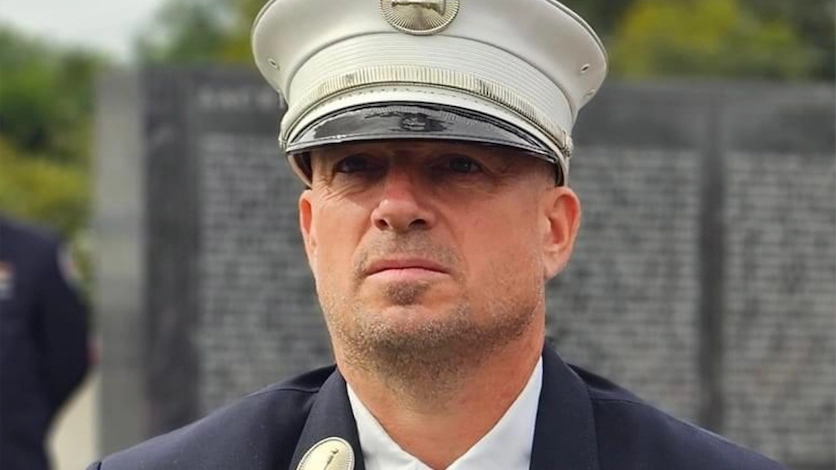
9/11 firefighter who was just 25 during attacks shares the life lesson he still lives by

Michael O'Connell was just 25 years old in 2001 when he was sworn into the FDNY, three years after he was hired by the NYPD.
It wasn't long before he saw tragedy in the job. While he was training, he and his colleagues were left devastated by the loss of three FDNY members who tragically died in the infamous Father’s Day Fire at a Queens hardware store on June 17, 2001.
Michael recalls his instructor telling him at the time that it would be the worst loss the firefighters would experience in their careers.
Just three months later, he was responding to the 9/11 attacks in which 343 firefighters lost their lives.
Advert
At the time, Michael was a probationary fireman for the FDNY, and rushed from his Long Island home to join the firefighters in the piles of wreckage, trying to help in any way he possibly could.
"I stayed on that pile for weeks looking for any sign of life," he tells UNILAD. "The thing that stands out the most to me and what changed my life is hearing my brothers' PASS alarms ringing under that pile and we couldn’t get to them."
PASS stands for Personal Alert Safety System; it's an alarm that allows firefighters to alert others that they need help.
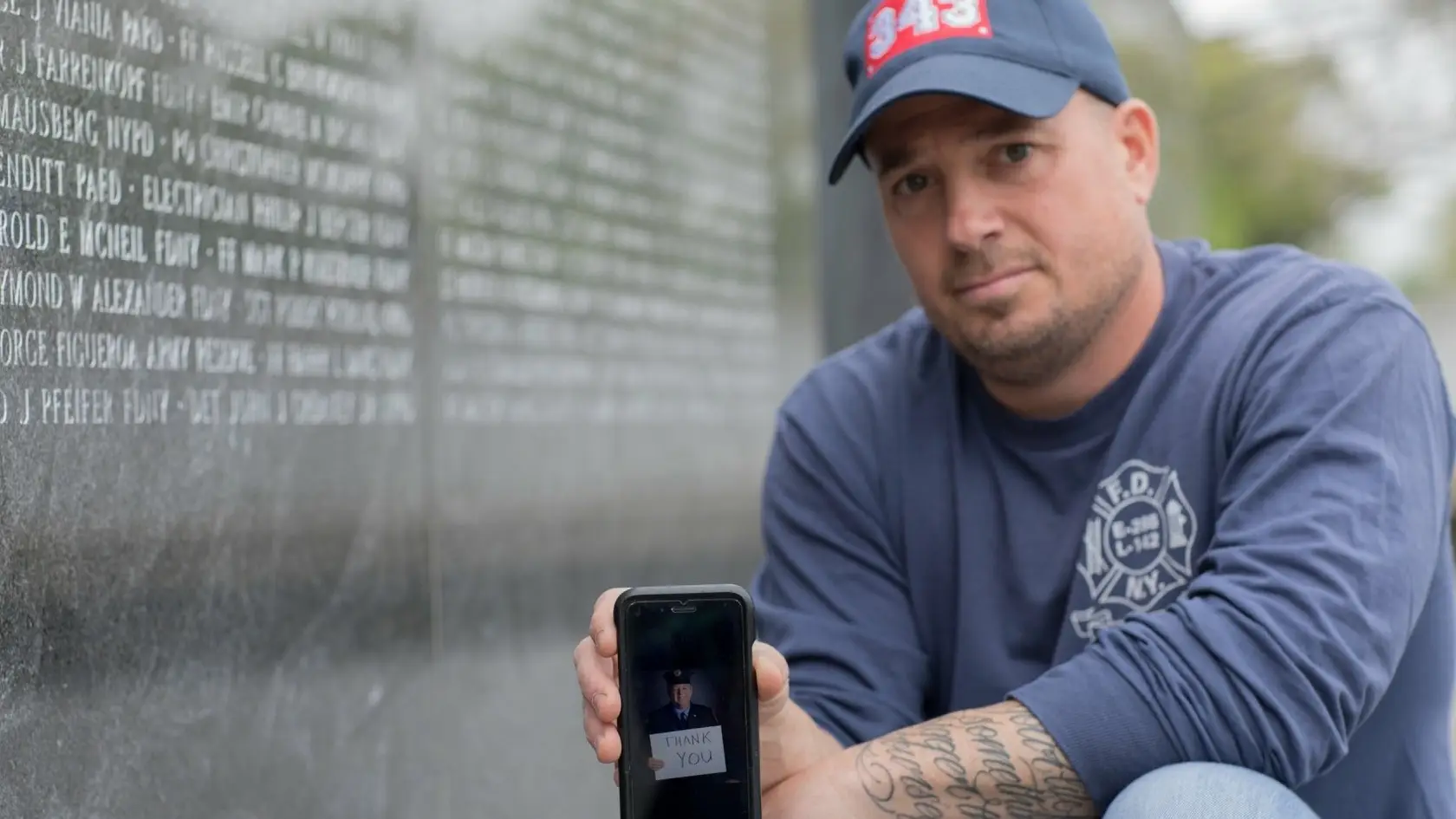
Being just 25 at the time, Michael, who has since gotten married to his wife Rebecca and become father to three children, Aidan, Colton, and Allie, says what happened on that day made him realize something earlier than others may do.
"What I recognized so much sooner in life, and something I tell people now being 50 years old and being a father of three, is that life is so fragile. It doesn't matter how much money you have and where you take yourself in life and the amount of houses you own, it really comes down to your relationships and making your mark on life.
"Whether those people in that moment knew what they were doing or not and didn't know if they were coming out of that situation, whether it was the firemen, the police officers or anybody else that raced in to help, they're beyond heroes," he continues.
"I wish the youth could understand that you don't need another 9/11 to show that you could do that. It doesn't have to be, you know, fighting terrorism or running away from a horrible scenario like that, like buildings coming crashing down on you. You could help the person next to you. You can lend a hand. We weren't put on this Earth to figure out who can make the most money. We were put on this Earth to help one another," Michael says.
Michael says that being a firefighter and police officer was always his ultimate goal of his, although it was made so much clearer to him on the horrific day of 9/11.
"9/11 was such a horrific day, but for me, what came out of it was 9/12, and a whole world embracing what happened and recognizing that this was good versus evil and it didn't matter who you are, what you look like, what political affiliation you came from, what the color of your skin was, it was if you were a good person, you put an arm around the person next to you and tried getting somebody through that," he says.
'My body swelled to twice its normal size overnight’
The 9/11 attacks killed almost 3,000 people, with thousands more injured. However, 25 years on, many first responders are still dealing with adverse health effects from working in toxic conditions.
Six years after responding, Michael recalls having a couple of friends over for New Year’s Eve. The next morning, he woke up to what was, at the time, a mystery disease, before he was later diagnosed with an autoimmune disease called sarcoidosis.
As per Cleveland Clinic, 'sarcoidosis is a condition that causes lumps or nodules (granulomas) to form in your lungs, lymph nodes, skin, eyes and other parts of your body'.
“It really came on in one night,” the father of three recalls. “The next morning, I woke up to the disease In the five or six hours that I fell asleep, something attacked my body. It was almost as if somebody came into the room that night and beat me up with a baseball bat.
"My body was swollen probably two times the size of what it was the night before. I had blotches all over my body and high fever. Obviously, something was wrong."
After running x-rays, doctors told Michael that they couldn't see his lungs due to the fact his lymph nodes being so swollen. At this point, they couldn't tell what was wrong, and it presented like an advanced case of lymphoma, before a pulmonologist recognized it as an autoimmune disease.
At first, doctors didn't think Michael would make it out of the hospital, due to how advanced his condition was.
Michael had to retire from his position due to his illness, and now advocates for the 9/11 community, 'so everyone affected by that day will not get left behind and those that we lose along the way know that we will NEVER FORGET!!!'
He works aside John Feal, who set up the FealGood Foundation, which advocates for and supports 9/11 first responders and survivors by helping them access healthcare and benefits.
The pair also testified before Congress in support of continued healthcare funding for 9/11 first responders.
 Kiesha Dosanjh