Photographer behind 9/11's famous Falling Man shared truth behind controversial image

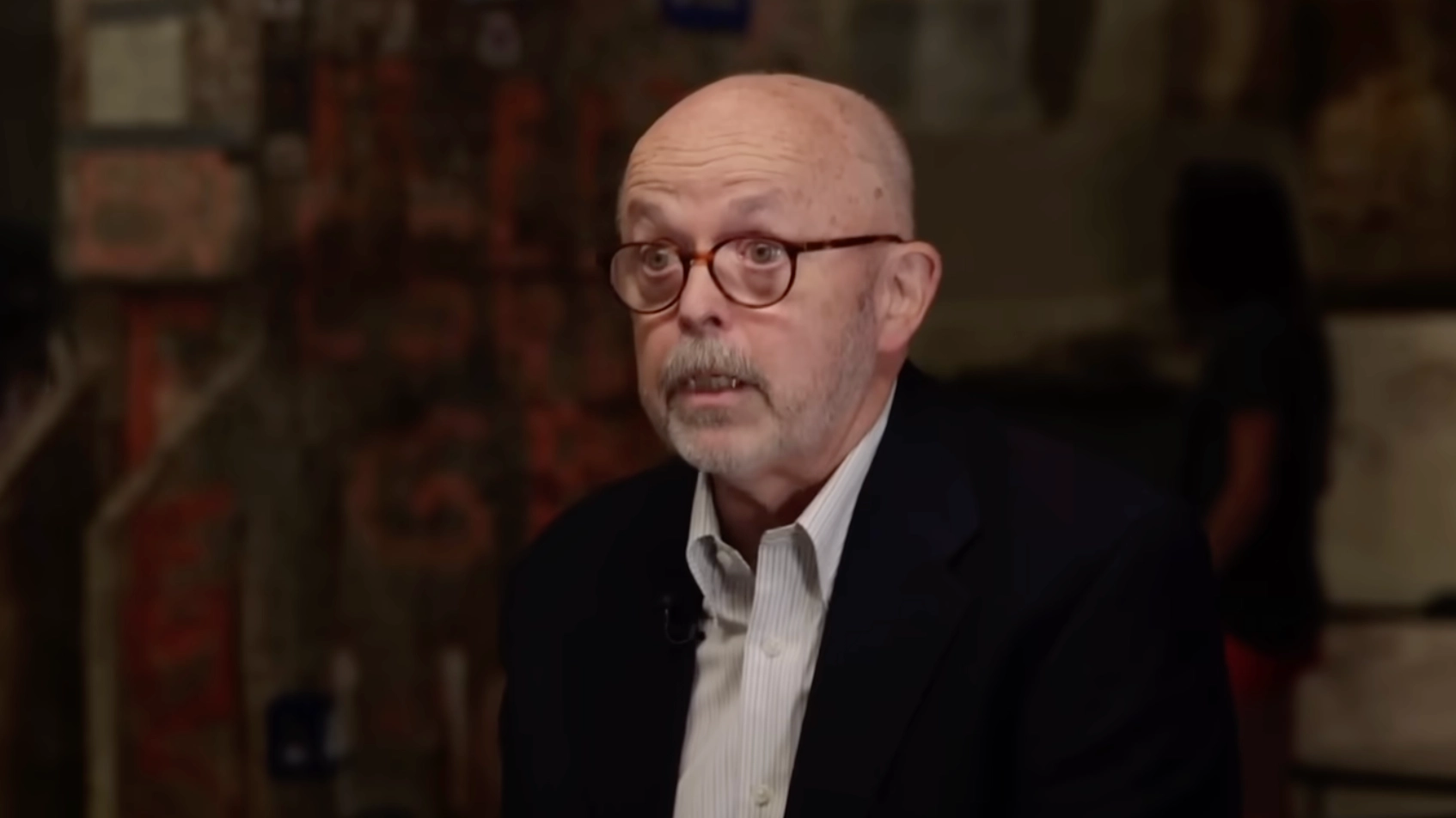
The Associated Press photographer behind one of 9/11's most haunting images has revealed he had no idea what he'd actually captured until he got back to his office and looked at the frames on his laptop.
Richard Drew, who has worked for the AP for 51 years, took the photograph that became known as 'Falling Man' on September 11, 2001, but he wasn't even at the World Trade Center when American Airlines Flight 11 struck the North Tower at 8:46 a.m.
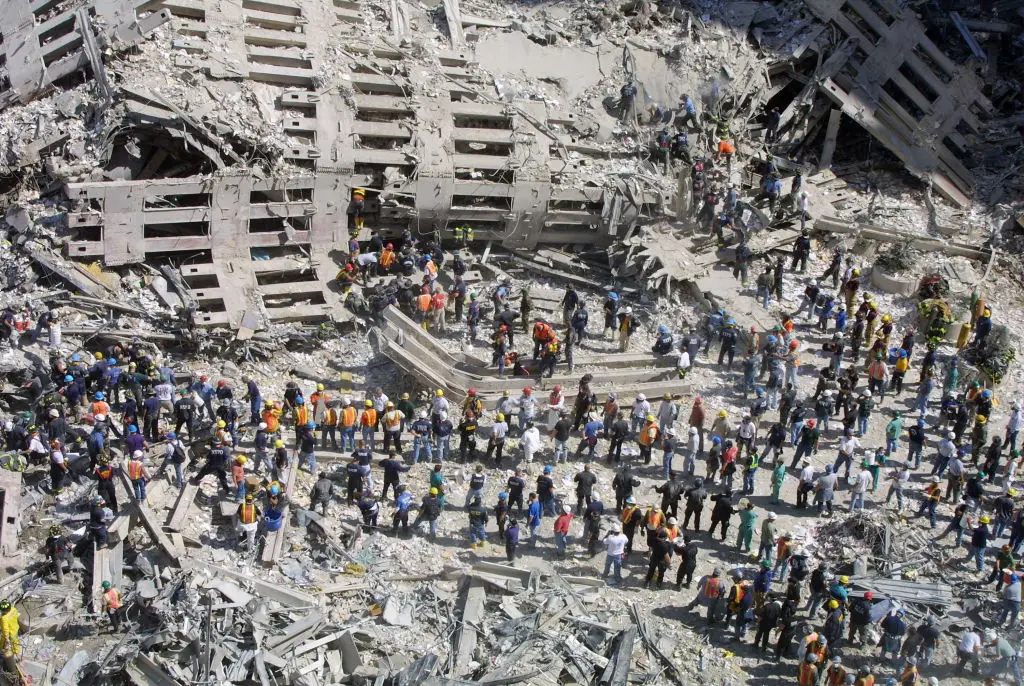
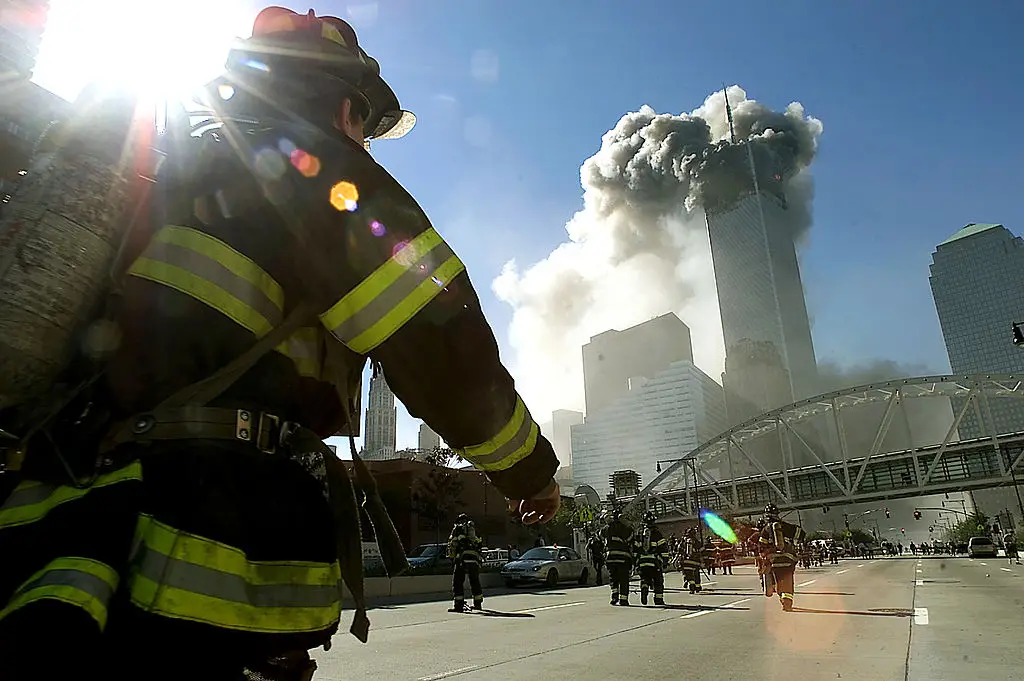
He was covering a maternity fashion show in Midtown when the newsroom called him with the news, telling him, as he recalled to CBS News' Sunday Morning, "'A plane has hit the World Trade Center,' very calmly."
Drew dove into the subway and resurfaced at the southern tip of Manhattan, where he began shooting almost immediately.
Advert
Who is the man in the 'falling man' photo?
Despite the image becoming one of the defining photographs of the attacks, the identity of the man falling from the towers has never been officially confirmed.
Journalists have since narrowed it down to two possibilities, Jonathan Eric Briley and Norberto Hernandez, whose names sit just one apart on the parapets of the 9/11 Memorial.
Drew explained that he didn't consciously compose the shot at all.
Photographing multiple people falling from the building, he simply held his camera up and let it fire off frames as they fell.
"I have, I think, eight or nine frames of this gentleman falling, and the camera just happened to cycle in that time when he was completely vertical," he said. "I didn't see that picture really until I got back to the office."
The image ran in newspapers the following day and provoked strong reactions, with many readers finding it too distressing to look at.
Singer Elton John was a notable exception, later buying the photograph for his personal collection.
He told The Guardian it was 'the most beautiful image of something so tragic,' adding: "It's probably one of the most perfect photographs ever taken."
Weeks after the attacks, while Drew was still photographing the aftermath, his daughter called him.
"She says, 'Dad, I just wanna tell you that I love you,'" he recalled. He said she still calls him every September 11, wherever he is, for the same reason: "Because I might not have survived."
Drew also helped identify a separate victim from his photographs after a man contacted the AP believing he recognised what his missing fiancée had been wearing that day. Looking through the images together, the man confirmed it was her.
If you or someone you know is struggling or in a mental health crisis, help is available through Mental Health America. Call or text 988 or chat 988lifeline.org. You can also reach the Crisis Text Line by texting MHA to 741741.
If you or someone you know needs mental health assistance right now, call National Suicide Prevention Helpline on 1-800-273-TALK (8255). The Helpline is a free, confidential crisis hotline that is available to everyone 24 hours a day, seven days a week.
Topics: Photography, History, Mental Health
 Thomas Bamford