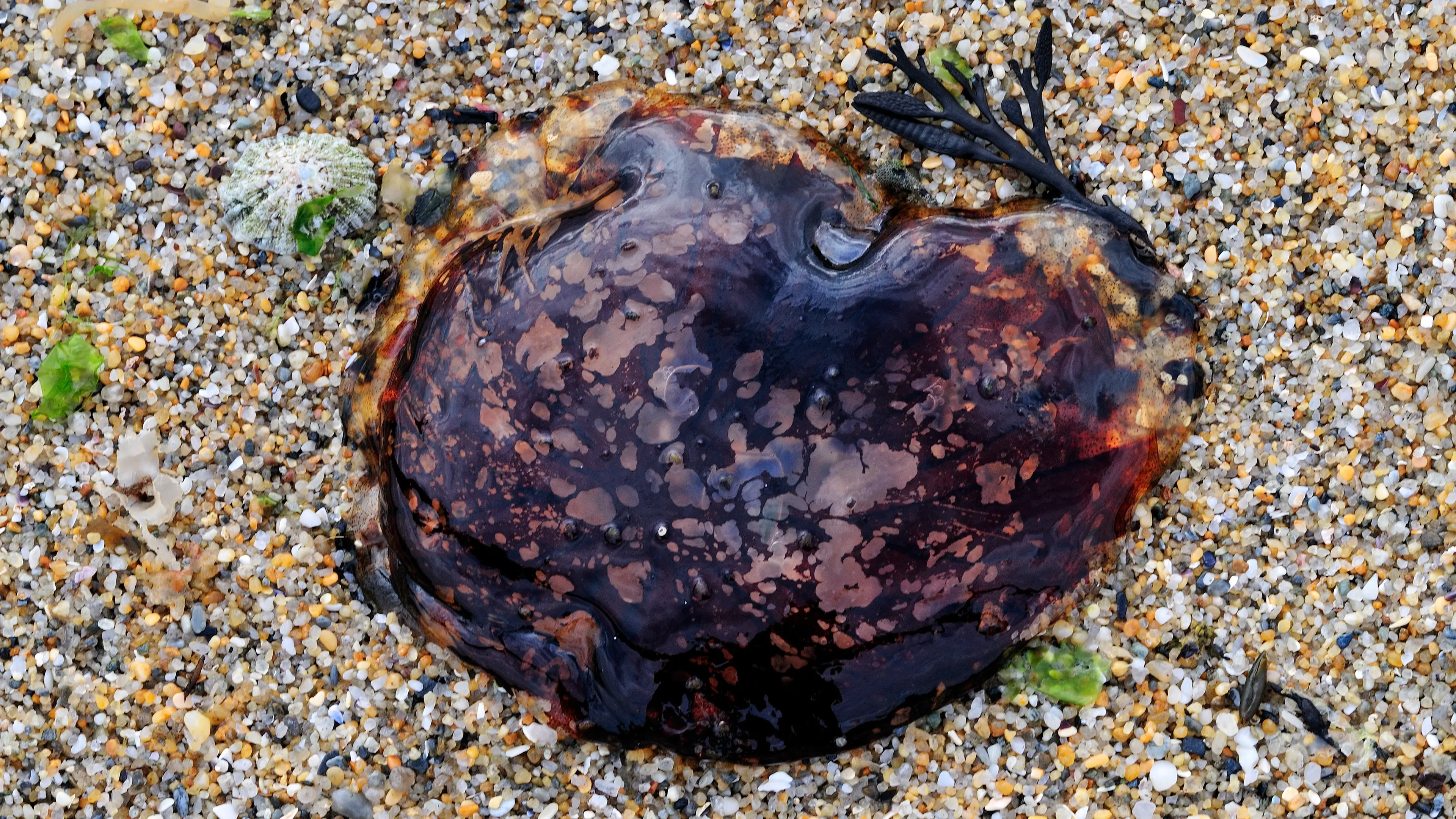
Officials warn of giant jellyfish with 120 foot tentacles as they swarm US beaches

Giant jellyfish with tentacles up to 120 feet long are the latest danger to US beachgoers and if you don’t heed the warning, you could end up making a painful mistake.
The New England coast has apparently seen thousands of jellies wash up on beaches, from Massachusetts’ North Shore to Cape Cod and Nantucket.
While Maine has also seen its fair share, according to WMTW, it has also seen a resurgence of native jellies too.
However, you wouldn’t want to get too close to find out which jelly fish is which as they wash up the sand.
Advert
All you need to do is back away and keep walking, because if it’s this one species, it’s got enough neurotoxins inside of its tentacles to have you writhing for a long time.
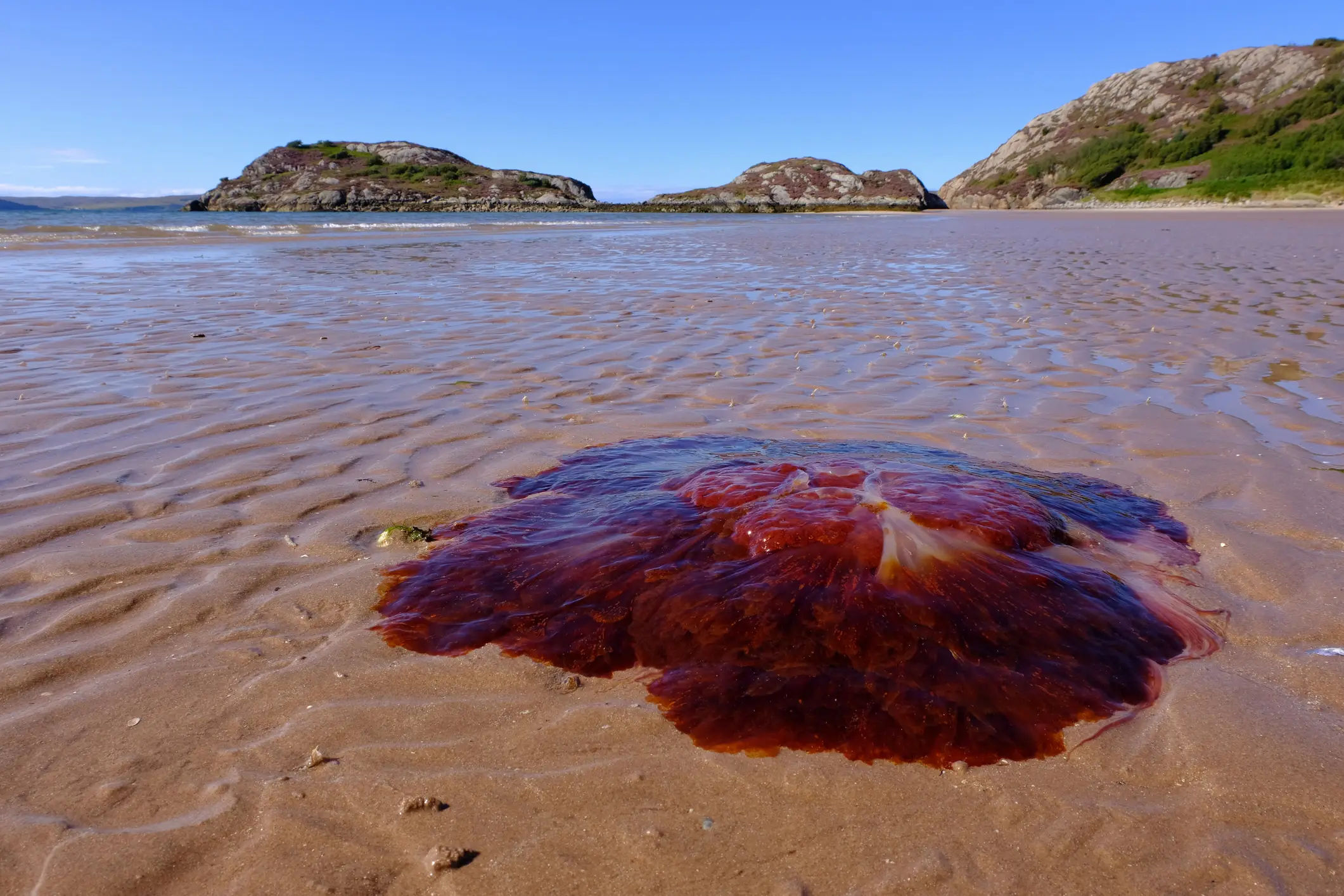
The giant lion's mane jellyfish are here, and residents have seen the gooey things all over shores after being caught up in the marsh, according to Great Marsh Kayak Tours in Eastham, Massachusetts.
The company posted to social media with the news: “Right now, Cape Cod is inundated with lion's mane jellyfish! Multiple thousands of them have gotten swept into the marsh with the tides.”
The type of jellyfish is able to cause all types of pain, and they don’t have to be in the water to do so.
In fact, they don’t even have to be alive to hurt you, either.
In light of the invasion, Beverly in Massachusetts said last week to its citizens to be wary of getting too close, revealing: “Keep children and pets away from stranded jellyfish. … Do not touch jellyfish or detached tentacles, even if they appear dead.”
Per the Smithsonian, the lion’s mane jellyfish is the largest species of jellyfish in the world and can grow up to 2150 feet from top to bottom.
Experts say the jellyfish’s tentacles contain large amounts of neurotoxins that can cause things like skin rashes to respiratory problems, welts, and, in rare cases, even death.
According to the Mayo Clinic, if you come into contact with a lion’s mane jellyfish, they recommend removing any visible tentacles using fine tweezers.
Then, soak the area in hot water between 110 and 113 degrees Fahrenheit, as well as keep the area immersed under hot water until the pain subsides.
Afterward, apply hydrocortisone cream or ointment.
Experts say the surge in lion's mane jellyfish is being driven by warming ocean temperatures, wind and tidal currents, abundant food sources, and sheltered coastal waters that allow the creatures to thrive before washing ashore.
While this is a strange occurrence, marine experts say this influx of the species could indicate something is changing.
A spokesman for the Boston Center for Youth & Families (BCYF) told the Swampscott Tides and WHDH: “Jellyfish are a natural part of the marine environment, and their presence can vary with tides, currents, and weather conditions.
“While beach operations remain open at this time, we encourage all visitors to remain alert and follow instructions from lifeguards and staff.
'If you experience a jellyfish sting or require assistance, please notify a lifeguard or staff member immediately.”
 Britt Jones