• News
  • Film and TV
  • Music
  • Tech
  • Features
  • Celebrity
  • Politics
  • Weird
  • Community
  • Advertise
  • Terms
  • Privacy & Cookies
  • LADbible Group
  • LADbible
  • SPORTbible
  • GAMINGbible
  • Tyla
  • UNILAD Tech
  • FOODbible
  • License Our Content
  • About Us & Contact
  • Jobs
  • Latest
  • Topics A-Z
  • Authors
Facebook
Instagram
X
Threads
TikTok
YouTube
Submit Your Content
Expert weighs in after creature that grows 70-foot tentacles washes up on US beach

Home> News> Animals

Published 18:27 24 Sep 2025 GMT+1

Expert weighs in after creature that grows 70-foot tentacles washes up on US beach

Jace Tunnell explained that the 'pink meanies' are not the kind of jellyfish you'd want to eat... despite their candyfloss-like appearance

Joe Yates

Joe Yates

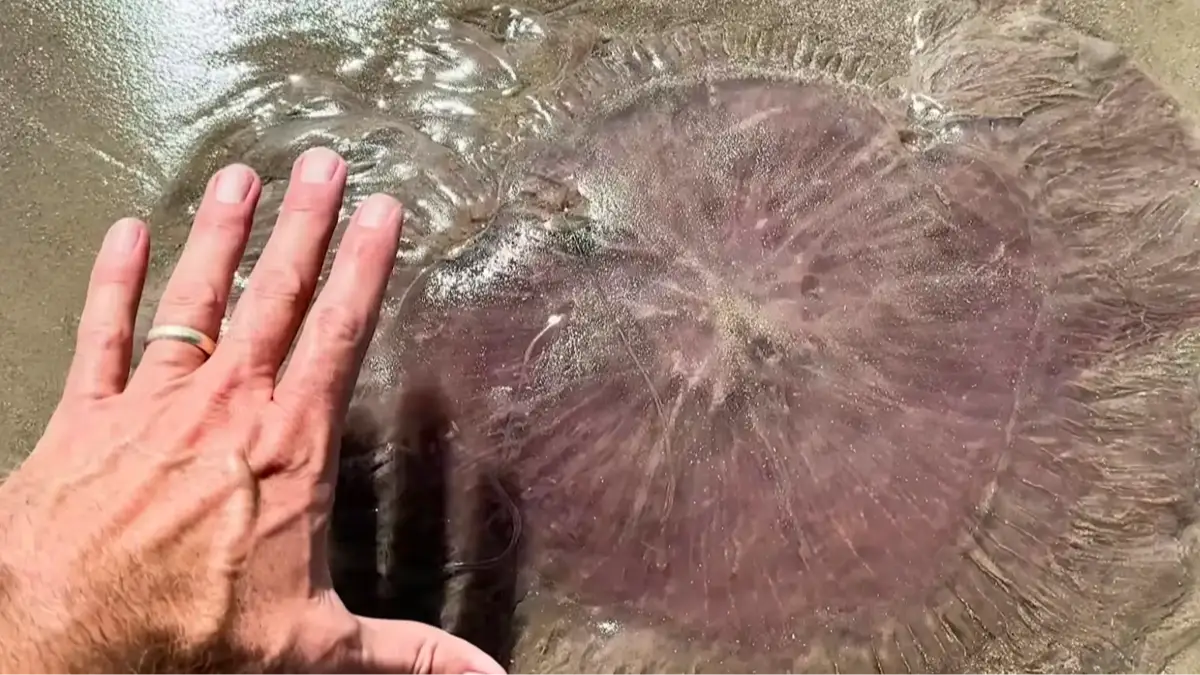
A creature with tentacles that can grow up to 70 feet has been washing up on US coasts, leaving beachgoers stunned.

The bizarre jellyfish, nicknamed the 'pink meanie', is known for its candyfloss colouring, enormous size, and rather gruesome appetite.

More than ten of the species have been spotted along a 10-mile stretch of beach in Texas, according to Jace Tunnell, director of community engagement at the Harte Research Institute, in Corpus Christi.

“I even spotted one in Port Aransas marina wrapped around a moon jellyfish,” Tunnell revealed to his fans on Facebook.

Advert

The pink meanie, or Drymonema larsoni if you want to get scientific, can weigh over 50 pounds, with its trailing tentacles stretching out longer than a bus.

Despite looking almost too pretty to be real, these jellies are relentless hunters, feeding almost exclusively on moon jellyfish.
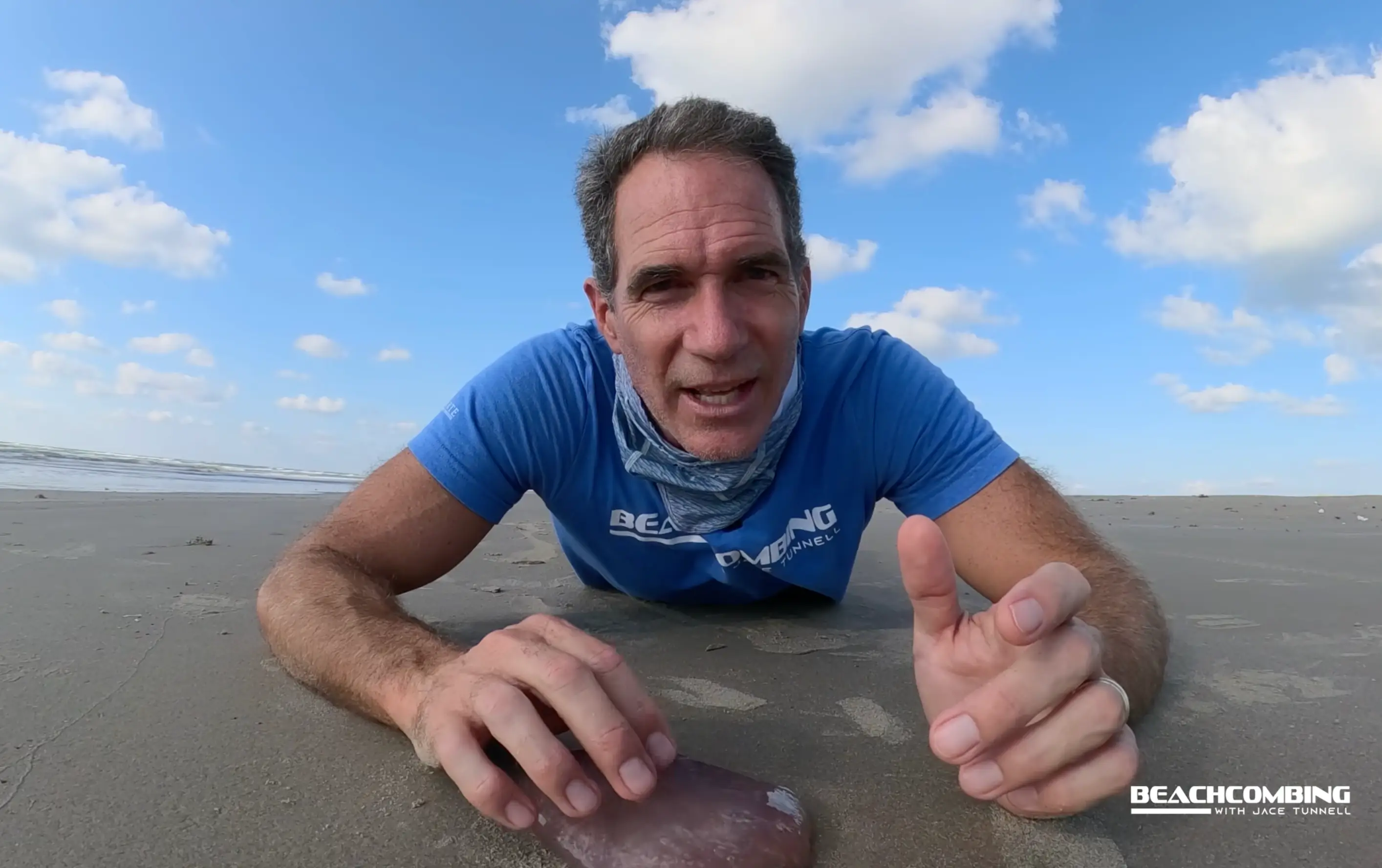
Jace Tunnell explained that the 'pink meanies' are not the kind of jellyfish you'd want to eat... despite their candyfloss-like appearance (Harte Research Institute)

A Facebook account, titled 'Padre Island Madre', posted her encounter with the beast online as they dubbed it 'the biggest jellyfish I had ever seen'.

“This is about the time when you start seeing them show up,” Tunnell said, explaining that the appearance of pink meanies is linked to an influx of moon jellies floating through the Gulf of Mexico.

Moon jellies, or Aurelia aurita, are among the most common species in the area. They drift with the current, feeding on plankton - making them easy pickings for a predator with giant sticky tentacles.

Once a pink meanie snags its prey, it uses dangling 'oral arms' to break down the meal with digestive juices... brutal.

Despite their name, though, pink meanies aren’t as terrifying as they sound. Tunnell rated their sting as a 'two out of 10', though he warned anyone sensitive to jellyfish stings to be careful - but if you do get caught up in their tentacles, vinegar helps.
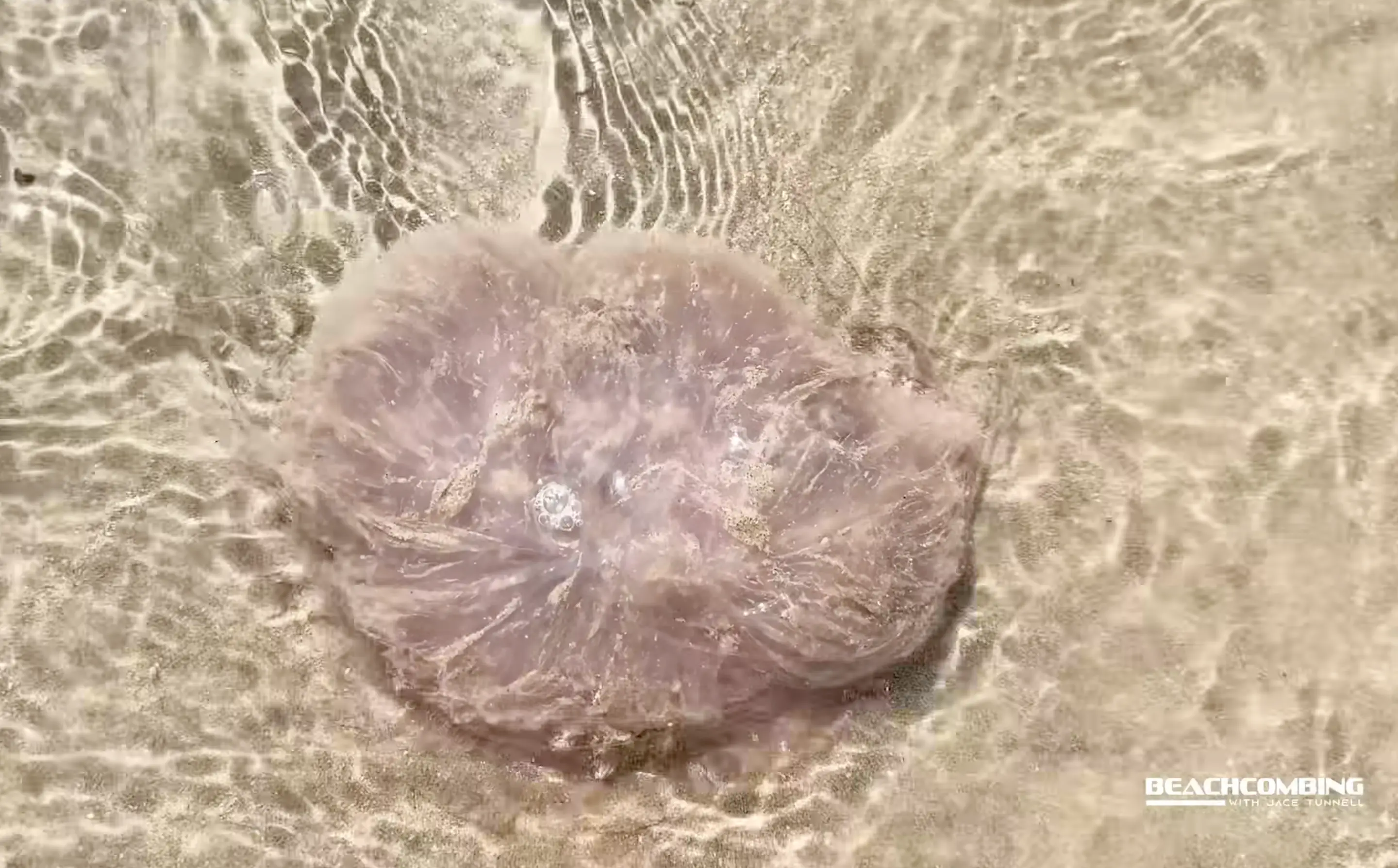
Pink meanie tentacles can stretch longer than a bus (Harte Research Institute)

As for whether you could eat one, Tunnell revealed: “If you’re like, ‘do people eat these things? It looks like cotton candy'. No, you can’t eat these things. This is one of the jellyfish that people aren’t eating.”

The creatures are so rare that when they first appeared in the Gulf of Mexico back in 2000, scientists thought they were a Mediterranean species. But genetic testing later revealed they were entirely new - so new, in fact, that researchers had to create a brand-new jellyfish family, the first since 1921.

While they’ve been found in the Gulf, the Mediterranean, and even near South Africa, sightings remain uncommon.

Once they wash ashore, they don’t last long, as their bodies are mostly made of water, so they dry out quickly, and begin to fade, and shrink.

For Tunnell, the discovery is a reminder of just how much of the ocean is still a mystery.

“That’s what I love about science,” he added. “There’s still new species to be found out there.”

Featured Image Credit: Harte Research Institute

Topics: Texas, Science, Animals

Joe Yates
Joe Yates

Joe is a journalist for UNILAD, who particularly enjoys writing about crime. He has worked in journalism for five years, and has covered everything from murder trials to celeb news.

X

@JMYjourno

Advert

Advert

Advert

Choose your content:

4 hours ago
5 hours ago
  • TikTok/@sabrinavonb/NewsNation
    4 hours ago

    Disneyland’s Evil Queen reveals exact reason she was fired from park despite massive fame

    The iconic Evil Queen from Snow White was booted out of Disneyland despite a massive online following for her wickedness

    News
  • Getty Images/NBC
    4 hours ago

    Expert reveals why 'one of the most important clues' in Nancy Guthrie kidnapping is camera found on the roof

    It comes as the first images of a potential suspect were released

    News
  • ITV/This Morning
    5 hours ago

    Woman whose partner was an undercover cop with a wife and children reveals how she found out

    Dozens of women discovered that their partners were in fact undercover cops in a scandal that has rocked British police

    News
  • GoFundMe
    5 hours ago

    Man given 10% chance of survival after contracting flesh-eating disease from scratch

    Brian Roush developed a disease that only 1 in 250,000 people get in the US

    News
  • Experts make unexpected discovery after rare ‘Twilight Zone’ fish washes up on shore
  • Millions of flies to be dropped on US state after disturbing threat of flesh-eating maggots
  • Shocking update on winter storm that could impact 200 million Americans and dump over a foot of snow on NYC
  • Expert issues warning to pet owners after 'Frankenstein' rabbits with 'tentacles' invade the US