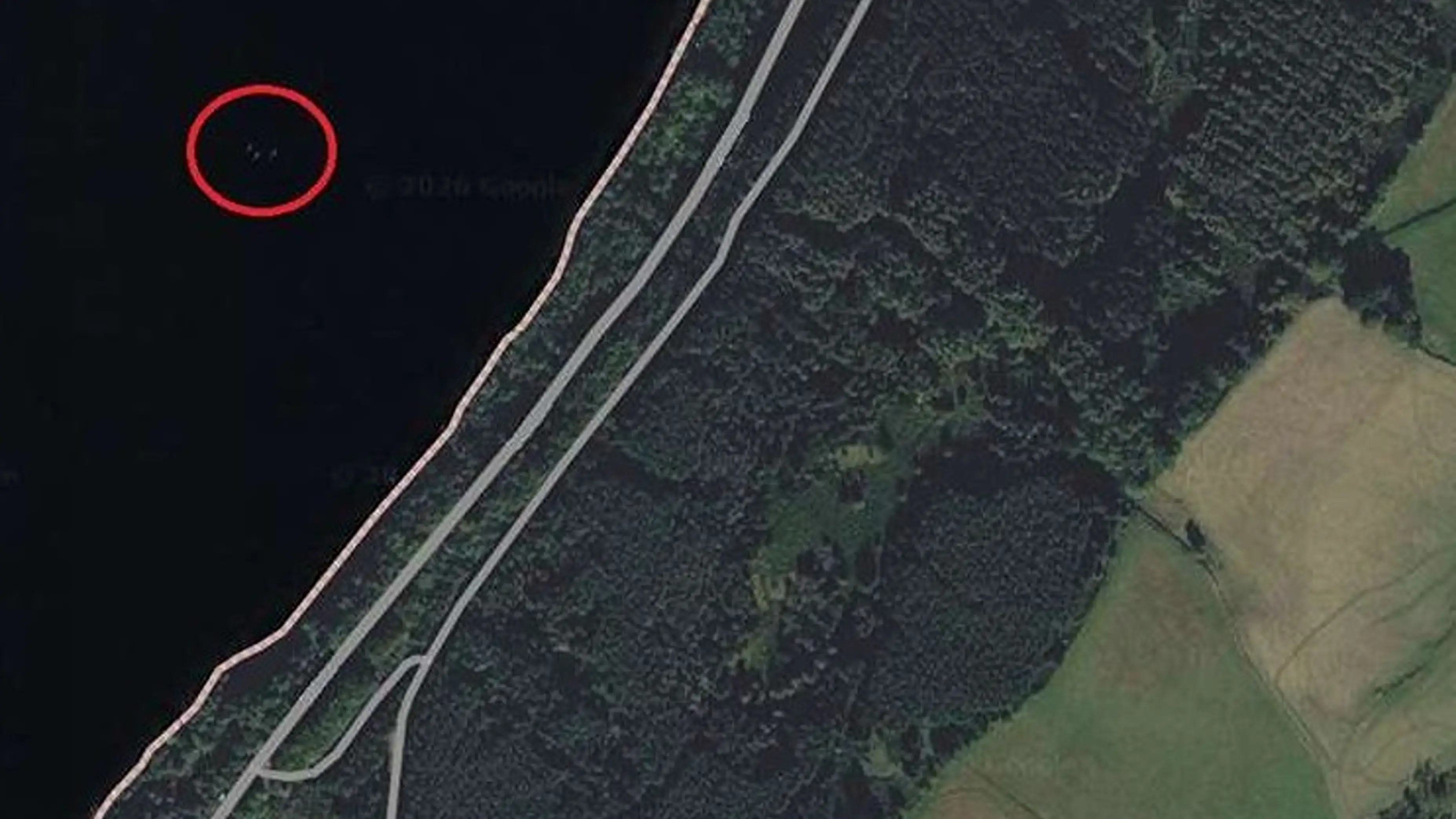
Mysterious new Loch Ness Monster image shows 'family of Nessies' on Google Earth

Woman spots 'family of Nessies' on Google Earth in mysterious new Loch Ness image
Unexplained objects have been spotted in an eerie image of Loch Ness circulating on social media.
Legends of the monstrous underwater giant fondly known as “Nessie” have haunted this part of Scotland for generations – but now fans of the theory believe they have finally proved the existence of the monster – via Google Earth.
The images caused an online storm after they were reported by Julie Fraser to The Official Loch Ness Monster Sightings Register, according to the New York Post.
Advert
“The thought of a little family of Nessies is so exciting,” Fraser said.
If the sighting is ‘confirmed’ it would not be the first time the beast has been sighted this year, reports the Inverness Courier.
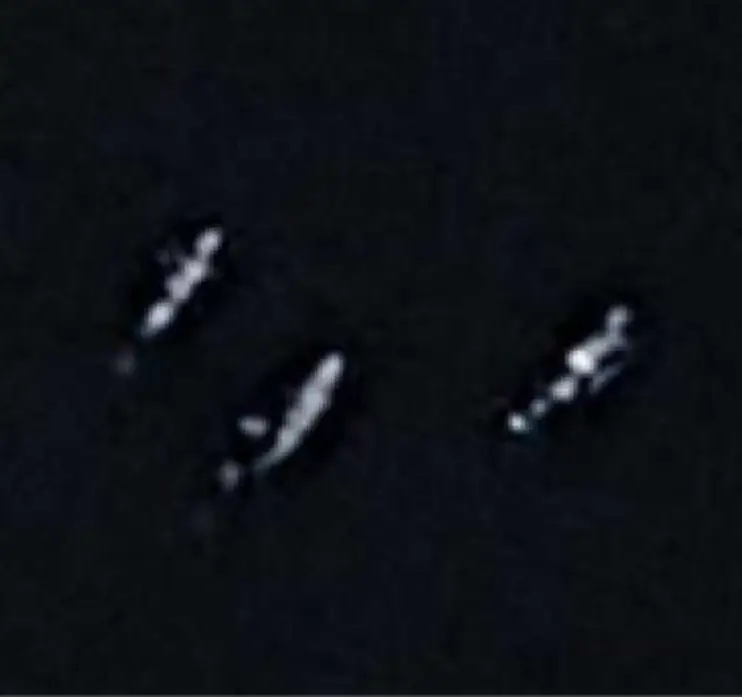
Fraser said, “I’m planning a visit to Inverness later in the year and was just playing [with Google Earth] when I spotted the three objects.”
She added, “Taking a closer look and enlarging the images — they don’t look like boats, and look like whales or something similar with an arc to their back.”
Fraser believes the sighting could not be of boats on the loch, because they lack the distinctive v-shaped wake that is usually created by moving vessels when viewed from space.
Her sighting also includes a 2026 timestamp within the imagery, which also shows leafy trees, indicating it was taken in spring or summer seasons this year.
Fraser insisted, “I’m not a crank.” She added, “I’m not as familiar as probably local people but it definitely looks like something significant to me,” she added.
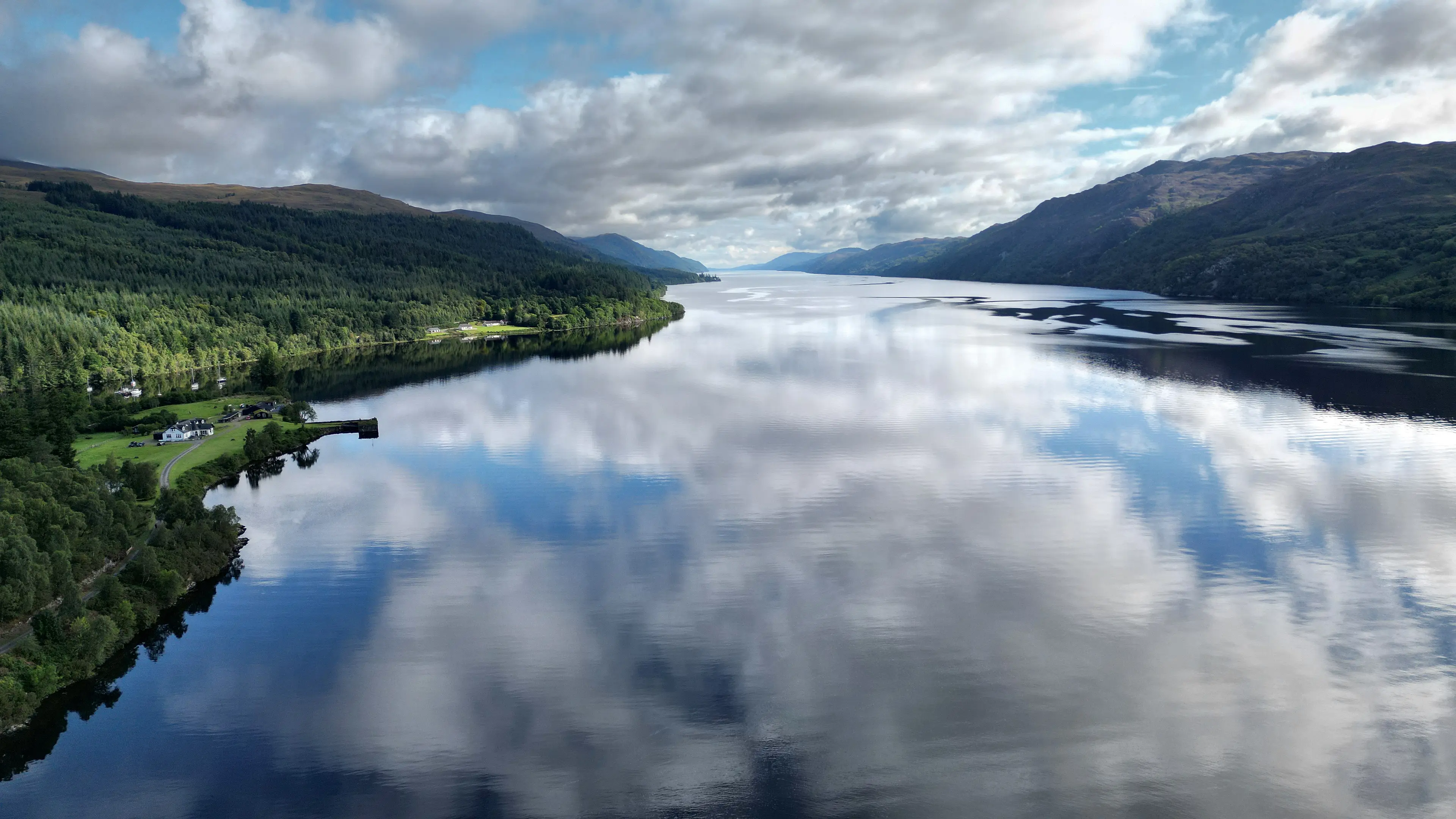
This year has been a bumper one for sightings, according to the register. So far there have been three online sightings if Fraser’s is included, 14 in-person encounters and two Nessies were captured by webcam.
The legend of the Loch Ness monster goes back as far as the 6th century, when the Irish monk St Columba ‘commanded a water beast to retreat’ after it attacked a swimmer in the River Ness, states his biography Life of St Columba.
For centuries after this time, local folklore held that sinister ‘kelpies’ or water spirits inhabited the deeper lochs of Scotland. Some of these tales are thought to have preserved the Nessie legend.
However, it was in the 20th century that Nessie mania really took hold.
By 1933 a new road was constructed close to the shore of Loch Ness, which hugely increased the accessibility and visibility of Scotland’s largest loch by volume.
A hotelier called Aldie Mackay caused a sensation when she reported a giant whale-like beast splashing in the loch.
Soon after, her accounts seemed to have been confirmed by a couple who insisted they had seen a pre-historic type creature slipping across the new road, before it disappeared into the water.
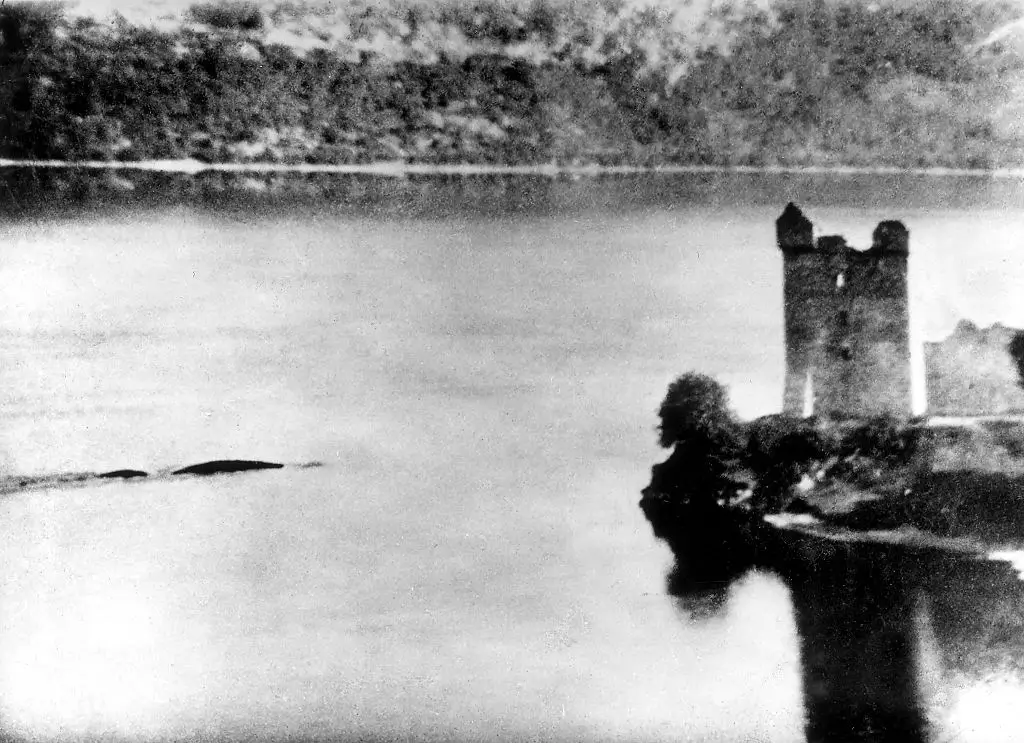
Then the public’s imagination was gripped for good. The Daily Mail published the iconic black and white image of an elegant neck rising from the rippling water. For years this picture was held as definitive ‘proof’ of the animal’s existence by Nessie fans.
Scientific minds have turned to the explanation of what the beast could be. One theory suggests Nessie could be a prehistoric marine reptile called a Plesiosaur that somehow survived the freezing of the loch during previous ice ages.
Others point to DNA evidence of eels living in the loch, which could point to Nessie in fact being a giant eel. However, detractors have pointed out that while Giant Moray eels can grow up to 4m in length, European eels can only grow to 1.5m.
The third theory is much more boring. Many sightings are explained away as natural phenomena, like floating logs and swimming deer or optical illusions from light bouncing off water ripples and currents.
While the Nessie of old was a fierce, fear-inducing monster – today she is depicted as a gentle and friendly mythical protector of Loch Ness.
Topics: Scotland
 Michael D. Carroll