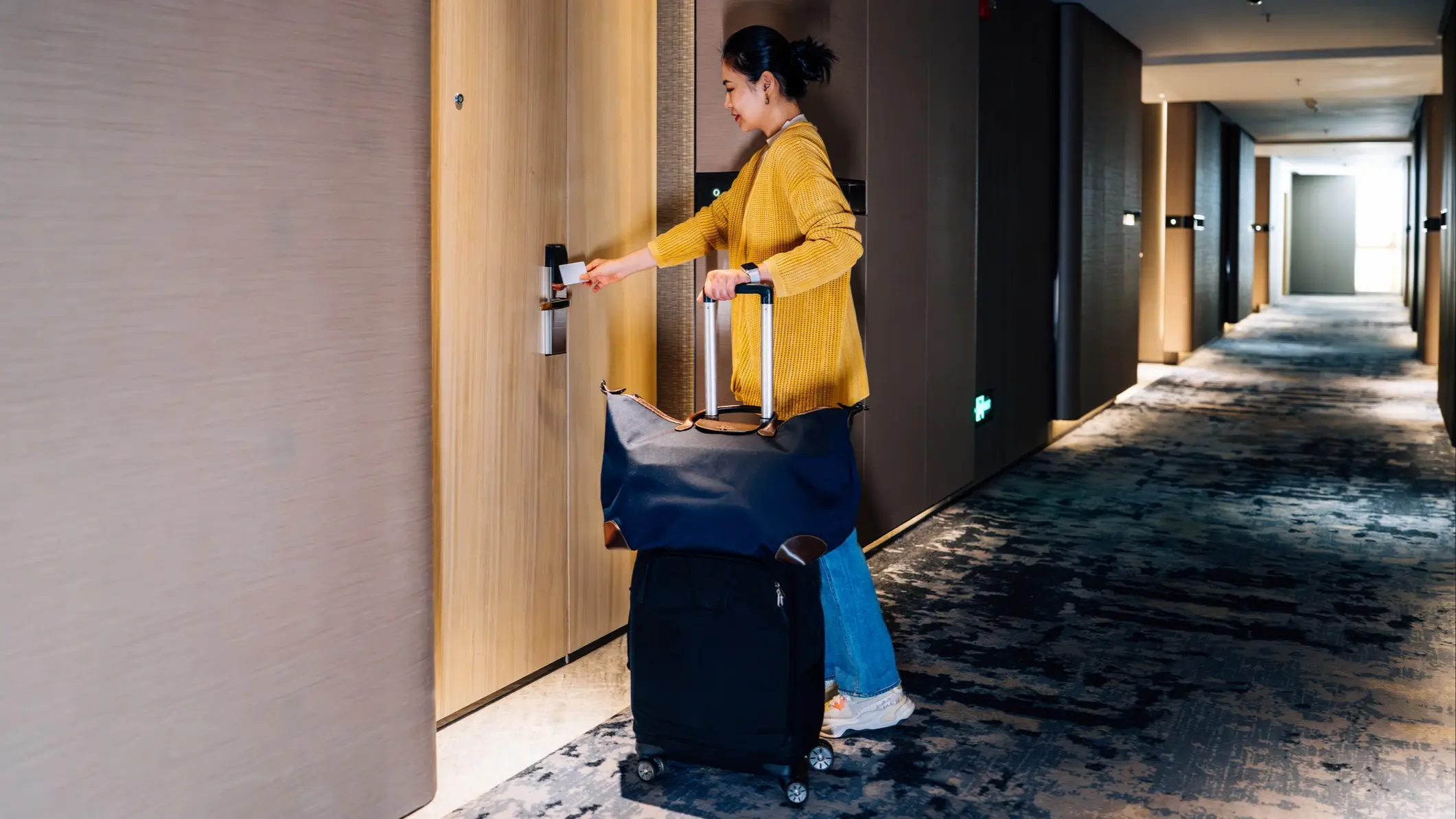
Flight attendant always performs 'hotel room autopsy' before staying for important reason

A flight attendant who has slept in hundreds of hotel rooms all around the world has shared a 90-second habit that could save your life next time you travel.
Like many other crew who travel for a living, this flight attendant performs what is called a 'hotel room autopsy' to ensure their room is safe before settling in.
The habit consists of six simple steps, which all aviation professionals are now being urged to follow to keep them safe while staying in unfamiliar accommodation.
It was recently shared by CabinCrew24, an online resource for flight crew, with the author insisting, "this is not a nervous habit."
Advert
The post explains: "It comes from years of sleeping in strange rooms, in different countries, under different fire rules and different levels of hotel security."
How to perform a hotel room autopsy
The first step upon arriving at a new hotel room is to simply scan the room. The flight attendant keeps the door open as they do this, and ensures no one is in the room and that housekeeping is complete.
Aura Martinez, a New York-based flight attendant for nearly two decades, told Fox News: "I just want to familiarize myself with the space and make sure everything looks as it should. It doesn't need to become a 20-minute inspection."
Next up is an inspection. This means checking common hiding spots, such as the bathroom, closets and even behind the curtains, to once again confirm you are alone in your room.
Once the inspections are done, the next step is to locate the nearest emergency exit, much like when flight attendants ask flyers to look for the nearest doors.
There will usually be a safety map on the back of the door, which hotel guests should familiarize themselves with long before any kind of emergency actually happens.
Martinez added: "Know whether you turn left or right when you leave your room, approximately how far the stairwell is and, if possible, how many doors you would pass before reaching it."
Once the emergency exit is established, the flight attendant will check the locks to make sure the dead bolt, security latch and window locks are all in full working order.
Then, they will ensure the hotel room phone is working so they can reach the front desk or emergency services if their mobile phone isn't available.
The final step is to put a door alarm in place to alert you if someone tries to enter your room, with Martinez adding that a small flashlight is an 'incredibly underrated' item to pack.
Topics: Travel
 Emma Rosemurgey