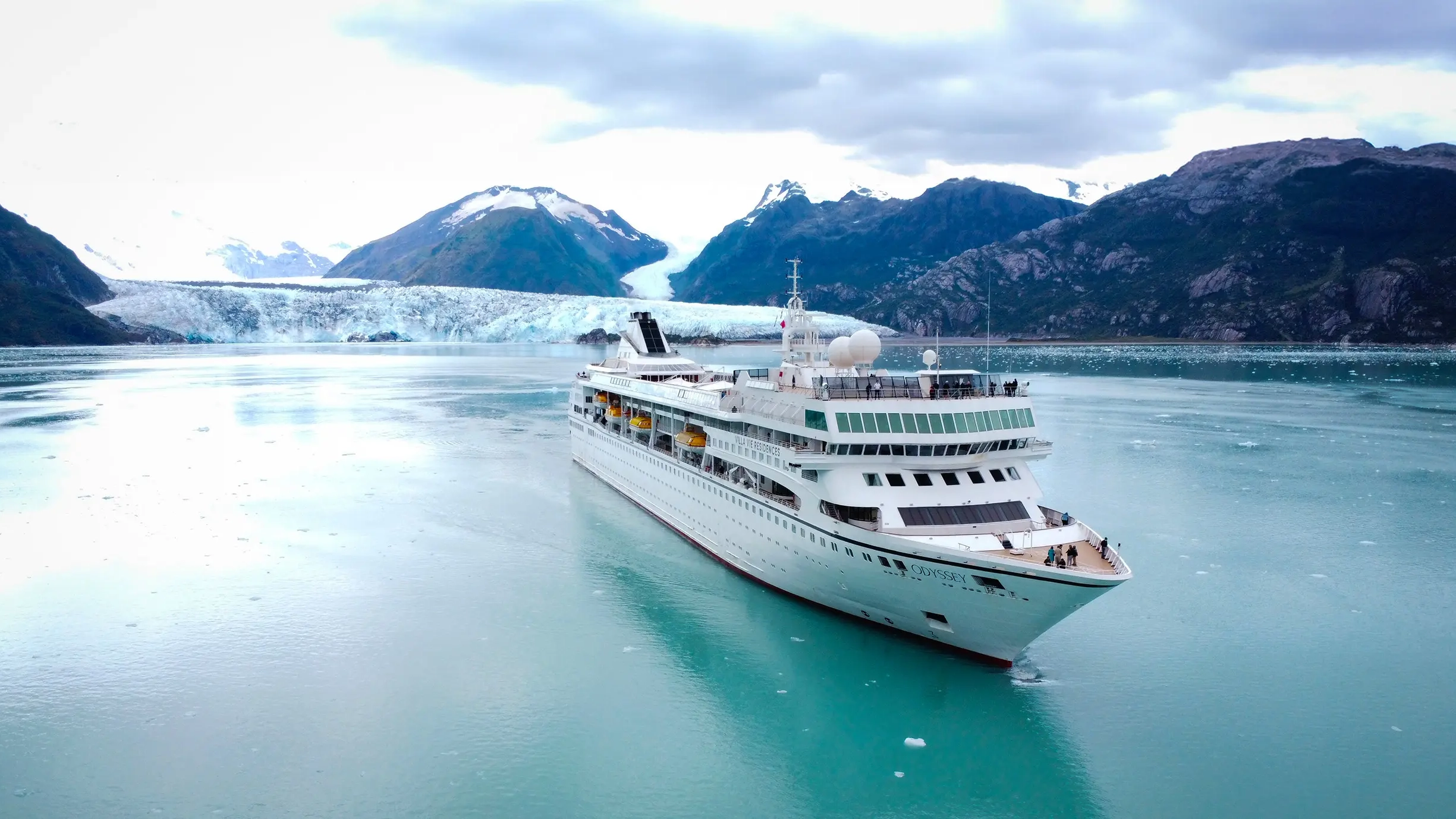
Passengers stranded after selling everything to live on 'endless' cruise as company suspends operations

Passengers who sold their homes and all their worldly possessions to live aboard an 'endless' round-the-world residential cruise have been ordered to disembark after the vessel abruptly suspended operations in Cambodia.
Villa Vie Residences, which operated the 509-cabin Odyssey ship, confirmed on Tuesday that soaring fuel prices and unsustainable operating losses have brought the globe-trotting journey to a sudden standstill.
The residential concept allowed travellers to purchase permanent cabins starting at $119,999 (£90,000) up to $349,999 (£263,000), alongside long-term rental and rent-to-buy contracts.
Designed as a perpetual, never-ending voyage, the luxury vessel was slated to visit more than 400 destinations across the globe, taking roughly three-and-a-half years to circumnavigate the earth before immediately restarting the journey.
Advert
Onboard amenities included a spa, restaurant, swimming pool deck, cocktail bar, and pickleball courts, with some residents noting that living on board cost as little as $47.16 (£35) a day—cheaper than renting on dry land.

The lifestyle shift led several passengers to make permanent, irreversible life decisions.
Couple Randy Cassingham, 66, and his wife Kit, 71, sold their custom-built Colorado home and everything they owned to take up full-time residency on the ship, famously declaring in January that they had no intention of ever leaving.
"I’m not coming off this ship alive. We had designed and built a house that was our dream home. I expected to die there," Randy said at the time. "But fate clearly had a different plan for us."
However, that dream for global adventure was cut short when Villa Vie Residences announced it had halted operations in the Cambodia leg of the trip to evaluate urgent restructuring alternatives after fuel expenses exploded.
According to company officials, average fuel costs spiked from a historical benchmark of $1,800 (£1,350) per cabin to an eye-watering $6,000 (£4,500) to $8,000 (£6,000) across Asian ports.
"The company cannot simply pass increases of that scale on to residents, and the resulting shortfall has placed its current operating model under unsustainable financial pressure," the company stated in a formal release.
Officials are now coordinating with stranded passengers to organize immediate disembarkation and find temporary shelter while evaluating their financial survival over the next 60 days.
"Since the conflict began in late February, we have taken significant steps to reduce fuel consumption, including slowing the itinerary and spending more time in port," a company spokesperson said.
"Those measures have not been enough to offset the extraordinary increase in fuel costs, and we have been unable to continue carrying the resulting operating losses."
The spokesperson acknowledged that passing the burden onto residents is "not a realistic solution," adding that while recapitalisation talks remain ongoing, "no outcome is assured."
Topics: Cruise ship, Travel
 Phoebe Tonks