
unilad homepage
unilad homepage
  • News
    • UK News
    • US News
    • World News
    • Crime
    • Health
    • Money
    • Sport
    • Travel
  • Music
  • Technology
  • Film and TV
    • News
    • DC Comics
    • Disney
    • Marvel
    • Netflix
  • Celebrity
  • Politics
  • Advertise
  • Terms
  • Privacy & Cookies
  • LADbible Group
  • LADbible
  • SPORTbible
  • GAMINGbible
  • Tyla
  • UNILAD Tech
  • FOODbible
  • License Our Content
  • About Us & Contact
  • Jobs
  • Latest
  • Archive
  • Topics A-Z
  • Authors
Facebook
Instagram
X
Threads
TikTok
YouTube
Submit Your Content
Expert warns against 'suspicious' activity in relationships that breaks up one in ten couples
Home>News>Sex & Relationships
Published 14:18 8 Feb 2025 GMT

Expert warns against 'suspicious' activity in relationships that breaks up one in ten couples

A survey asked 2,000 people in the UK what they thought were the most suspicious phone habits

Niamh Shackleton

Niamh Shackleton

google discoverFollow us on Google Discover
Featured Image Credit: Getty Stock Image

Topics: Technology, Social Media, Sex and Relationships, Phones

Niamh Shackleton
Niamh Shackleton

Niamh Shackleton is an experienced journalist for UNILAD, specialising in topics including mental health and showbiz, as well as anything Henry Cavill and cat related. She has previously worked for OK! Magazine, Caters and Kennedy.

X

@niamhshackleton

Advert

Advert

Advert

Research has found that some behaviors linked to the way a person uses their mobile phone are breaking up relationships.

In the digital age, the younger generation in particular have become glued to their phones.

Whether it's scrolling through TikTok, online shopping, or checking out potential new suitors on Tinder, there's always something to do on our devices.

Advert

In fact, our lives have become so technology-centered that studies have found it increasingly common for people to meet a partner on a dating app.

However, your phone might help you get a partner, but it could also be the reason you break up.

In a survey conducted by mobile phone experts Compare and Recycle, 2,000 UK-based participants were asked what habits they see as 'suspicious' when it comes to their partners and their phones.

39 percent of people said that someone having their phone with them at all times was one type of suspicious behavior, while 29 percent of participants said that a person having password-protected apps would be a red flag.
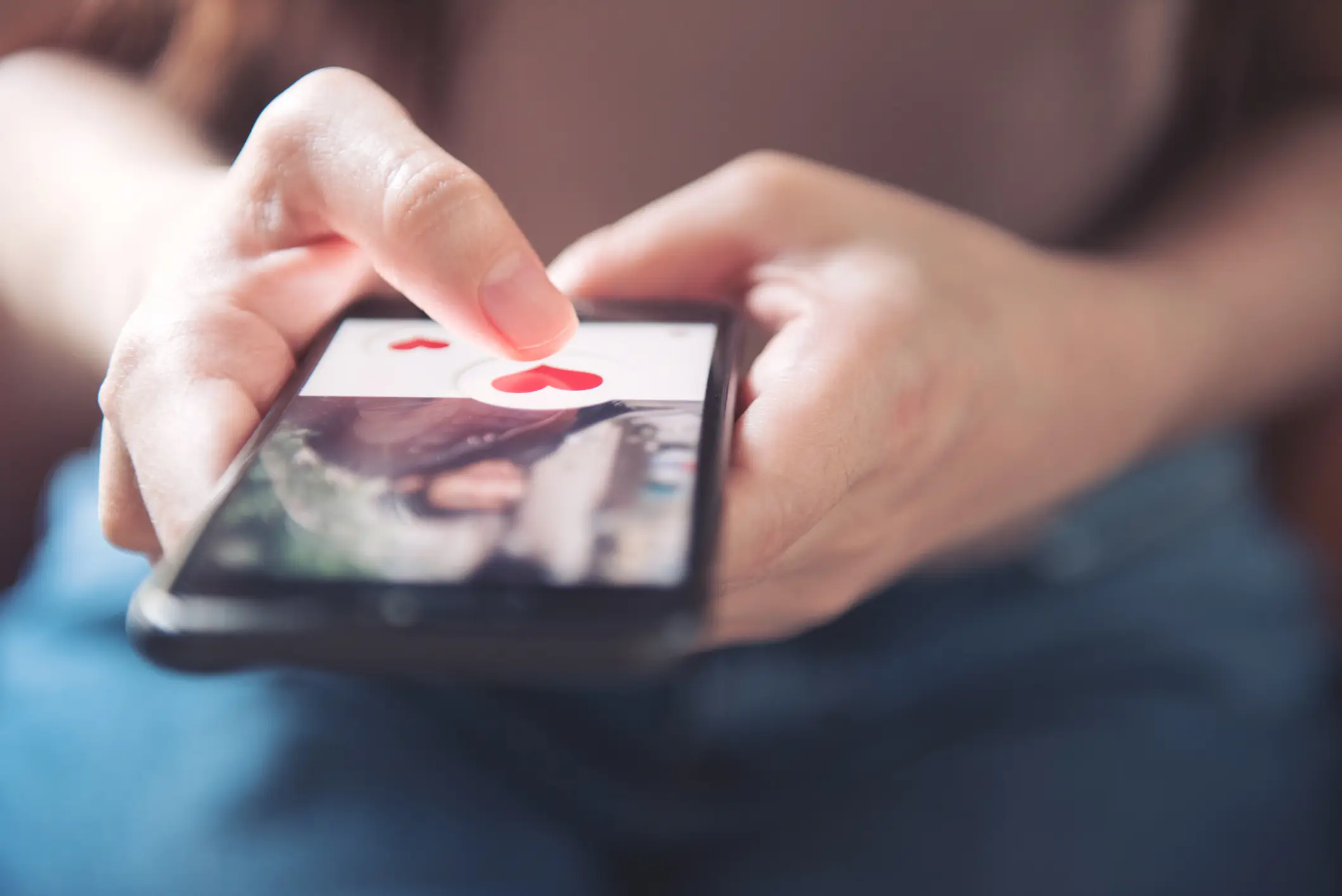
Studies have shown that you're most likely to find your next partner on a dating app (Getty Stock Image)

Elsewhere, half of the 2,000 people agreed that it's suspicious if someone gets defensive if you ask to borrow their phone.

But the top suspicious behavior (according to 59 percent of respondents) was someone having two phones that you weren't aware of.

The findings revealed that one in ten relationships have fallen apart due to confrontations about suspicious phone activity.

The survey also found that 18 percent of adults have caught their partner engaging in a digital affair, with 59 percent of those relationships breaking up as a result.

With these worrying statistics in mind, accredited counsellor with the National Counselling and Psychotherapy Society Rebecca Partridge, has given some tips on how to navigate trusting your partner and their digital habits.
An expert said that secretly checking your partner's device is a bad idea (Getty Stock Image)

Partridge shared: "In maintaining trust around social media and messaging apps, it is beneficial for couples to define what digital infidelity means, thereby setting boundaries of what they expect within the relationship. Communication and ownership of behaviour is also useful."

She also urged people to not check their partners' phones if they're skeptical about their habits.

"It may feel natural to want to check a partner’s phone if there were suspicions, however overall, I believe it causes more harm than good. It is a violation of your partner’s privacy and breaks the trust between you," Partridge said.

Instead, she suggested that you 'communicate with your partner about these concerns and seek to have an open conversation with them about this subject and what you're experiencing'.

Choose your content:

12 hours ago
13 hours ago
14 hours ago
  • Getty Stock Photo
    12 hours ago

    'Hidden gem’ with emerald lakes perfect for wild swimming has become number 1 country for tourists

    Searches for visiting country increased by 5,800 percent in July 2026 compared to July last year

    News
  • Getty Stock Image
    13 hours ago

    New safety warning issued for GLP-1 drugs over rare eye disorder

    36 cases have been reported in Australia among those taking GLP-1 medications

    News
  • PA Real Life
    13 hours ago

    Woman who dropped 7 dress sizes in just 8 months says doctors dismissed her cancer as anaemia

    65-year-old Yinka Sowemimo-Coker first started feeling unwell in April 2018

    News
  • Nikolas Kokovlis/NurPhoto via Getty Images
    14 hours ago

    New LinkedIn CEO shares 4 simple habits to boost career - including ditching phones

    Prepare to rethink how you're using LinkedIn

    News
  • Expert reveals how to fix 'phubbing' in relationships as it becomes increasingly common leading to separations
  • Everyday habit 98% of people experience can damage your relationships and cause a break up
  • Relationship expert reveals one of the main reasons couples break up in January
  • Couples in happy relationships reveal just how often they have sex