
'Heteroflexible' meaning explained as experts say it was the fastest-growing sexuality last year

Experts have explained what it means to be 'heteroflexible' as the orientation emerged as the fastest-growing sexuality of 2025.
As people across the globe continue to explore their sexualities and become more open about their experiences, it's become more clear than ever that sexuality can go far beyond gay, straight or bisexual.
Internet users have previously spoken out about orientations such as 'demisexual' and 'abrosexual', and in 2025 it emerged that more and more people are identifying as 'heteroflexible'.
The discovery comes from the dating app Feeld as part of its Feeld Raw 2025 report - an 'annual deep dive into the desires, identities, and connections that shaped modern intimacy this past year'.
Advert
According to the data, people identifying as 'heteroflexible' grew by 193 percent in the last 12 months, making it the fastest growing sexuality on the app.

What does it mean to be heteroflexible?
As the first part of the name suggests, being 'heteroflexible' initially applies to people who are straight - however, the 'flexible' part comes in if they are open to same-sex experiences.
A broad range of people can meet the heteroflexible identity, ranging from those who simply wouldn't rule out a same-sex encounter to people who lean more towards identifying as bisexual.
For example, if a woman was in a relationship with a man, but was open to an encounter such as a threesome with another woman, then they might consider themselves heteroflexible.
Similarly, if a woman who considers themselves straight may just be theoretically open to a same-sex encounter - without actively seeking it out - then they could also fall under the umbrella.
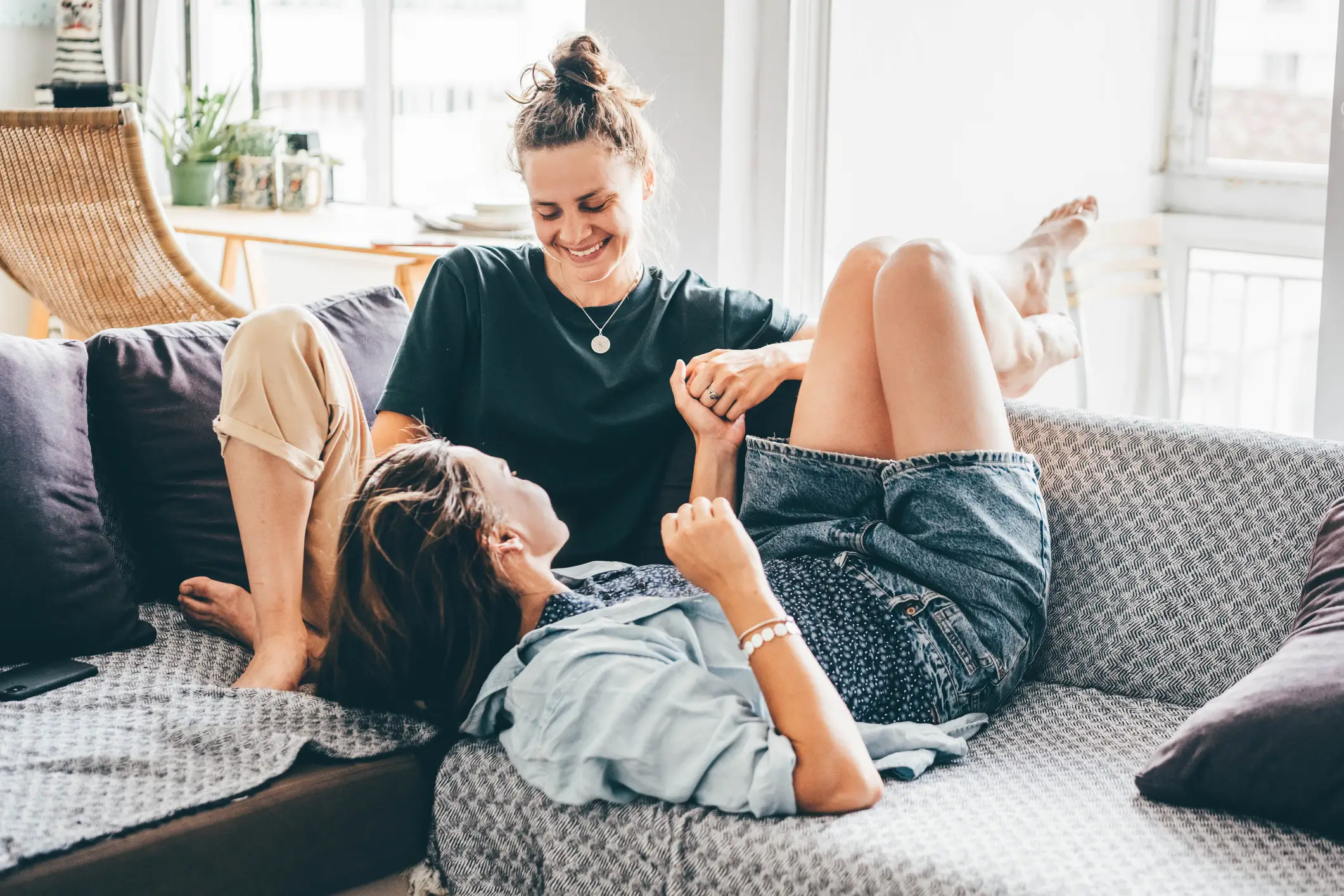
What does the data show?
Dr. Luke Brunning, Lecturer in Applied Ethics at the University of Leeds, UK, explained that the changing identities emerging in the data 'speak to the growing awareness that sexuality is complex'.
"If anything, it would be surprising if people were never sexually curious about people of their own sex or gender, or if attraction worked in neat and predictable ways," he said in a Feeld press release.
Taking a more specific look at the data, Feeld revealed that the 'most heteroflexible city' is Berlin in Germany. Berlin also emerged as the city with the highest percentage of open relationships.
Across the Atlantic, New York City was found to have the fastest-growing bisexual population, with an increase of 161 percent.
Dina Mohammad-Laity, Feeld’s VP of Data, commented: “Thanks to our incredible community, Feeld has a depth and diversity of data like no other. Feeld Raw offers a unique look at how intimacy and identity are evolving... We’re seeing a surge in people exploring connection and playfulness in authentic, fluid ways, redefining what it means to be seen and to connect in 2025.”
Topics: Sex and Relationships, Life, Community
 Emily Brown