
Never-before-used rule could strip Trump of presidential powers without impeachment

There are ways that Donald Trump could be forced to give up his presidential powers other than impeachment that Congress plays a big part in.
Democrats have won control of both the House of Representatives and the Senate in the 2026 midterm elections. The party is therefore set to take control of both chambers of Congress when the newly elected members take office in January 2027, giving Democrats greater influence over legislation and congressional investigations despite a Republican president remaining in the White House.
There could be plans to try and impeach Donald Trump again – something that political scientist Dr Daniel Schatz told UNILAD is a 'realistic possibility'.
"If Democrats win the House, a third Trump impeachment becomes a realistic possibility, but it is far from inevitable," Dr Schatz told us.
Advert
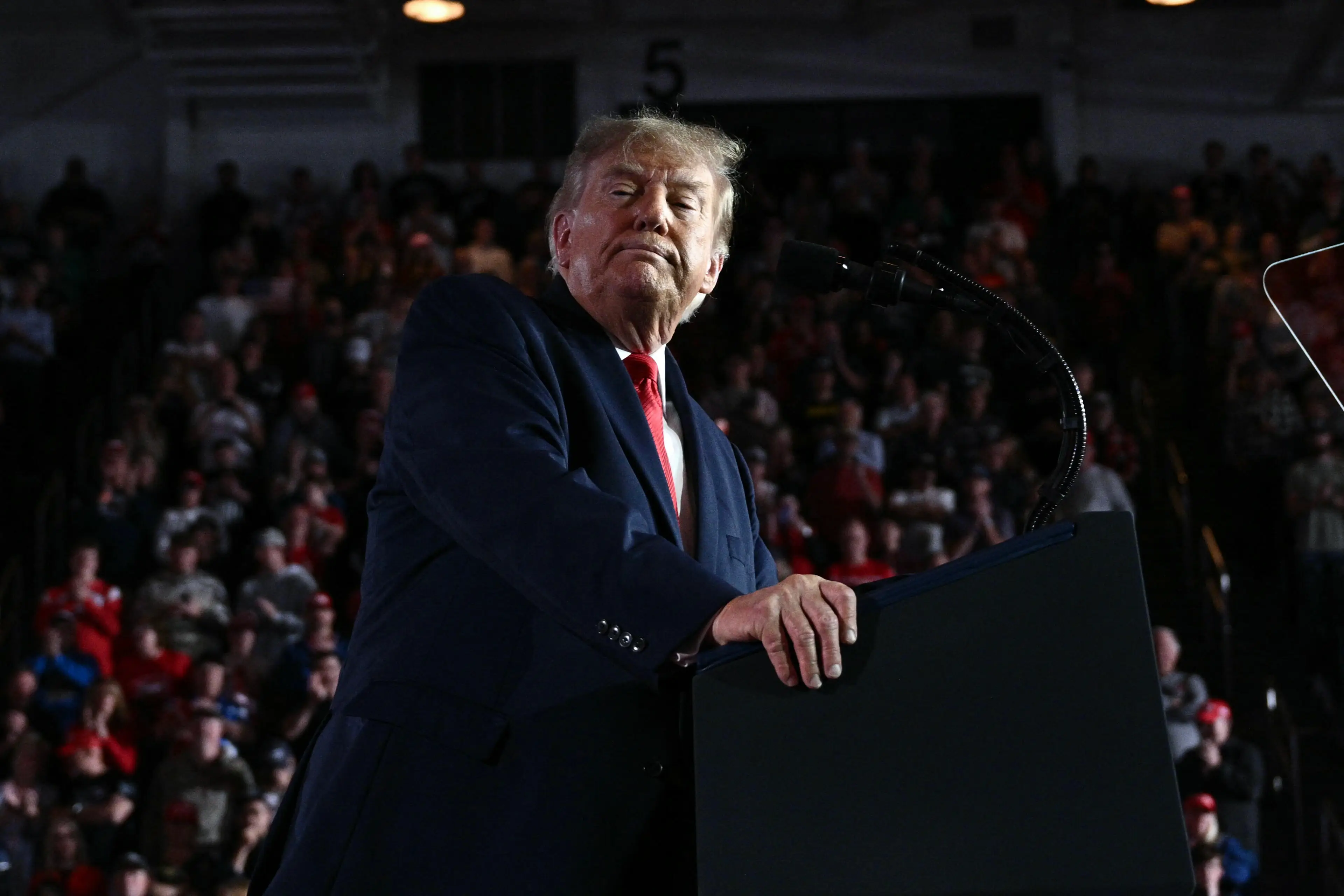
"My assessment is that investigations are more likely than an immediate impeachment push.
"Losing seats does not itself trigger impeachment: the decisive questions are who controls the House, what evidence emerges and whether Democratic leaders can unite their caucus behind specific charges."
But impeachment isn't the only way to take away Trump's presidential powers; the Democrats could also help to invoke Section 4 of the 25th Amendment once the new Congress has been sworn in on January 3.
What is Section 4 of the 25th Amendment?
Congress.gov explains on its website: "Section 4 of the Twenty-Fifth Amendment provides for instances of contingent presidential disability. It covers instances of presidential disability or inability that differ from, and arguably are more potentially complex and problematic than, those addressed in Section 3."
This was proposed in 1965 and passed into law two years later. Now, almost 60 years later, the rule is yet to be used.
Section 3 covers circumstances in which a president is able to declare themself 'unable to discharge the powers and duties' as president for things like sudden illness or a scheduled medical procedure.
"It may potentially cover other situations, such as absence from the country or a period of intense grief, for example, related to the loss of a loved one," the website adds.

With Section 4, however, this can be invoked by the vice president and the Cabinet (on the basis the Cabinet is in majority agreement with the decision) if the president themself is unwilling to admit that they're unfit.
This could include circumstances involving serious physical or mental impairment, unconsciousness or an inability to communicate essential presidential decisions. However, the amendment does not provide a definitive list of qualifying conditions.
A key difference between impeachment and Section 4 to note is that impeachment removes the POTUS from office, while Section 4 simply transfers powers to the VP.
Congress' powers regarding Section 4 under Trump's rule

For the ball to get rolling on involving Section 4, it must be triggered by Trump's cabinet or Vice President JD Vance should they feel that the president – in this instance Trump – is no longer physically or mentally fit to be president.
In terms of Congress' power when it comes to Section 4, it can be suggested by them to the likes of Vance, but not invoked.
Congress can also hold hearings and investigate its concerns about Trump and decide whether Trump resumes power after a Section 4 dispute.
Ultimately, Congress has the power to decide a contested Section 4 case, but it does not have the power to start one.
Topics: US News, News, Politics, Donald Trump
 Niamh Shackleton