Polar vortex faces off against historically strong El Niño as experts warn of unusual winter ahead

A bizarre atmospheric event is unfolding high above the Arctic, and it could have a huge impact on the weather millions of people experience this winter.
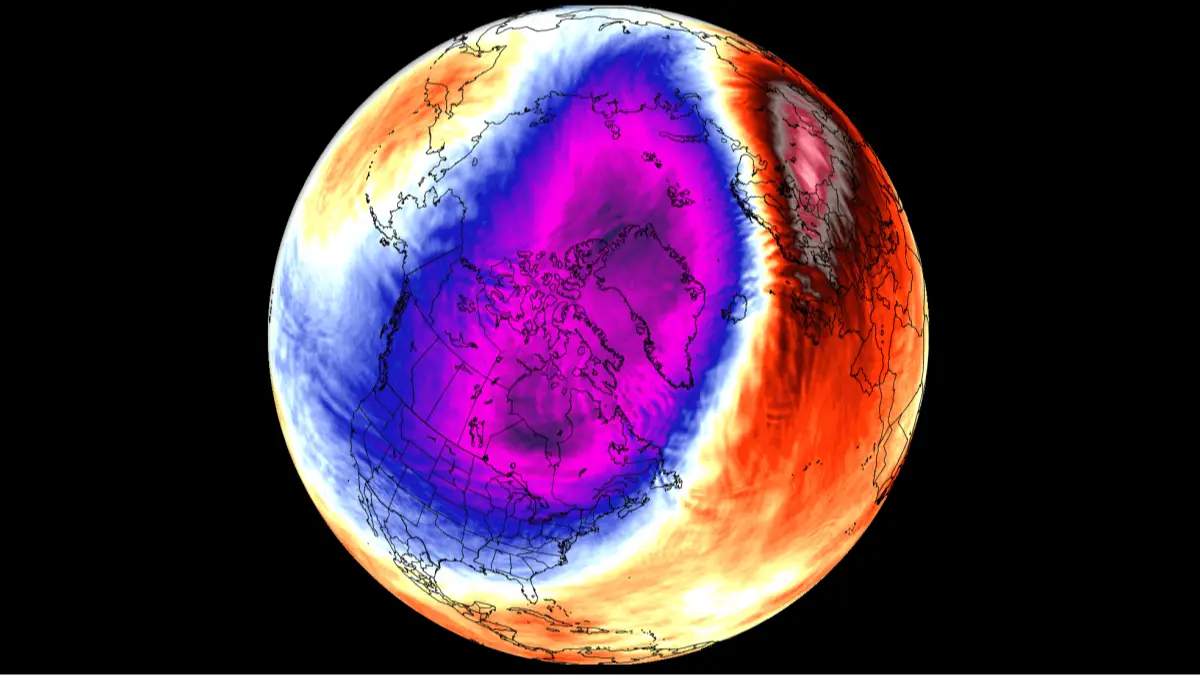
The polar vortex has broken down earlier than ever recorded, raising the possibility of bitterly cold Arctic air spilling into parts of the Northern Hemisphere.
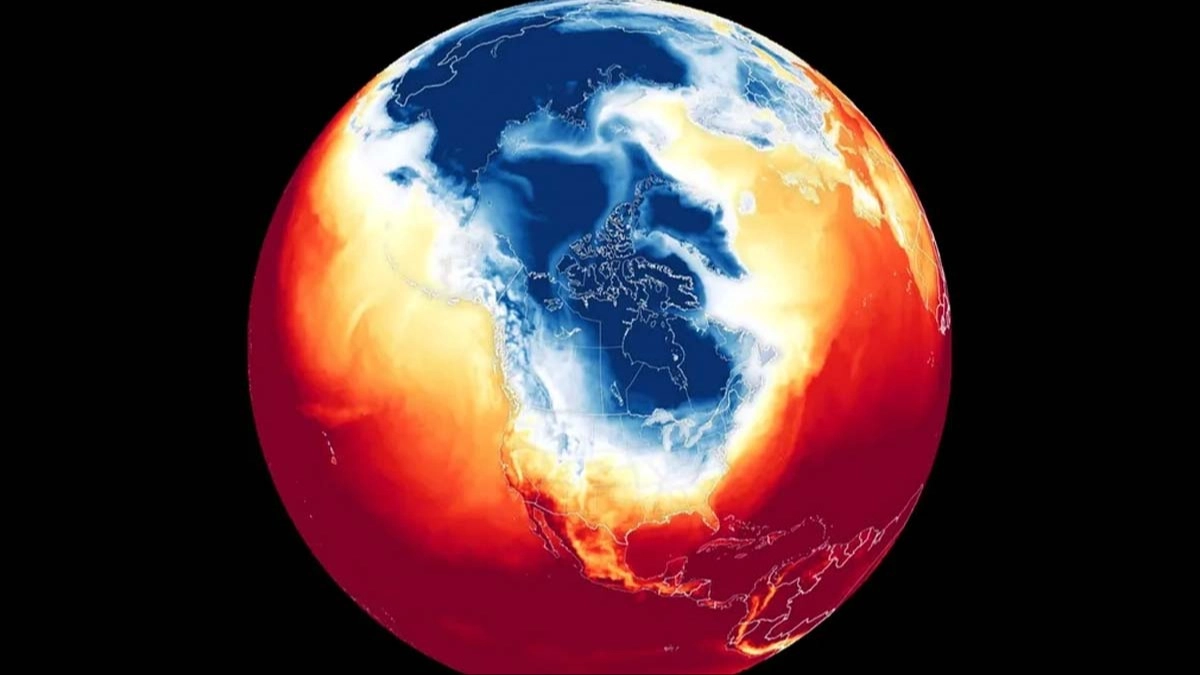
But there's a twist: another powerful weather phenomenon is also at play. An exceptionally strong El Niño, which typically pushes global temperatures higher, is threatening to counteract the effects of the collapsing polar vortex.
The two forces are now effectively battling it out in the atmosphere, and it's still unclear which will have the biggest influence on the months ahead.
Advert
To understand what's happening, the polar vortex is essentially a huge circle of powerful winds that forms high above the North Pole. It acts like a barrier, keeping the Arctic's extremely cold air contained in the region rather than allowing it to spread further south.
The system develops every year as autumn turns to winter and the Arctic enters months of darkness.
Although the vortex sits roughly 10 to 30 miles above the Earth's surface, its strength and position can have a surprisingly significant influence on winter weather across the Northern Hemisphere.
The polar vortex has been weakening for weeks, but things have now taken a dramatic turn. Temperatures high up in the Earth's atmosphere are rising rapidly in an event known as a 'major sudden stratospheric warming'.
This happens when the normally powerful winds surrounding the Arctic reverse direction, disrupting the polar vortex and potentially allowing freezing Arctic air to push further south. The knock-on effects can take days or even weeks to reach the Earth's surface, but they can significantly increase the chances of cold weather outbreaks across the Northern Hemisphere.
Meteorologist Andrea Lopez Lang, from the University of Wisconsin-Madison, described the situation as 'exceptionally unique' as per CNN.
That's because these major atmospheric disruptions usually happen much later in winter, typically between January and March. Before this year, the earliest recorded events took place on November 28, in both 1968 and 2025.
Scientists are still trying to establish why the polar vortex has been disrupted so unusually early. One possible explanation is El Niño, with some research suggesting the weather phenomenon can weaken the polar vortex and increase the likelihood of these major atmospheric events.
However, atmospheric scientist Simon Lee, from the University of St Andrews, stressed that there is not yet enough evidence to confirm whether El Niño is responsible, adding: "We're not sure yet."
What makes the situation even more difficult to predict is just how unusual the timing is. Historical weather records offer little guidance when it comes to understanding what might happen next.
The disruption is happening so early in the season that previous records simply don't provide a reliable comparison for what's unfolding now.
 Emma Rosemurgey