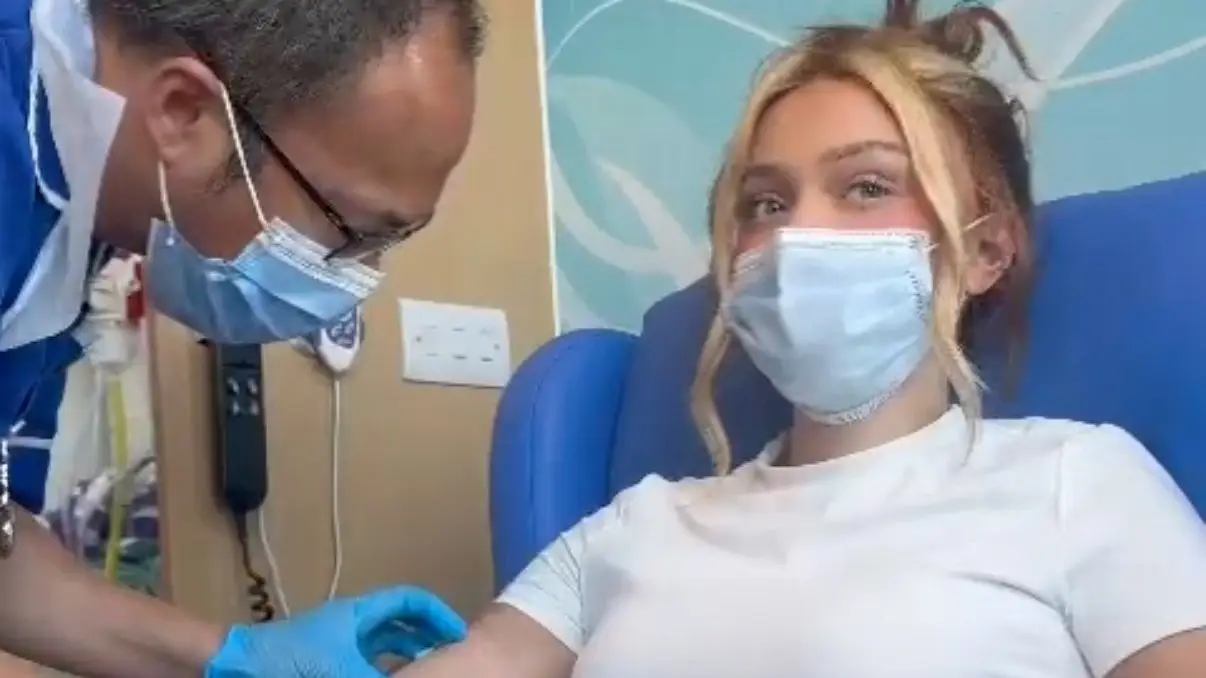
Woman who realized she had cancer she saw on Grey's Anatomy reveals symptoms

A young woman has spoken out about how she struggled to understand the jargon being used by doctors who were trying to tell her that she had cancer. That is, until she remembered an episode of Grey's Anatomy.
Patrycja Sobanska was just 19 when she was diagnosed with a form of non-Hogkins lymphoma that grows quickly in the body's lymphatic system, after noticing a small pea-sized lump and a few other concerning health symptoms.
Not only did she after insist on being referred to hospital for further tests when she presented at her doctor's office, but when they figured out that the lump was being caused by either a lymphoma or sarcoma, the teen found herself confused by the medical jargon and didn't even know if that meant she had cancer.
Her only real source of useful information was her knowledge of Grey's Anatomy. Not the medical textbook studied by trainee doctors around the world, but the long-running TV series that focuses on the never-ending medical drama at the fictional Grey Sloan Memorial Hospital.
Advert

Patrycja, from Cambridgeshire, England, said: "I was already so emotional because I've never been in a hospital overnight by myself and I couldn't have anyone with me.
“Then when my dad arrived the doctor told us it was either lymphoma or sarcoma. I didn't know what sarcoma was. I knew what lymphoma was, purely because I've watched Grey's Anatomy.
"So, it kind of clicked in my head, I was like, that's cancer, isn’t it? My dad and I just kind of paused and were like: ‘What, that's not possible’. And then I just started bawling my eyes out. I think that was just the normal reaction. I just didn't know what to do."
Now 20 years old, Patrycja had at first thought the pea-sized lump was the side-effect of some infection, but visited her doctor four times in a row when it did not go away. Eventually, when her skin began to turn yellow from jaundice, she was referred to hospital for a CT scan.
By October 2024, she had been diagnosed with a fast-growing form of non-Hodgkins that is called diffuse large B cell lymphoma (DLBCL).
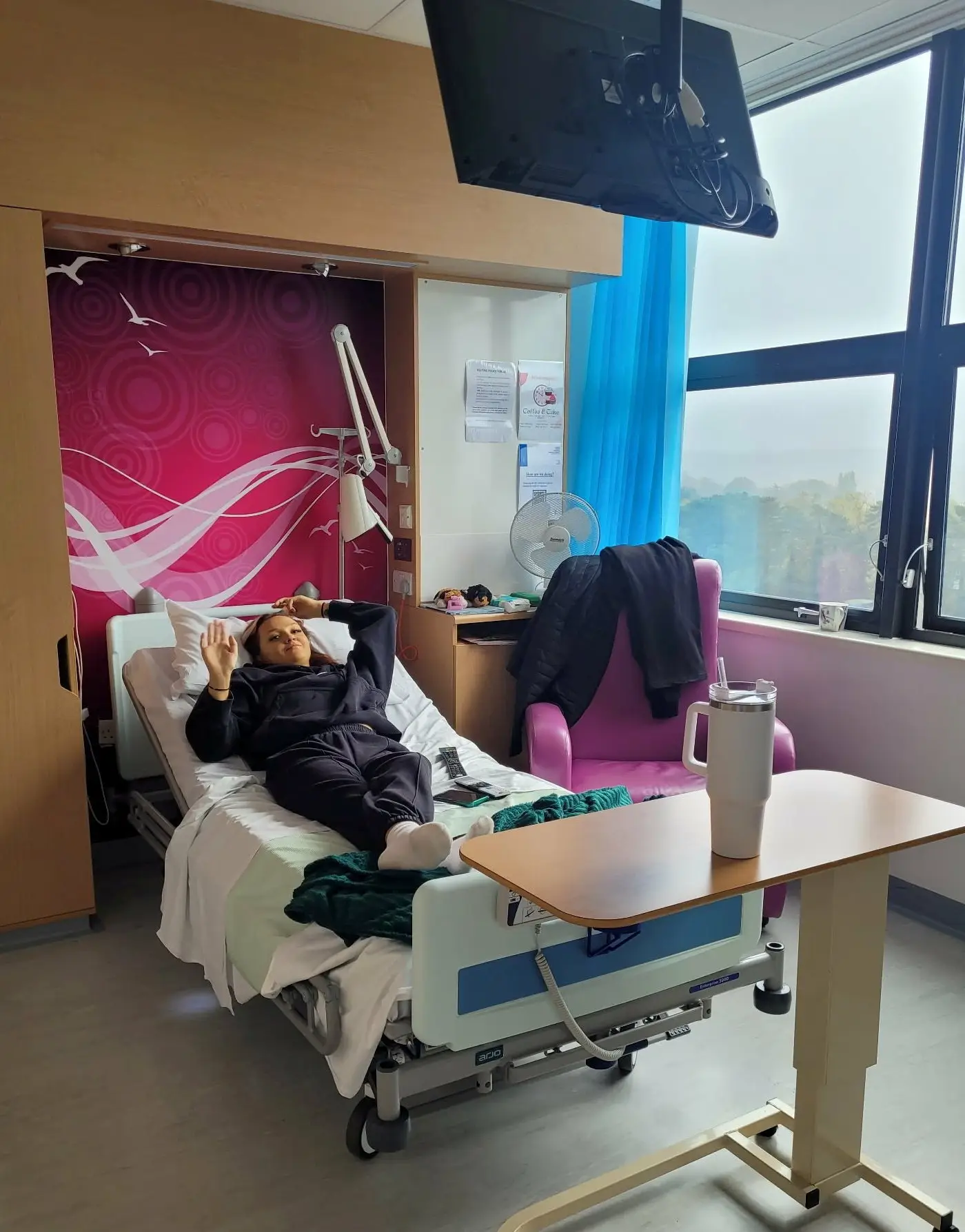
Patrycja said: “In the moment I still didn’t know what it was. I asked: ‘So, is that cancer? Have I got cancer?’ but they never said the words: ‘You've got cancer’.
"They've just kind of beat around the bush. I asked again whether it was cancer and they just told me it was either lymphoma or sarcoma.
"I started Googling because I wasn’t getting the information I needed. When they told me I had lymphoma they said something along the lines of ‘the type of cancer you have isn’t even that bad’. There wasn’t any compassion.
“I think soft skills training is needed.”
But after her 'difficult' time receiving care in a general hospital, the young woman was transferred to a specialist cancer trust for young people, where doctors were able to explain her condition properly - without Patrycja having to rely on Grey's Anatomy to know what they were talking about.
She added: “The doctor that came in the first day I was there explained everything to me – he was absolutely brilliant.
“I was treated with R-CHOP, which is a type of chemotherapy combination used to treat types of lymphomas. It’s a combination of five drugs, one being a steroid, another being targeted therapy, immunotherapy, and the red devil chemotherapy.
“One of the Junior Sisters working on the day unit, Sandra, would always explain all of the chemotherapy and treatments I was having on the ward. It didn’t matter if it was my first time having chemo or my last, she remembered to take me through every step every time to ensure I was comfortable.”
Thankfully, as a result of her treatment, Patrycja's cancer is now in remission.
Dr Louise Soanes, Chief Nurse at Teenage Cancer Trust, said: “The way in which we talk about and explain cancer is so important, but it’s a difficult subject and can be incredibly challenging.
“However, one conversation can change everything for a young person. The right words at the right time can make all the difference - and we must all do our best to get it right."
Symptoms of diffuse large B cell lymphoma

Diffuse large B cell lymphoma is an uncommon type of non-Hodgkin's lymphoma that takes hold in your lymphatic system and can cause a number of striking symptoms, any of which should prompt a conversation with your physician.
One of the most important of these symptoms is experiencing a large and painless swelling, typically in the neck, armpit, or groin. This swelling is one of your lymph nodes, and they can grow very quickly.
You can also experience heavy sweating at night and high temperatures that seem to come and go at random. Another red flag is when these symptoms are experienced alongside a sudden weight loss, equating to around 10 percent of your body weight.
As this form of cancer can sometimes develop outside of your lymphatic system and have different symptoms as a result, with Cancer Research UK guidelines stating that diffuse large B cell lymphoma can cause stomach pain and diarrhea if in your abdomen, for example.
These symptoms can start and get worse in just a matter of weeks.
 William Morgan