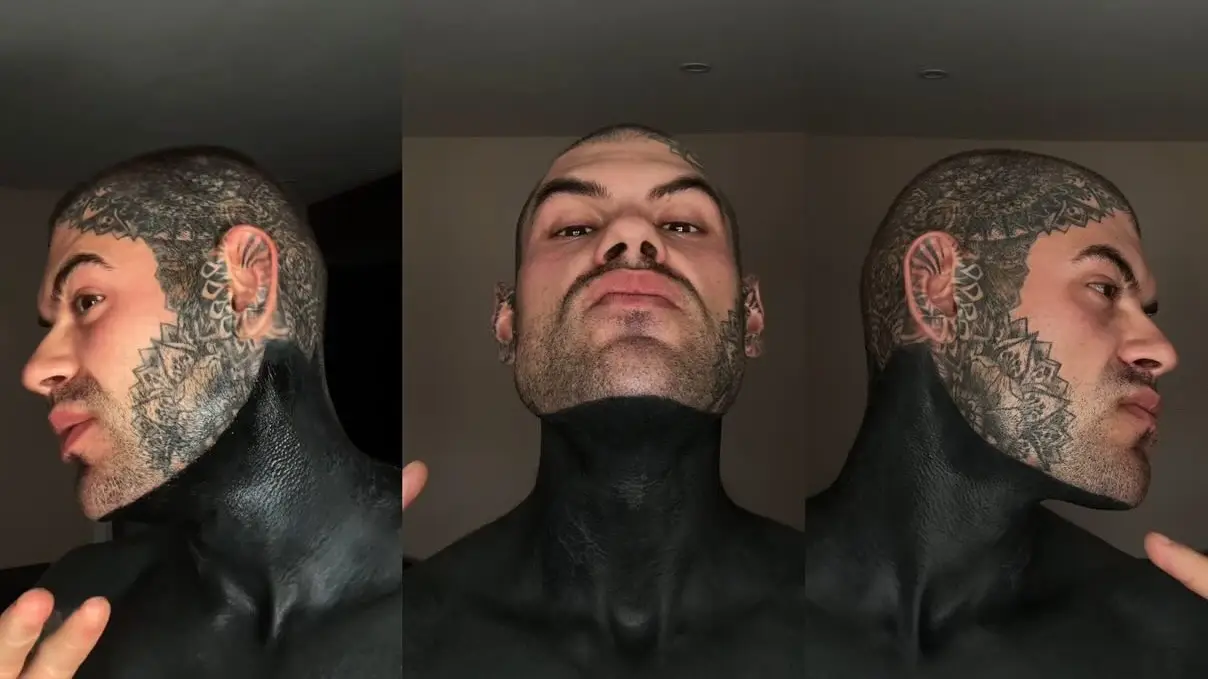
Man with blackout tattoos reveals what he wishes he'd known before starting the process

A man covered head to toe in blackout tattoos has opened up about the painful lessons he learned the hard way after diving into the trend with barely any guidance on how it actually worked.
Dave Chudley, who began having blackout work done back in 2020, has built up a significant amount of coverage across his body over the years.
This began well before the style was thrust into the mainstream by celebrities like Machine Gun Kelly, who has spent the last couple of years steadily covering large areas of his own body in solid black ink.
For the uninitiated, blackout tattooing involves doing exactly that, covering large areas of skin entirely in black, often blending with or covering existing tattoos to create a bold, uniform look.
Advert
But Dave has admitted that if he could go back to where he started, there's a lot he'd do differently, starting with assuming the style was the easy option simply because it doesn't involve detailed artwork. "'It's just colouring it in.' No, it's not just colouring it in. There's so much to it, because it's not just about colouring the skin in, it's about not damaging the skin in the process, achieving that smooth finish, complete saturation," he explained.
He's adamant there are levels to it that most people don't appreciate going in. "People think it's easy, it is not, it's far from it, it's actually very, very difficult." His own first attempt is proof of exactly that.
Looking back, there are three things in particular Dave says he wishes he'd understood before he ever sat in the chair: that blackout is far harder to get right than it looks, that it demands a specialist rather than a general tattoo artist, and that back in 2020 there simply wasn't a reliable process in place for any of it yet.
What was Dave's first blackout tattoo mistake?
Dave started in 2020 with just his forearm, only to find it didn't match the rest of his work once it had settled. The result was bad enough that he ended up having it removed entirely and starting over from scratch, before the project gradually crept further up his arm as he learned what actually worked.
It's a mistake he puts down to the style being so new at the time that there was barely an established process for it at all. "We didn't know a lot about it back in 2020. It was more the artist will experiment along with you as they're doing the work, maybe we need two passes, maybe this needle, maybe that needle," he said.
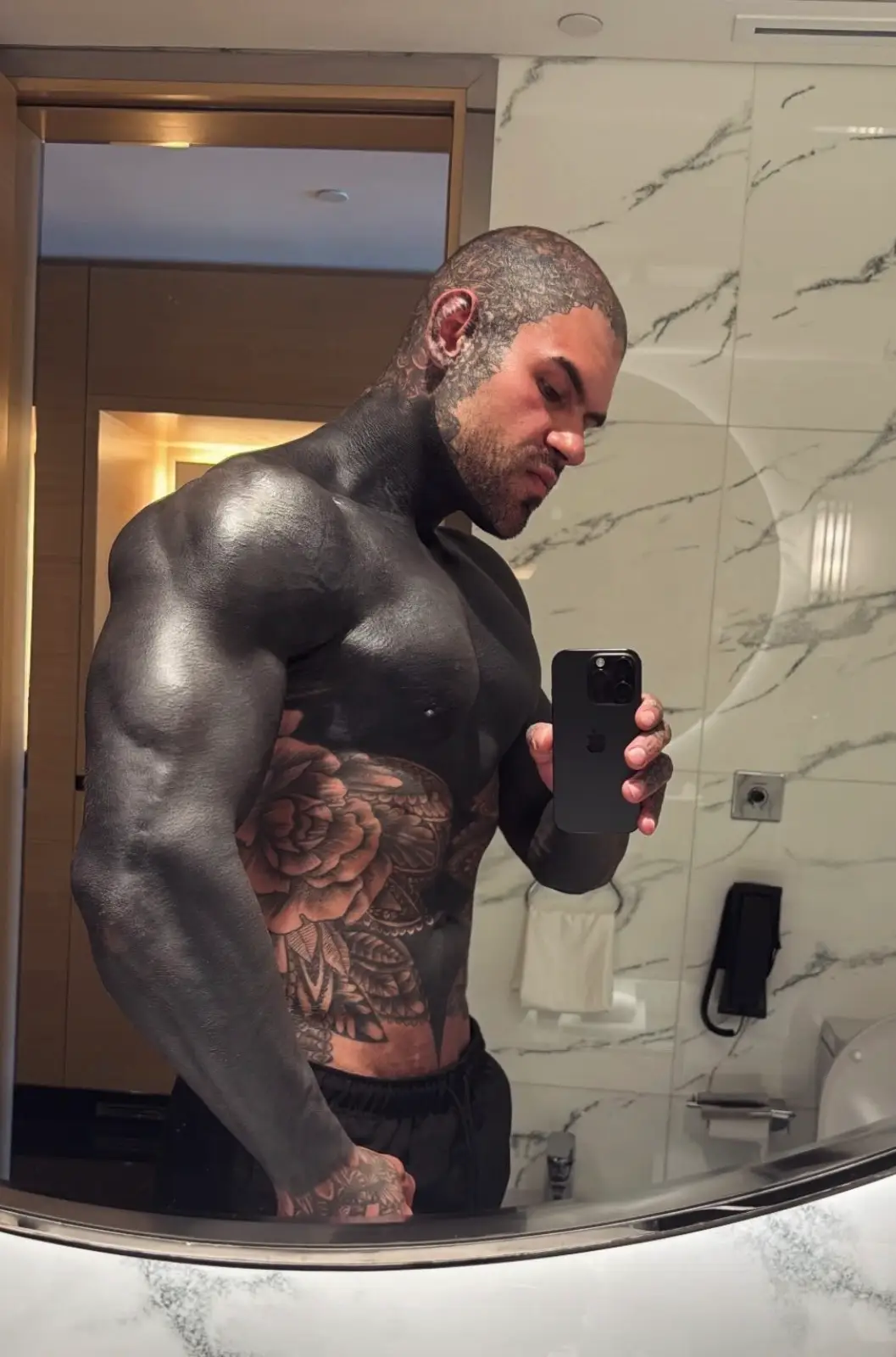
Do you need a specialist for a blackout tattoo?
It's part of why Dave is now adamant that the style requires a genuine specialist, rather than a general tattoo artist taking a punt - something he says he wishes he'd prioritized from the start. He now travels to see Johnny Ransom, who works out of Berkshire and focuses exclusively on blackout work.
"His saturation is the best. He knows exactly how to [do it], this is the only thing he does. He's the best in the UK, potentially even in Europe," he claimed.
Dave says the guesswork which defined his early experience has now disappeared entirely industry-wide.
"There is a very concise blueprint to how the work is done. We know what inks to use, we know what needles, we know what machine, we know exactly how to heal it in the best way possible."
It's a shift that's coincided with blackout tattooing's journey from a niche, largely unknown style into one of the most talked-about trends in body art, with high-profile figures helping push it firmly into the mainstream in recent years.
Despite how extreme the finished result looks, Dave says he barely gets a reaction from people in real life, and that most of the attention comes from social media, where clips of his tattoos reach audiences outside the tattoo world entirely.
"The reactions come from online. When a video reaches viral status, it tends to get pushed out to audiences that aren't involved in the tattoo industry. To people in the tattoo industry, it's like, whatever, just blackout."
 Thomas Bamford