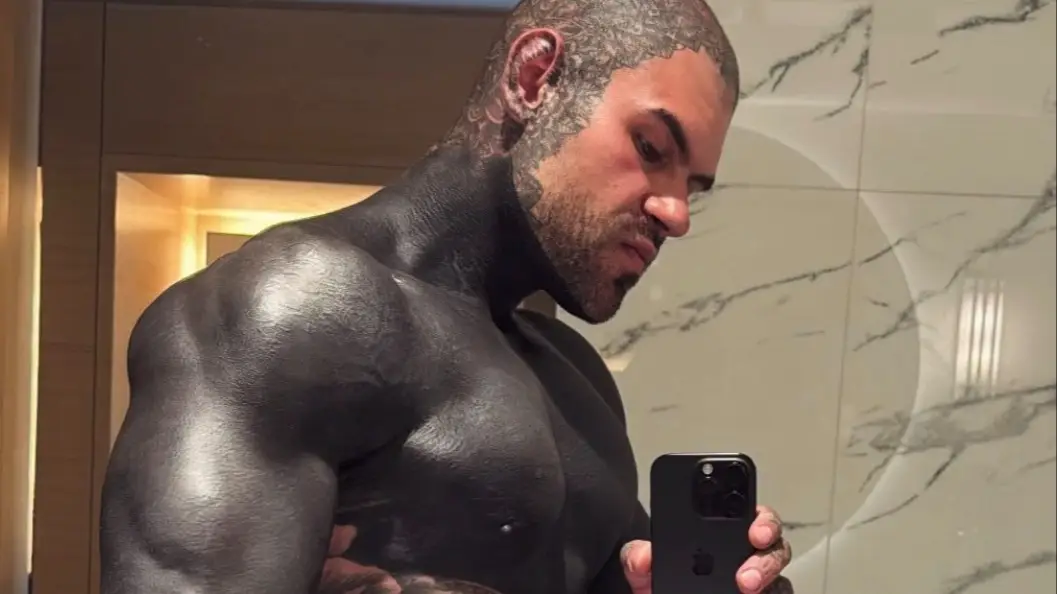
Man with blackout tattoos warns of non-negotiable rule you must follow while it’s healing

A man covered in blackout tattoos has issued a stark warning after learning the hard way what happens if you touch a healing piece too soon, and the damage isn't always something you can undo.
Dave Chudley, who began having blackout work done back in 2020, has built up a large amount of coverage across his body over the years, and he's hoping to have as much as 80 percent of his entire body covered before he's finished.
The style has recently become super popular with Kat Von D, Machine Gun Kelly and Chris Daughtry - but Dave started his blackout journey way before the style really entered the spotlight. For the uninitiated, blackout tattooing involves covering large areas of skin entirely in black, often blending with or covering existing tattoos to create a bold, uniform look.
Some people will then have artworks tattooed on top of it too, creating a unique effect.
Advert
According to Dave, the actual tattooing is only half the story. He says the difference between a blackout tattoo that looks incredible and one that ends up botched almost entirely comes down to what happens after you leave the chair, and he's living proof of what can go wrong if that discipline slips, even for a moment.
What happens if you touch a healing blackout tattoo?
Dave says there is one rule that is completely non-negotiable during healing, no matter how tempting it might be in the moment. "You do not want to pick it, you do not want to touch it," he explained. He revealed he developed a scabby patch on his own neck after accidentally catching it on something, and even then, he refused to interfere with it. "Don't touch it. Otherwise you can scar, you can get infected, and it won't heal as well."
He says you can have perfect technique, full saturation and a flawless finish in the chair, and it still won't matter if the aftercare isn't right.
"You can have a great saturation, your skin can be very well saturated, it could be done exactly how it should be, and if you don't look after it properly, you don't take care of it, it will still heal badly and it will still end up not looking good."
He also warned against overcompensating by smothering the area in too much product, insisting the skin needs space to recover on its own. "You don't want to over apply healing products as well, you just want to kind of let it do it itself naturally."
Why can't blackout tattoos heal like normal ones?
Dave revealed that the usual go-to aftercare for fresh tattoos, a second skin patch, simply doesn't work on blackout pieces. "You can't heal it like a regular tattoo. A second skin, for example, doesn't work, because there's just way too much fluid, plasma, excess ink that's seeping through. So it's just not going to work."
Instead, he uses something most people would never associate with tattoo aftercare. "That's why I use puppy training pads, because they just absorb everything in. They're large, so you can wrap them around quite well, and you just keep replacing those. That seems to be what I found the best way for healing."
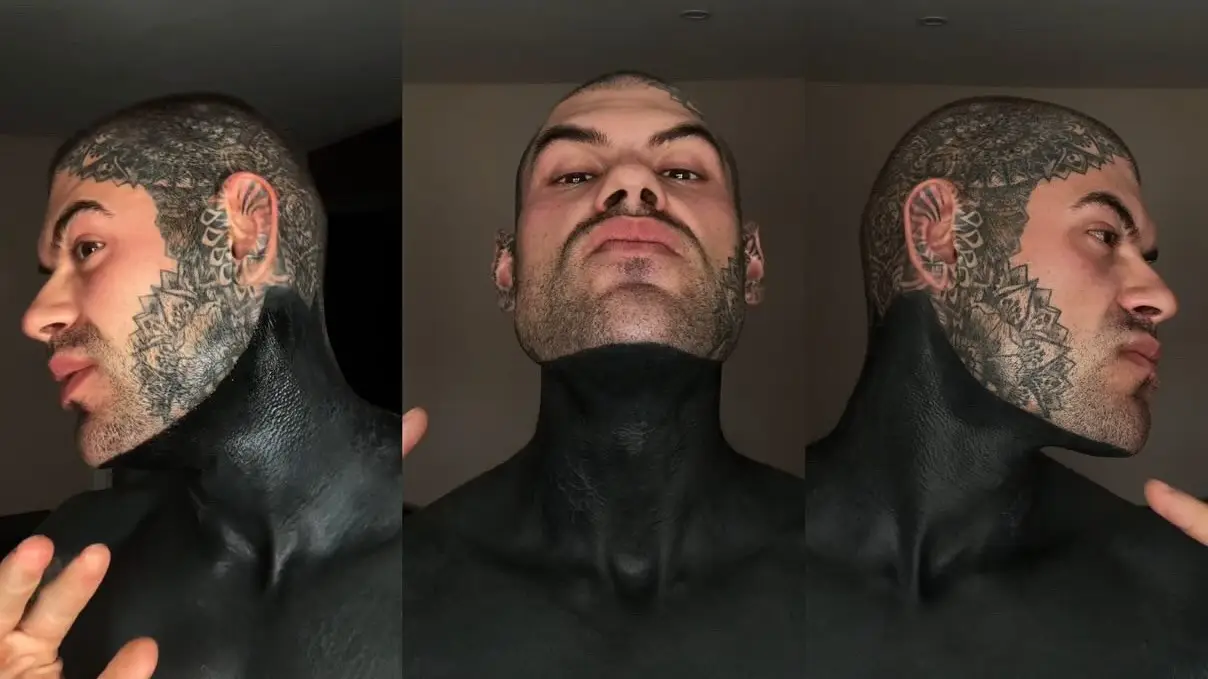
Dave says the biggest misconception people have is assuming blackout is somehow the easy option, since it's "just" solid colour rather than detailed artwork. "It's just colouring it in. No, it's not just colouring it in. There's so much to it, because it's not just about colouring the skin in, it's about not damaging the skin in the process, achieving that smooth finish, complete saturation."
His own first attempt proved the point. He started in 2020 with just his forearm, only to find it didn't match the rest of his work once it had settled, and ended up having it removed entirely and starting over from scratch.
Unlike a marathon single sitting, Dave has his blackout work done in small, regular sessions, which he says makes both the pain and the healing more manageable.
"My process with black work is little and often. I actually sit weekly. I find that healing is better, I find that you tolerate it better, and you can actually kind of still live your life normally while having that work done."
He added that the pain itself behaves differently to a standard tattoo, starting rough and then getting progressively worse as the area swells, with more sensitive spots like the throat or jaw hurting the most regardless of style.
 Thomas Bamford