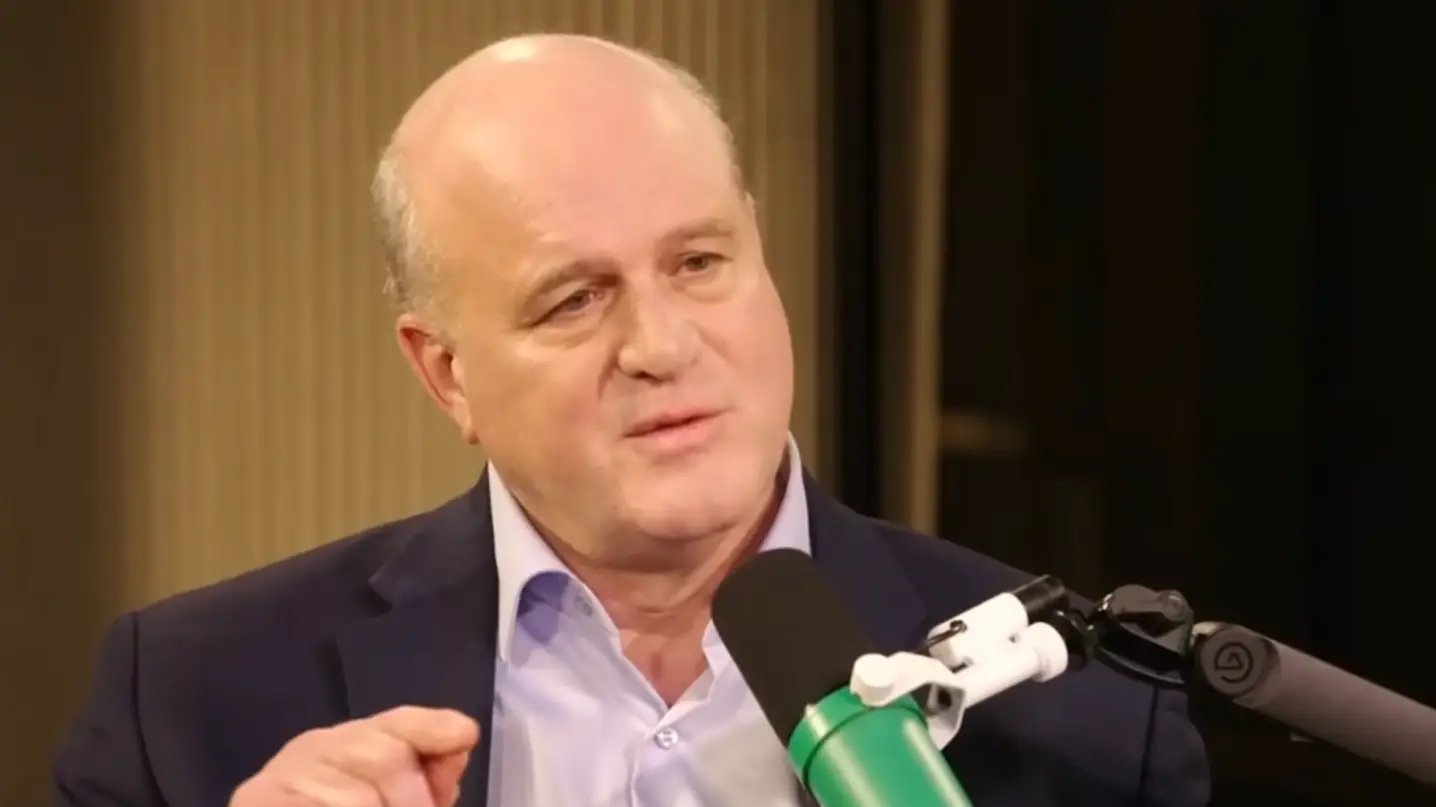
Hospice doctor shares the key signs someone is about to die

A hospice physician who has spent nearly three decades at the bedsides of dying patients told Oprah about some of the key signs someone is about to die.
Dr. Chris Kerr has witnessed thousands of people take their last breath through his role working in hospice care, and as a result he's come to learn that when you’re nearing the end of your life, you start to have visions, or ‘visitations’ of people who have passed away.
"That’s a sign you’re very close to the end," he told Oprah in an episode of her podcast.
He also added that those approaching the end of their life spend a lot of time sleeping, spending ‘more and more time within the sleep state’ where they get immersed in these visitations.
Advert
Dr. Chris Kerr also said children who are dying often won't picture a deceased relative, because in many cases, they've never lost one.
Instead, he said, an 'animal comes back with the same meaning' - offering the same comfort an adult might draw from seeing a late parent or grandparent.
The doctor explained that these experiences, which he deliberately avoids calling 'dreams,' tend to intensify as a patient gets closer to death, and patients themselves are often insistent that what they're seeing is not a dream at all.

What are end-of-life visions?
According to Kerr, patients nearing death frequently report visitations from people who have already died - and the visions grow more vivid and more frequent the closer someone gets to the end.
"It's happening in the context of sleep, so you're sleeping more, and within the sleep state, more and more you're immersed in these experiences," he said.
Crucially, Kerr said these episodes don't resemble ordinary dreams.
"They're not dream-like, and there's not symbolism, they're not metaphor," he explained, adding that patients can become offended if a doctor suggests otherwise.
"Sometimes they actually get offended when you imply that it was a dream because it was a visitation for them."
He said the visions are strikingly literal rather than symbolic - no tornadoes standing in for chaos, no hidden meanings to decode. "It's based on real-life happenings, real-life people. It's recalled with absolute clarity," Kerr said, noting patients seem to understand exactly what they're experiencing without needing it explained. "I've been doing it for 27 years. I've never had a patient ask me, 'What do you think this means?'"

Do children experience death differently to adults?
Kerr said the picture changes entirely with younger patients.
Children facing terminal illness, he explained, haven't usually lost anyone in their own lives, so their visions take a different shape.
"They don't distinguish between the imaginary and the real in the same way," he said, adding that children also lack the vocabulary adults have for death. "They don't have language for mortality, finality."
Rather than seeing a deceased person, Kerr said children more often picture a lost pet, or sometimes a family friend who has died, carrying the same underlying message.
He described one young patient who imagined herself inside a castle she'd built for herself, which she described simply as 'a safe place.'
Kerr said these experiences appear to give dying children, much like adults - an unusually clear sense of what's happening to them.
"They often have a very clear understanding that they are at the end of their life," he said.
Topics: Health, Science, World News
 Thomas Bamford