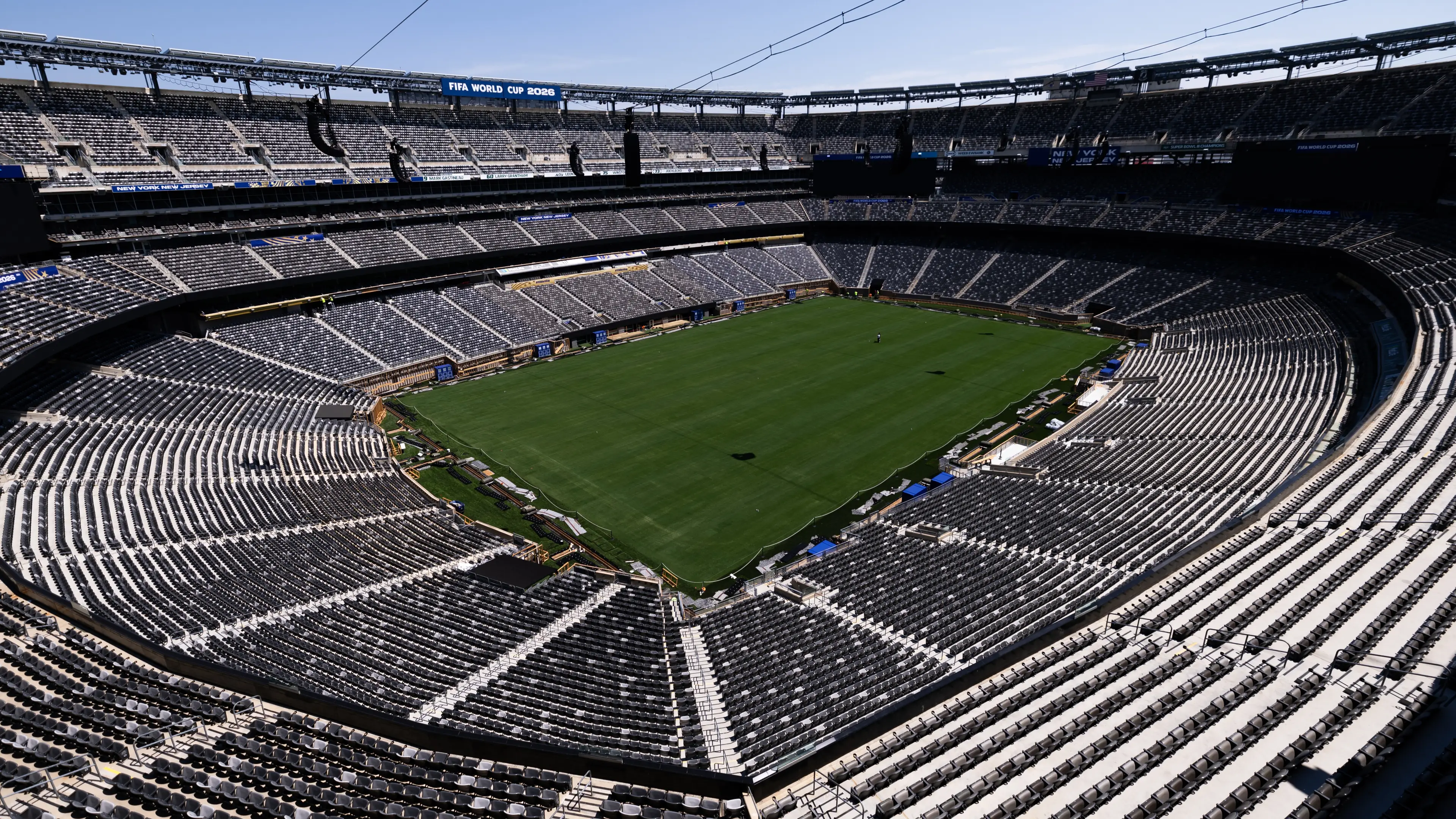
2026 FIFA World Cup faces major health risks, according to experts - here's what to look out for

Those attending the 2026 FIFA World Cup have been warned about major health concerns, while organizers have ensured they are doing everything to minimise risks.
Centers for Disease Control and Prevention director Jay Bhattacharya has issued a health warning to those traveling for the World Cup in June, which is being jointly hosted by 16 cities across the US, Mexico, and Canada, where 48 teams will play a record-setting 104 matches.
Millions of soccer fans from around the world are expected to be in attendance, with five million tickets having already been sold according to FIFA.
But speaking to The Independent, Andy Pekosz, a professor of molecular microbiology and immunology at Johns Hopkins University, issued a warning to those traveling, noting that there are active infections circulating in other nations.
Advert
"The best example is influenza," he said.
The health expert added: "It's circulating in some countries in the Southern Hemisphere (South America), and so it may be that some influenza infected individuals can get to the US/Canada/Mexico and perhaps spread the infection."
He did, however, admit that this is unlikely, given that the conditions are not really ideal for influenza to spread.
Measles, however, is a more serious cause for concern.
Since January 2025, there have been 3,564 cases, the largest number in an outbreak in decades, according to Harvard University research.
And while the deadly hantavirus outbreak may be a concern for many, the CDC stated that the risk is 'extremely low' for those traveling for the World Cup.
Extreme heat is another risk that is being closely watched, given that the competition, scheduled to commence between June 11 to July 19, is being held cities like Houston and Miami, where the average high temperatures in June are in the mid-80s.
Another issue being monitored is food safety, particularly in some US cities.
Inspectors in Georgia have already been dispatched to restaurants, food trucks, and temporary tents to ensure health regulations are being followed.
Commenting on the numerous risks, director Bhattacharya said: "Of course, any time so many people are traveling, there's always the possibility of various outbreaks or whatnot to happen.
"But the risk is not any different than it is in other World Cups that we've managed properly, and the United States has systems in place to make sure that if something happens that we respond appropriately."
Topics: Health, Sport, Travel, World News, US News
 Mia Williams