
Doctors issue urgent melanoma warning as historic heatwaves blast millions across US and UK

With a massive, high-pressure "heat dome" trapping historic temperatures across the United States and record-breaking heat buckling infrastructure in the United Kingdom, leading dermatologists are sounding a critical alarm over a hidden, delayed threat: irreversible skin cancer risk.
The timing of the current climate anomalies couldn't be worse for public health.
In the US, a sprawling upper-level ridge of high pressure has trapped an intense air mass over the central and eastern states, subjecting more than 180 million Americans to major or extreme heat risks right ahead of the July Fourth holiday weekend.
Meanwhile, across the Atlantic, the UK Met Office has provisionally confirmed that a massive heatwave just shattered its all-time June national temperature record, with a blistering high of 37.7°C (99.9°F) recorded at Lingwood.
Advert
As millions of people flock outdoors, to beaches, or to outdoor festivals to seek relief from the sweltering conditions, health officials warn that people are inadvertently setting themselves up for a surge in melanoma diagnoses later in life.
According to global oncology data, a person’s risk of developing deadly skin cancer doesn't just climb with age—it is directly amplified by the number of blistering sunburns they accumulate during intense, single-day events exactly like these record-shattering heatwaves.
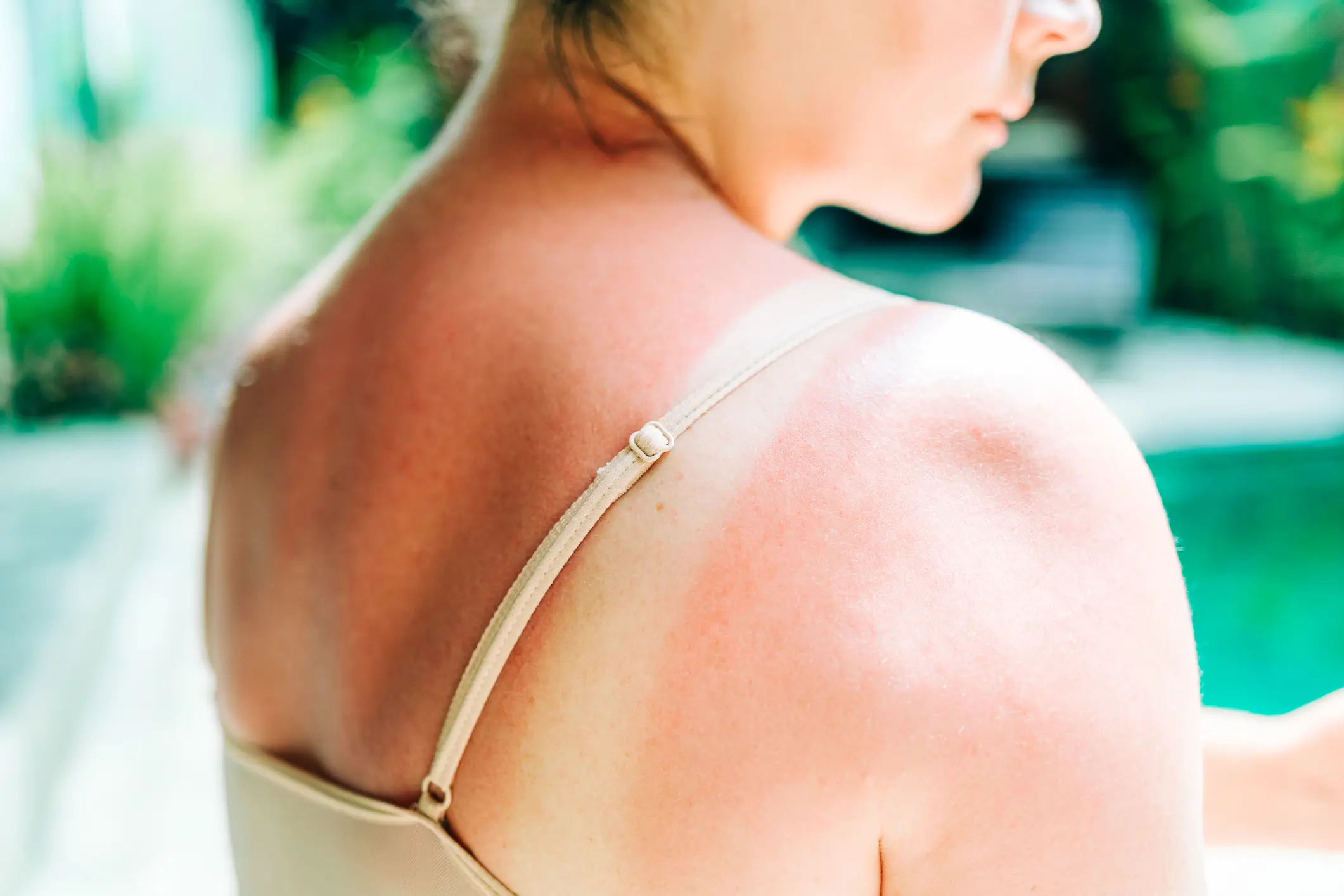
The Math Behind a Single Sunburn
Medical experts stress that many people treat a painful sunburn as a temporary, annoying inconvenience that will simply heal and fade away. However, cellular biology tells a much more sobering story.
Data compiled by global health watchdogs reveals a terrifying mathematical correlation between UV damage and cellular mutation:
According to the Skin Cancer Foundation, sustaining just five blistering sunburns before the age of 20 increases your lifetime risk of developing melanoma—the most aggressive and lethal form of skin cancer—by a staggering 80%, while effectively doubling your overall skin cancer risk.
“Your skin behaves like a ledger; it remembers every single ultraviolet insult,” safety experts warned in the wake of the latest global heatwaves. When UV radiation hits unprotected skin, it acts like a microscopic shotgun, physically tearing apart the DNA bonds inside your skin cells.
While the body can successfully patch up some of this initial cellular damage—which manifests outwardly as peeling, inflammation, and redness—frequent, high-intensity exposure overwhelms the body’s natural repair mechanisms.
Over time, these unmitigated, mutated cells replicate undetected, eventually forming malignant tumors years or even decades after the original sunburn occurred.
“Every intense sunburn adds to your skin’s lifetime DNA damage,” Dr. Michelle Henry, of New York City's Skin & Aesthetic Surgery, recently told The New York Post.
“We don’t have one exact threshold where researchers can say, ‘This one burn changed everything,’ but we do know the risk increases with both the severity and number of burns.”
Demolishing the 'Base Tan' Myth
Compounding the current public health emergency is the persistent, dangerous survival of tanning myths on social media.
With search trends for "base tan" surging as people prepare for summer holidays, dermatologists are racing to dismantle the false narrative that getting a light tan beforehand protects your skin from burning during an extreme heatwave.
A tan is not a sign of healthy skin or a protective shield. Biologically, the darkening of your skin is a frantic, last-ditch distress signal.
When your cells detect that their DNA is actively being mutated by UV rays, they rapidly produce melanin—a dark pigment—and shift it upward to form a tiny umbrella over the cell's nucleus to protect it from further destruction.
A "base tan" provides an estimated sun protection factor (SPF) of roughly 3 or less.
To put that into perspective, an SPF of 3 offers virtually zero protection against a high-intensity UV index, leaving your skin completely vulnerable to the deep, structural DNA damage that drives premature aging and melanoma.
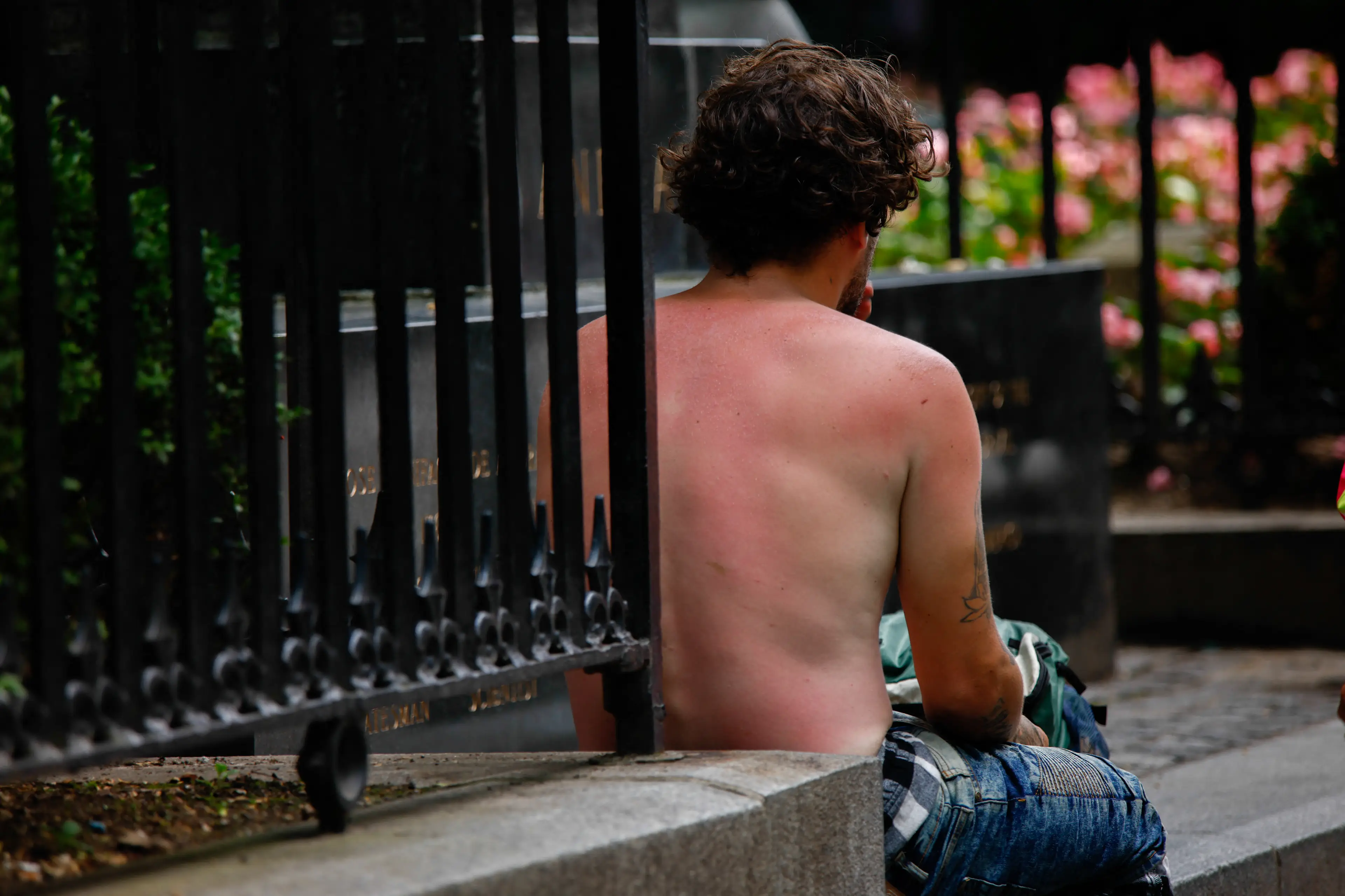
The New Summer Blueprint for Survival
With extreme weather patterns and stagnant heat domes predicted to become longer and more frequent due to climate shifts, health organizations are urging the public to entirely rethink their relationship with the summer sun.
To safely navigate the ongoing holiday heat waves, doctors are mandating a strict adherence to a modern sun-safety blueprint:
- The 'Generous' Rule: Most people apply less than half of the required amount of sunscreen. To achieve true protection, an adult needs a full shot-glass worth of SPF 30 or higher for the body, and a nickel-sized dollop strictly for the face and neck.
- The 2-Hour Countdown: Sunscreen is not an all-day armor. Chemical filters degrade under direct sunlight and sweat, meaning you must reapply every two hours without exception, and immediately after swimming.
- Target the Blind Spots: Melanoma frequently develops in overlooked areas. Ensure you actively coat your ears, the tops of your feet, the parting of your hair, and your lips (utilizing a dedicated SPF lip balm).
- Respect the Peak: Between 10 a.m. and 4 p.m., the UV index reaches its most hazardous levels. Seek natural shade under trees or umbrellas, and remember that high ambient heat does not automatically correlate to UV strength—you can sustain severe DNA damage even on hazy, overcast days under a heat dome.
 Phoebe Tonks