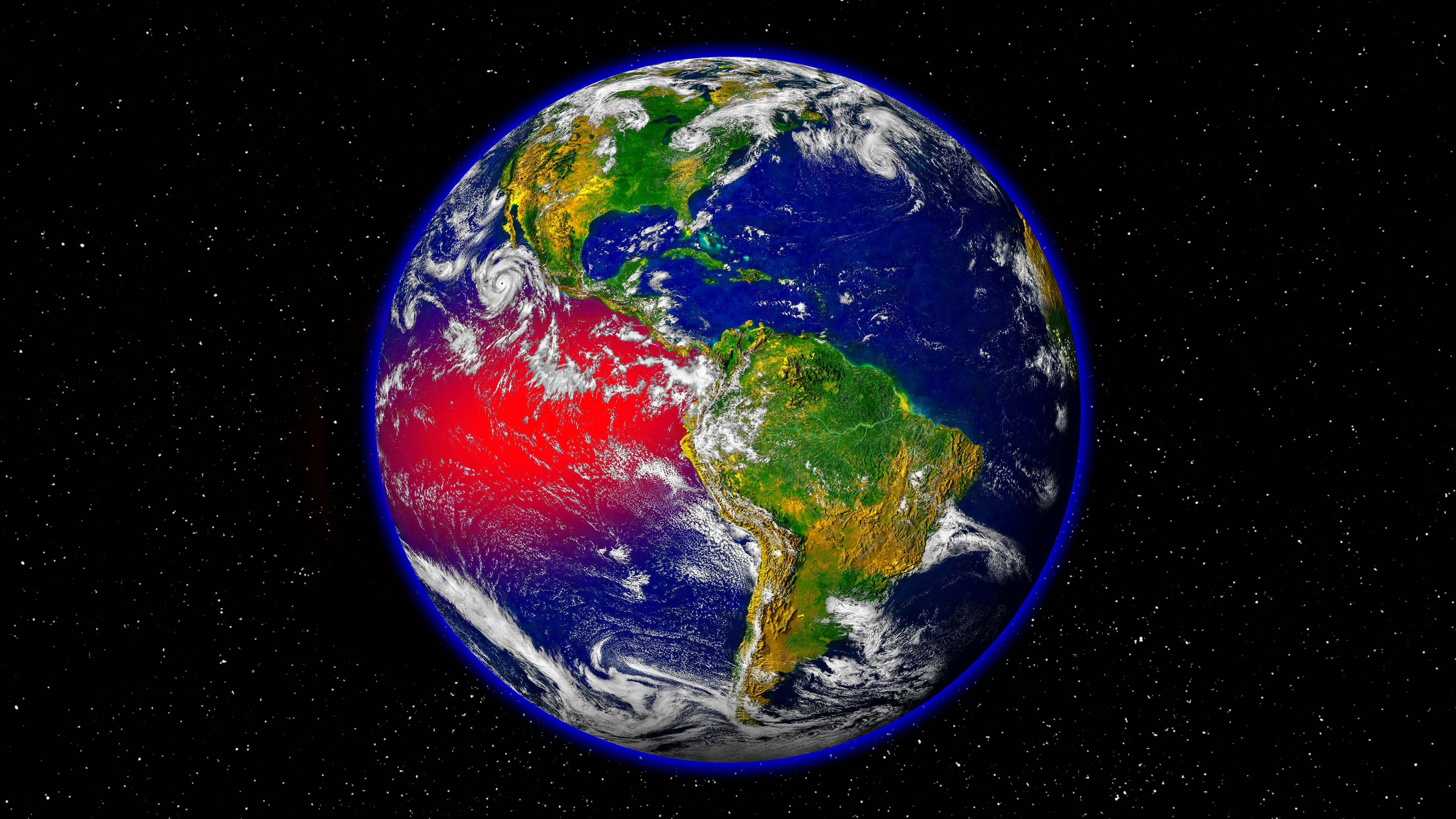
Five ominous signs of strongest El Niño ever recorded are showing up around the world

Another El Niño has officially arrived and forecasters believe it will become the biggest and strongest on record for at least 150 years.
In fact, there are already several signs showing up in various parts of the world which are proving the global effects of the weather phenomenon.
An El Niño occurs when surface waters in the central and eastern tropical Pacific Ocean become unusually warm, causing changes in atmospheric circulation that can disrupt weather patterns around the world, including rainfall, temperatures, storms and droughts.
We've seen this happen many times in history, but with August 2026 being the hottest month on record globally, many climate experts are worried about the impact of the weather pattern.
Advert
Here are some of the signs showing up around the world signifying the increasingly powerful El Niño.

Fish migrate to cooler water
In Ecuador, fishing crews are already reporting catching fewer tuna and having to travel further into cooler water to find them, Ecuavisa reports.
This is a sure sign that the ocean water they normally inhabit has become too warm for them.
During an El Niño, the increase in water surface temperature also reduces the upwelling of cold, nutrient-rich water from deeper in the ocean.
Therefore, fish searching for cooler water is a clear biological sign that Pacific Ocean temperatures are unusually high, which is one of the defining features of El Niño.
Coral reefs at risk of bleaching
Elsewhere, the coral reefs are feeling the impact of the El Niño and experts have warned they are at serious risk of bleaching.
Corals are incredibly sensitive to temperature, and when it gets too warm, they can become stressed and expel the tiny algae living inside their tissues, which provide much of their food and color.
Therefore, when the algae is expelled, the coral turns white, which is otherwise known as coral bleaching.
This generally is a temporary thing, as the coral can recover if temperatures return to normal fairly quickly. However, if the heat continues for too long, the coral is at serious risk of dying of starvation.

Seabirds arrive in Panama early
Meanwhile, Reuters has reported that flocks of seabirds native to Peru and Chile have been arriving in Panama Bay much earlier than usual due to the El Niño disrupting marine food supplies.
The birds have been forced to move in search of food after their usual meals of sardines and anchovies fled due to increase in sea temperatures.
Rosabel Miró, director of the Audubon Society of Panama, told the publication: "The birds were already telling us that we were going to have a very strong El Niño," adding that birdwatchers cited seeing the birds as early as June.
"These are not migratory birds," Miró said. "They are birds that, because of a lack of food, are forced to migrate."
Farmers unable to plant crops
In addiction to the influx of birds, farmers in Panama have also reported being unable to plant their crops due to the hotter and drier conditions the weather phenomenon brings the parts of Central America, France24 says.
With less rainfall, soils can become too dry for seeds to germinate and water supplies for irrigation can fall. Farmers may therefore have to delay planting, reduce the amount they plant, or lose crops altogether.
Increase in transit costs
Meanwhile, a rather unexpected side effect of the El Niño is the impact it is having on transit costs for shippers needing to pass through the Panama Canal.
This is because the worsening drought in the area is reducing the amount of water needed to operate the canal. In turn, this means fewer ships with less cargo are able to pass through in a day.
An unfortunate knock on effect of this means higher costs for anyone needing to transport all kinds of goods, as well as slower deliveries.
Topics: World News, Science, Weather
 Emma Rosemurgey