unilad homepage
  • News
    • UK News
    • US News
    • World News
    • Crime
    • Health
    • Money
    • Sport
    • Travel
  • Film and TV
    • Netflix
  • Music
  • Tech
  • Features
  • Celebrity
  • Politics
  • Advertise
  • Terms
  • Privacy & Cookies
  • LADbible Group
  • LADbible
  • SPORTbible
  • GAMINGbible
  • Tyla
  • UNILAD Tech
  • FOODbible
  • License Our Content
  • About Us & Contact
  • Jobs
  • Latest
  • Archive
  • Topics A-Z
  • Authors
Facebook
Instagram
X
Threads
TikTok
YouTube
Submit Your Content
NASA finds unknown object in deep space that's sending mysterious signals to Earth every 44 minutes

Home> Technology> Space

Published 12:42 9 Jun 2025 GMT+1

NASA finds unknown object in deep space that's sending mysterious signals to Earth every 44 minutes

Astronomers say they've seen nothing like it before

Ellie Kemp

Ellie Kemp

google discoverFollow us on Google Discover
Featured Image Credit: NASA/CXC/ICRAR, Curtin Univ./Z. Wang et al

Topics: NASA, Space, Science

Ellie Kemp
Ellie Kemp

Ellie joined UNILAD in 2024, specialising in SEO and trending content. She moved from Reach PLC where she worked as a senior journalist at the UK’s largest regional news title, the Manchester Evening News. She also covered TV and entertainment for national brands including the Mirror, Star and Express. In her spare time, Ellie enjoys watching true crime documentaries and curating the perfect Spotify playlist.

X

@EllieKempOnline

Advert

Advert

Advert

If the vastness of deep space is already enough to make your spine tingle, then you might not enjoy this latest update from NASA.

The US space agency has discovered a mysterious object which is sending signals to Earth every 44 minutes.

Located about 16,000 light-years away, it was uncovered by accident - and the phenomenon is unlike anything astronomers have ever seen before.

This object, called ASKAP J1832-0911, gives off powerful flashes every 44 minutes, with each pulse lasting for two minutes intervals.

Advert

ASKAP is part of a newly discovered group of space objects called long period radio transients.
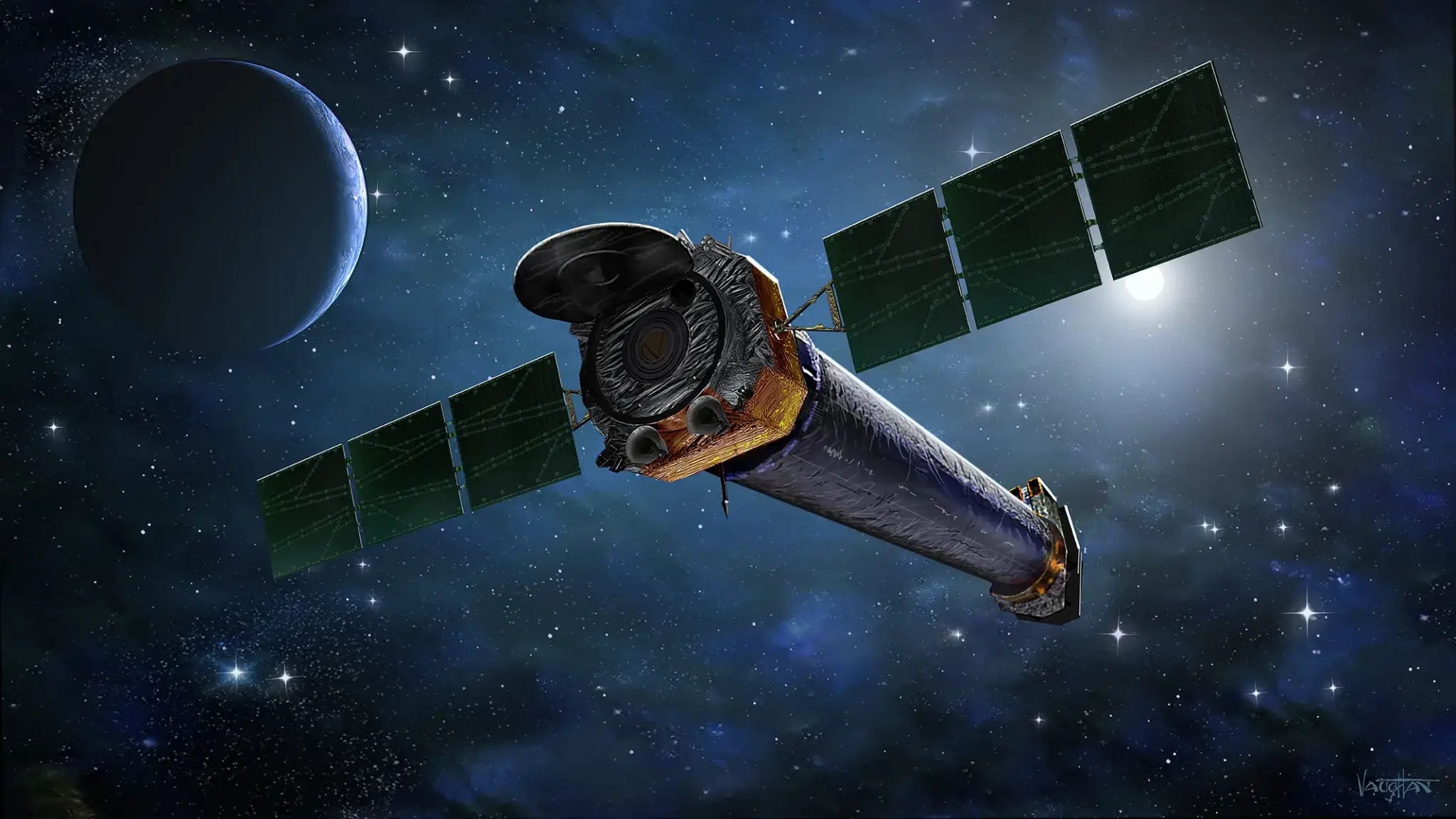
The Chandra X-ray Observatory picked up on the phenomenom (NASA/CXC & J. Vaughan)

These mysterious objects pulse in radio waves every few tens of minutes - a super slow beat compared to pulsars, which are rotating neutron stars observed to have pulses of radiation at very regular intervals.

Scientists using NASA’s Chandra X-ray Observatory - the world’s most powerful X-ray telescope, which is able to detect sources more than 20-times fainter than any previous X-ray telescope - found that ASKAP doesn’t just blink in radio waves, but also pulses in X-rays, on the exact same 44-minute cycle.

This is a first-ever discovery for this kind of object and opens up new questions about what it really is and how it works.

"This object is unlike anything we have seen before," said lead study author Andy Wang, an astronomer at Curtin University in Perth, Australia.

"ASKAP J1831-0911 could be a magnetar (the core of a dead star with powerful magnetic fields), or it could be a pair of stars in a binary system where one of the two is a highly magnetised white dwarf (a low-mass star at the end of its evolution)."

The unusual object is located 16,000 light years away (Pawel Libera/Getty Images)

He added: "However, even those theories do not fully explain what we are observing."

What's even more fascinating is that ASKAP's signals were found to have dramatically changed within a six-month period.

When scientists checked on it in August, they found that the radio signal had become 1,000 times weaker, and no X-rays were detected at all, compared to its signals given in February.

That sudden change left researchers scratching their heads.

“We looked at several different possibilities involving neutron stars and white dwarfs, either in isolation or with companion stars,” said co-author Nanda Rea of the Institute of Space Sciences in Barcelona, Spain, in a statement. “So far nothing exactly matches up, but some ideas work better than others.”
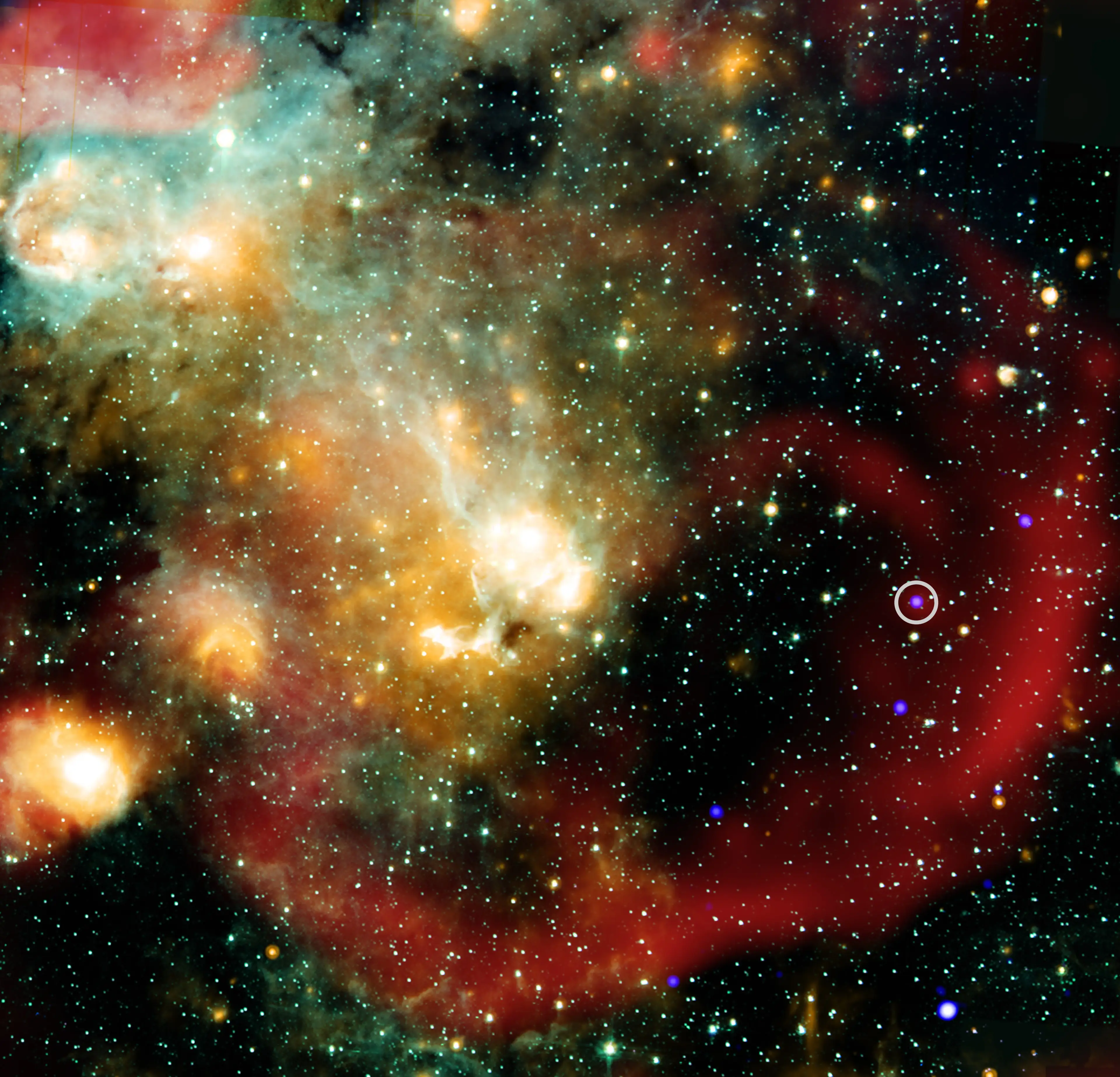
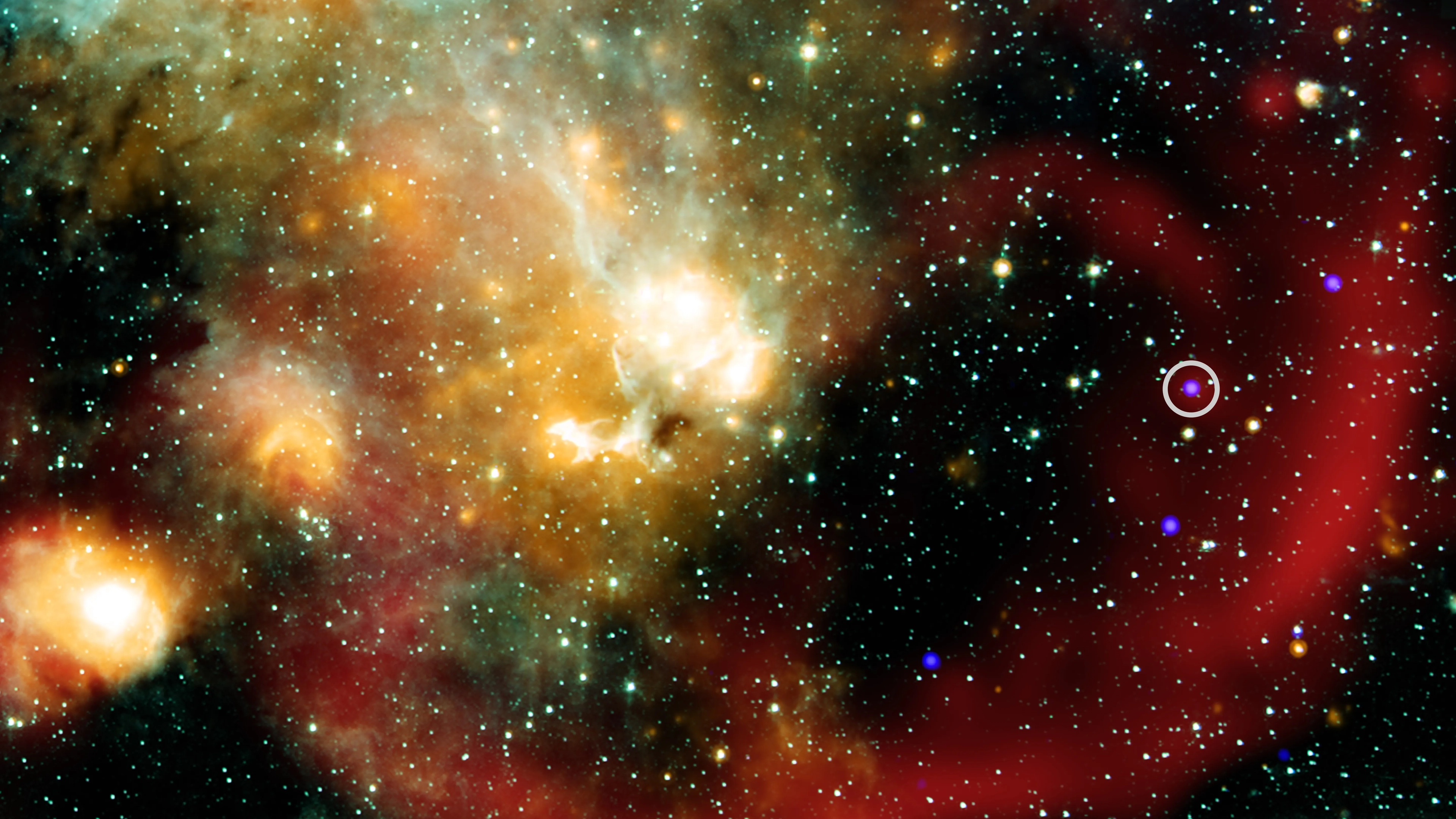
Circled is the mysterious Askap (NASA/CXC/ICRAR, Curtin Univ./Z. Wang et al)

Oddly, ASKAP also seems to line up in the sky with a supernova remnant - the glowing remains of an exploded star. However, researchers believe that’s just a coincidence.

The supernova debris appears to be in the foreground, like a cloud passing in front of the sun, while ASKAP J1832 is much farther away in the background.

For now, the object remains a cosmic mystery.

“Finding a mystery like this isn’t frustrating,” said co-author Tong Bao of the Italian National Institute for Astrophysics, in a statement. “It’s what makes science exciting.”

  • Where mysterious space object 3I/ATLAS is going as Harvard raises 'not natural' fears
  • Harvard scientist speaks out after mysterious space object heading our way appears to suddenly change color
  • NASA reveal unexpected new results of mysterious object aiming at Earth that scientist claims is 'not natural’
  • Bill Nye issues stern warning to Trump over concerns he could 'end NASA'

Choose your content:

a day ago
4 days ago
6 days ago
  • Justin Sullivan/Getty Images
    a day ago

    OpenAI names 22 industries at risk of job losses as it proposes four day week

    Two new reports suggest AI might be coming for your job - but you could also get a three day weekend

    Technology
  • Kayla Bartkowski/Bloomberg via Getty Images
    4 days ago

    Congressman Tim Burchett claims he has seen UFO footage that ‘defies logic’

    Tim Burchett says he has seen UFO footage that couldn't be man made - and he wants answers from the government

    Technology
  • NASA/JPL-Caltech/MSSS
    6 days ago

    NASA's Curiosity rover makes groundbreaking discovery that suggests Mars can support life

    An expert has claimed the new reveal 'increases the prospect that Mars offered a home for life in the ancient past'

    Technology
  • John Nacion/Variety via Getty Images
    6 days ago

    Bill Nye issues stern warning to Trump over concerns he could 'end NASA'

    Bill Nye the Science Guy revealed that Donald Trump's NASA proposal is a 'huge mistake'

    Technology