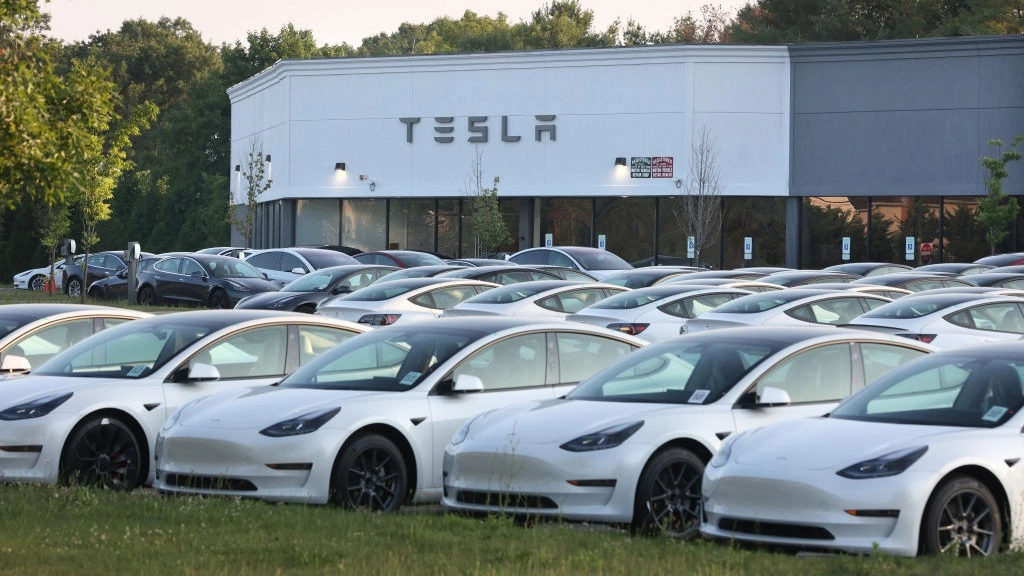
How much money you could save by switching to a Tesla as gas prices surge during Iran conflict

Americans could be saving money by driving electric vehicles as gas prices rise amid the conflict in Iran.
The US and Israel launched strikes against Iran on February 28, killing the latter's Supreme Leader Ayatollah Khomeini.
Iran has since hit back, targeting US bases in the Middle East.
On the US side, the operation has reportedly cost $6 billion for just one week of fighting, according to defense officials.
Advert
As tensions continue to escalate, so too do oil prices, which, of course, have a knock-on effect on drivers at the gas pumps.
Oil markets were thrown into chaos this week after Brent Crude prices recorded one of their biggest single-day jumps on record, briefly soaring to $119 per barrel before easing slightly, as Saudi Arabia, Iraq, Bahrain and Kuwait reportedly cut back production.

A major reason for the panic is the Strait of Hormuz, which is one of the most important shipping routes on the planet.
Between 20 and 30 percent of the world’s oil and gas supplies pass through this narrow stretch of water, helping to power homes, fuel cars and even manufacture fertilizer used in food production.
With security concerns rising, including threats from drones in the region, shipping traffic through the strait is under pressure, causing supplies to drop and prices to rise.
How much are electric vehicle drivers saving right now?
If you drive an electric vehicle such as a Tesla, you could be saving around $30 every time you fully recharge at the moment, compared to filling up a gas car.
That’s because, at current prices, it costs between $49 and $52 on average to fill a car in the US, according to the AAA.
Taking the midpoint, that’s roughly $50.50 per tank.
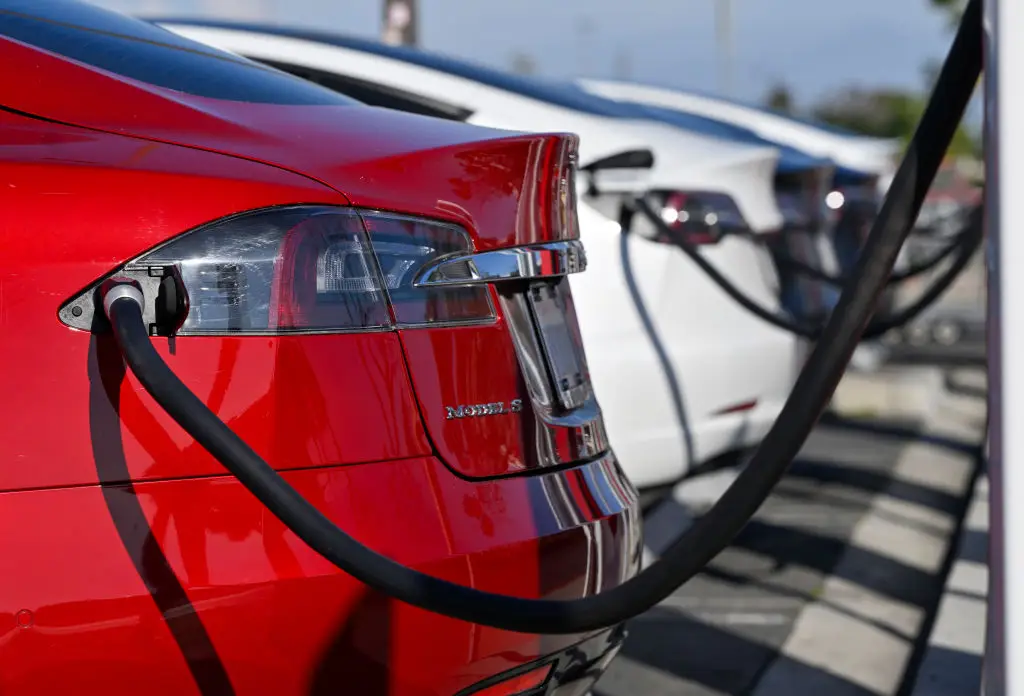
By comparison, charging a Tesla at home costs around $20 for a full charge, as per data from Energy Sage.
A typical petrol car travels between 350 and 450 miles per tank, so around 400 miles on average, while a Tesla can travel between 303 and 405 miles per charge, averaging roughly 354 miles.
So while gas cars may go slightly further on a full tank, the difference in range isn’t huge - but the difference in cost is.
Doing the math, drivers charging at home are saving around $30 per full 'fill' equivalent right now.

Broken down further, petrol works out at roughly 12.6 cents per mile, compared to about 5.6 cents per mile for a Tesla charged at home.
That's a saving of roughly 7 cents per mile.
So while the exact amount will vary depending on your car and local prices, Americans driving electric vehicles are currently saving around $30 every time they power up instead of filling up.
Topics: Tesla, Cars, US News, World News, Money
 Ellie Kemp