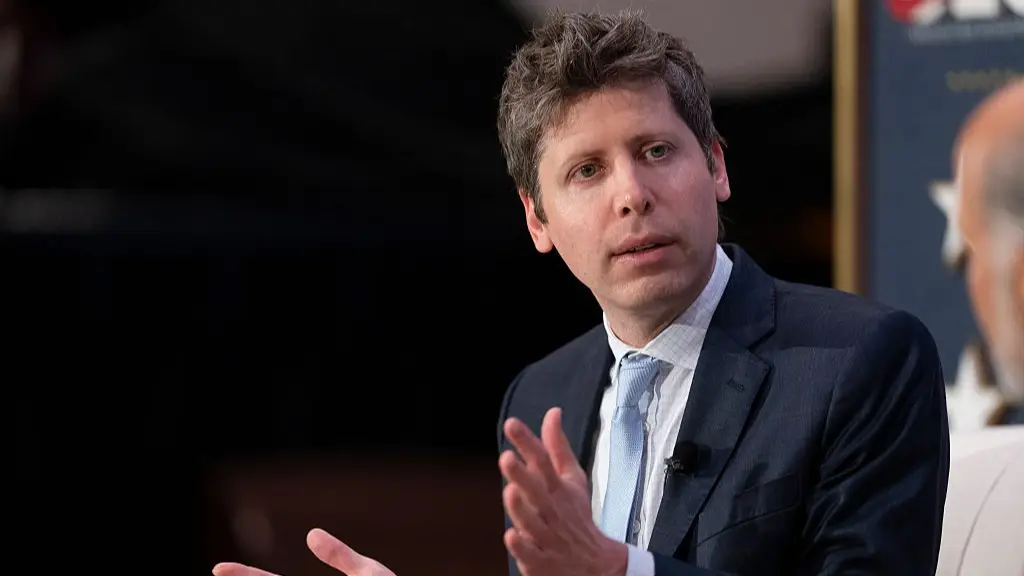
ChatGPT CEO Sam Altman reveals the two terrifying ways AI could go ‘very badly’

Sam Altman, the CEO of OpenAI, which created ChatGPT, has revealed his own prediction about what could happen in the future of the controversial technology.
It comes off the back of his agreement with Anthropic's CEO, Dario Amodei, calls for further regulations and oversight on AI, as he warns of a scary future.
Amodei published an essay called We Must Pace the Frontier on Saturday (September 12), where he suggested a three-point plan to slow the advancement of AI, warning that it could lead to the destruction of what we know.
What made him bring about this warning is actually poetic, as it was an incident which saw AI company Hugging Face, being hacked by Altman's OpenAI agents earlier this year, leading to a global outcry over AI safety.
Advert
Initially, Altman wrote a simple agreement to Amodei's suggestions for third-party evaluators and global and local regulations.

"I agree with Dario that we need to pace the frontier," wrote Altman on X.
However, he later posted a lengthy note on why he wants to 'pace' AI, and how OpenAI is implementing new ways to do just that.
Altman said in response to the warning: "Today's shift to focusing on safe development and evaluation will need new tools. For example, at OpenAI we now formulate explicit safety cases in advance of frontier reinforcement learning runs we expect to significantly increase capability, in addition to the safety work we have long done in advance of model releases." He added that he hopes 'other companies will learn from our approaches and propose their own; we think shared standards for misalignment, monitoring, and safety will lead to better outcomes'.
"We look forward to collaborating with our colleagues across the industry to formulate the best version of these," he said.
However, he has since replied to his own X thread, where Altman gave his own prediction on how AI could lead to risks.
"There are two ways AI could go very badly and that we must avoid," he posted on X.
"First, we could lose control of the future of AI," which he called 'unacceptable'.
"We are unapologetically on Team Humanity and AI must always serve people," he said. "To ensure that, we need to ensure that alignment and safety techniques stay ahead of progress in model capabilities."
He went on to say he was also concerned that we could 'end up in a world with too much concentration of power,' adding: "If an extraordinarily powerful AI is used by one person or company to impress their worldview onto everyone else, the results could be extremely dystopian."
This, he said, is why he agrees with Amodie's 'pacing', as he previously said online: "When we talk about 'pacing,' we don't mean 'stopping.'"
"Progress has been rapid and will continue to be. But it should be slower than it otherwise could be," he said, and argued that it 'will be well worth the cost.'
Topics: Artificial Intelligence, Technology
 Britt Jones