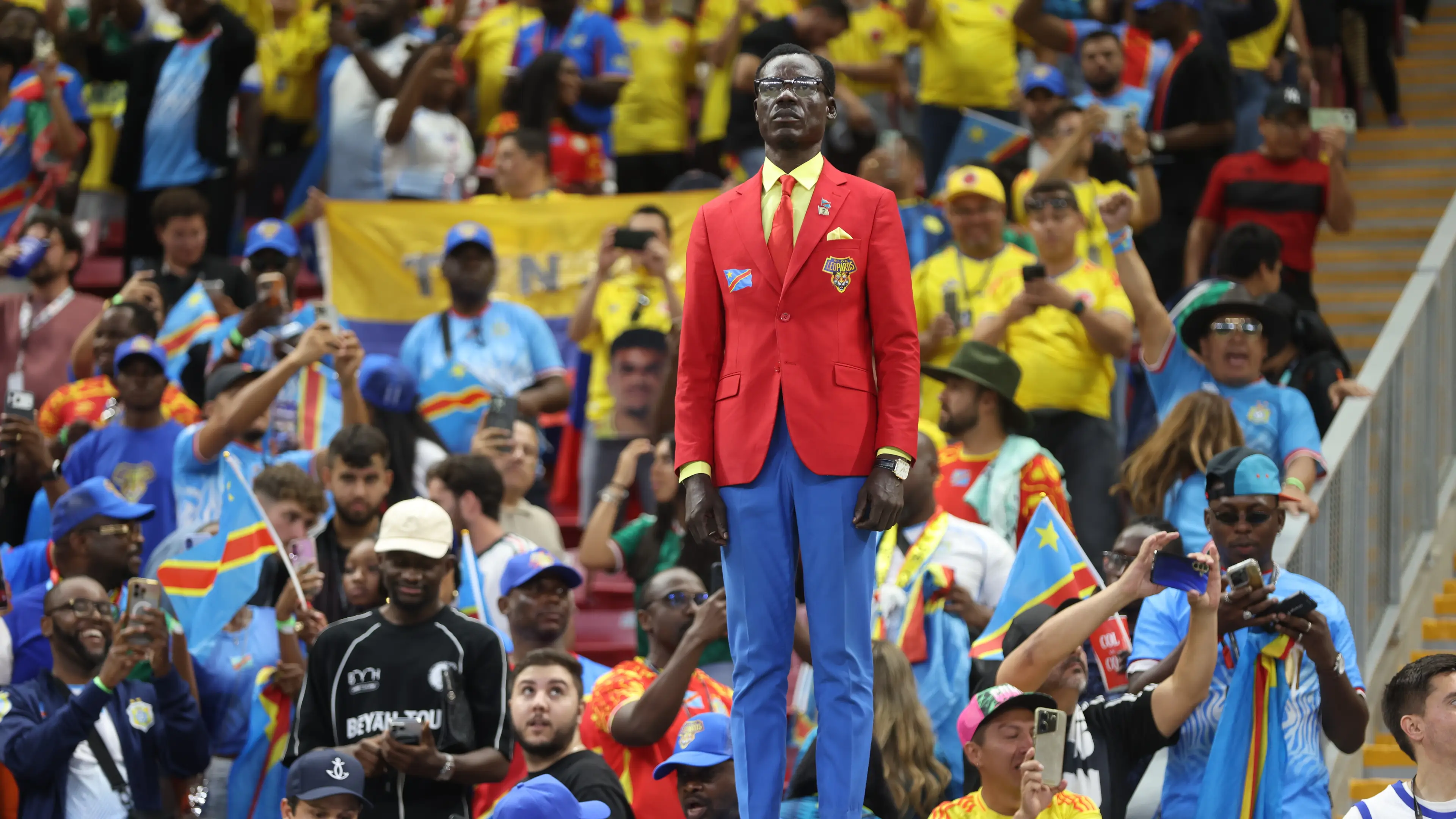
Reason why man is standing motionless for entire World Cup matches explained

If you've watched a game at the World Cup where the Democratic Republic of Congo are playing, you may have noticed an unusual addition to the team's fans.
Amidst the crowds of cheering and singing supporters, one man cuts an unusual figure in the stands.
He stands there entirely motionless for the entire game, from kick off to the final whistle, dressed in a suit and glasses, one arm raised in a wave.
The man is Michel Kuka Mboladinga, and his presence at DRC matches has become known as 'Lumumba Vea', or 'Lumumba Lives'.
Advert
Such is Mboladinga's importance to the DRC's national team, that he was even allowed to accompany them to the World Cup in the US, Canada, and Mexico as part of the DRC team's official delegation.
But why is he so significant?
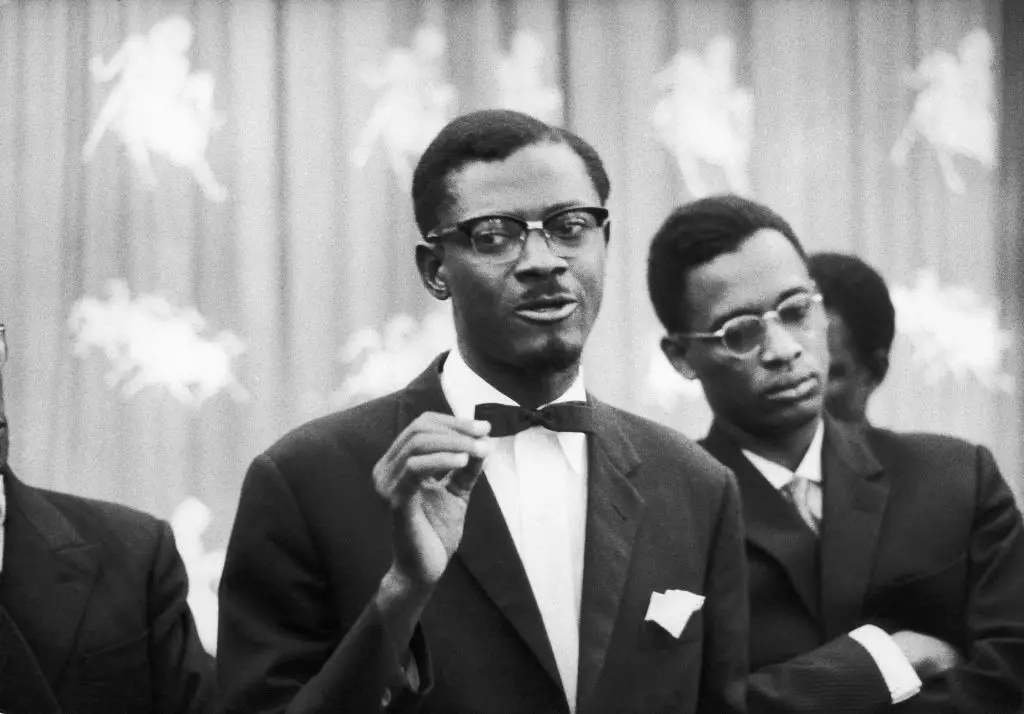
Who was Lumumba?
The Lumumba in Mboladinga's vigil is Patrice Lumumba, the DRC's first president after it gained independence from Belgium in June 1960, then called the First Congolese Republic.
Lumumba was a revolutionary, with his ideology including African nationalism, a way to create African states as a way to gain independence after European colonization, and Pan-Africanism, a philosophy which champions unity among African people both within the continent and around the world.
Lumumba gave a defiant speech at the official handover of of power when the Congo gained independence from Belgium, even though he had not been scheduled to do so.
In it, he referred to the Congo and Belgium being 'on equal terms', and highlighted that independence had not been given on good terms by Belgium.
He said: "For this independence of the Congo, although being proclaimed today by agreement with Belgium, an amicable country, with which we are on equal terms, no Congolese worthy of the name will ever be able to forget that it was by fighting that it has been won, a day-to-day fight, an ardent and idealistic fight, a fight in which we were spared neither privation nor suffering, and for which we gave our strength and our blood."
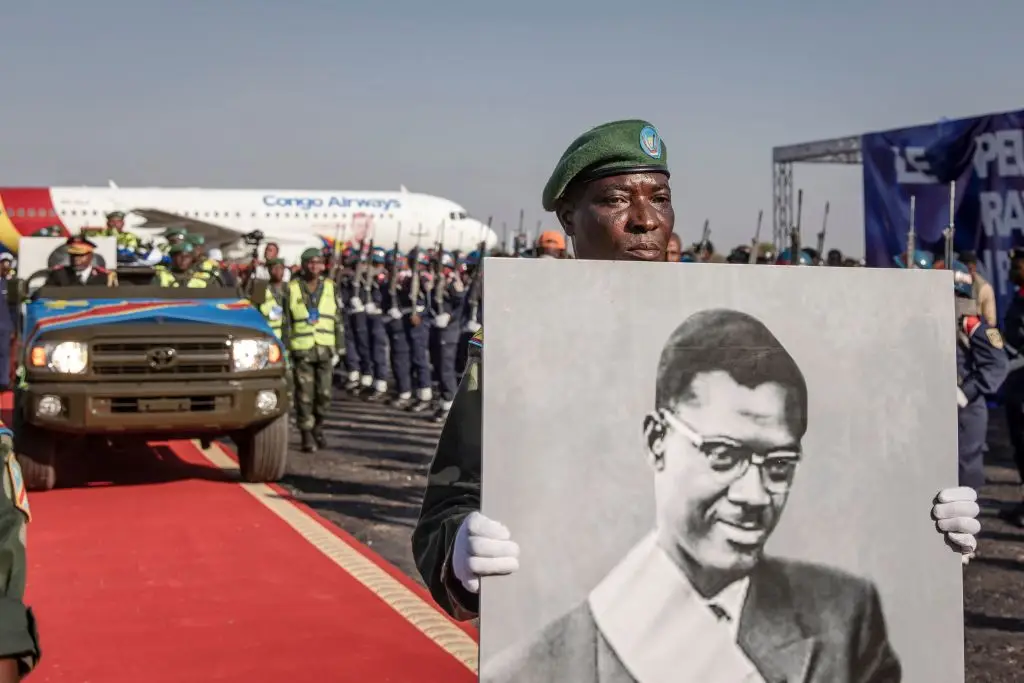
What happened to Patrice Lumumba?
Lumumba is now remembered as much for his death as his life.
In January 1961, at the age of just 35, Lumumba was assassinated after being ousted from power by Belgian-backed Congolese forces.
Belgian personnel were found to have been involved in his kidnapping and shooting by a firing squad.
After his death, Lumumba's body was dismembered and dissolved in a vat of acid, only his gold-crowned tooth was recovered and kept by a Belgian police officer for decades.
Lumumba's tooth was formally returned to his family and the DRC in 2022.
In 2011, members of his family brought a case against 10 Belgians alleged to have been involved in his death.
Why does Mboladinga stand still at DRC games?
Mboladinga aims to keep alive the memory and legacy of Lumumba, who became a symbol for the African struggle against colonization and its legacy.
He first drew international attention when he attended the 2025 Africa Cup of Nations finals in Morocco.
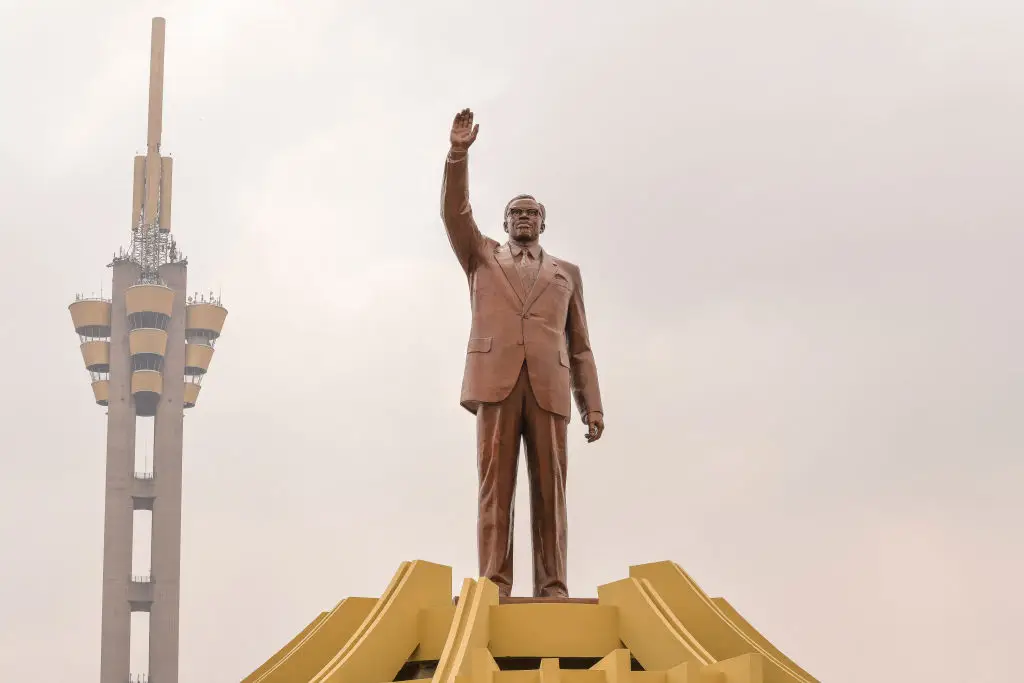
His pose is based on a statue of Lumumba in DRC capital Kinshasa.
Explaining how he manages to stand still for so long, Mboladinga said in an interview quoted in CNN: "Believe it or not, but I do practice, I can actually practice 20 days out of a month, but I'll also take a lot of rest."
Topics: World News, World Cup
 Kit Roberts