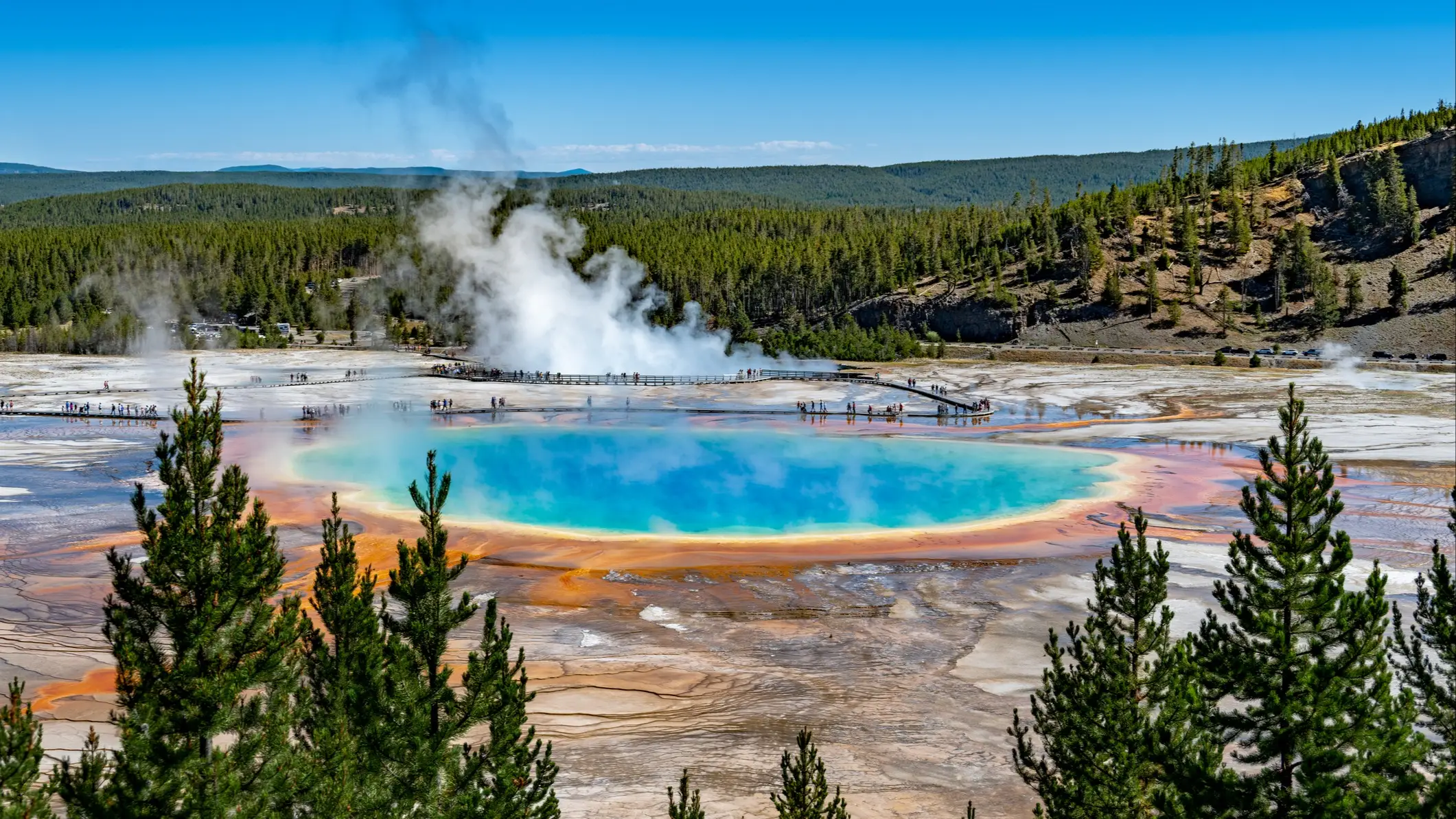
‘Worst-case scenario’ Yellowstone eruption could cause 1.3 billion premature deaths, scientists say

If Yellowstone's supervolcano ever erupted, scientists estimate the death toll could eventually climb into the hundreds of millions, or even beyond a billion, once the long-term effects on food, water and healthcare are factored in.
That's according to a detailed hypothetical timeline published by The Conversation, in which disaster and volcano experts modelled exactly what could happen if the Wyoming supervolcano, dormant for hundreds of thousands of years, woke up.
The scenario isn't a prediction, but a scientific thought experiment built on existing research and how countries have historically responded to major disasters. And it starts, ominously, with a set of seismic readings that look almost routine.
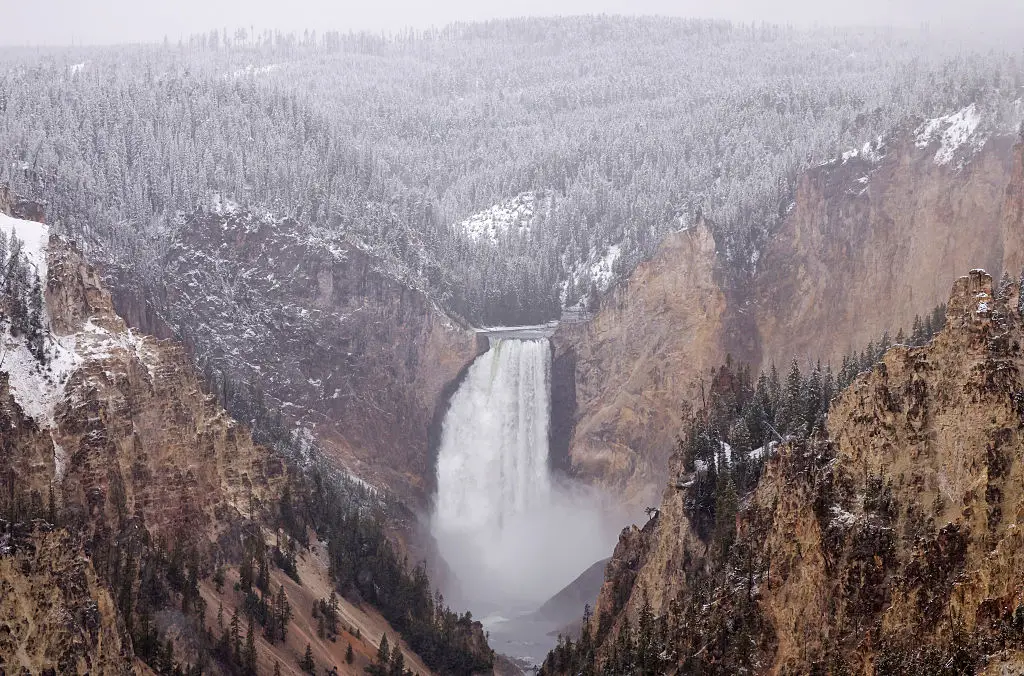
What would happen if Yellowstone erupted?
According to the researchers, the first sign would be a swarm of small earthquakes beneath Yellowstone's caldera, spotted by an analyst at the University of Utah Seismograph Stations, monitored round the clock via seismometers, GPS stations and gas sensors.
Advert
Initially dismissed as unremarkable, the swarm would begin migrating upward over the following month, accompanied by accelerating ground uplift, prompting Yellowstone's Volcano Alert Level to rise from 'normal' to 'advisory'.
Within weeks, the probability of a major eruption within three months would jump from 6-9% to 21-27%, triggering quiet evacuation planning from FEMA.
Two weeks before eruption, scientists would put the odds of a cataclysmic blast within three weeks at 85-92%, prompting a 100-kilometre evacuation zone around the park, affecting roughly 200,000 residents.
When the eruption itself hits, magma reaching temperatures of 650-800°C would fragment into ash and pumice, hurling an eruption column 30 to 50 kilometres into the sky, visible from Denver, some 800 kilometres away. Pyroclastic density currents would flatten and incinerate everything for tens of kilometres, with researchers estimating up to 1,000 immediate deaths from the blast itself.
How many people would die if Yellowstone erupted?
The immediate casualties would only be the beginning. Within days, Billings, Montana could be buried under up to 1.8 metres of ash, while Salt Lake City and Boise would receive tens of centimetres.
Ash contaminating power lines would cause widespread electrocution and fire risks, and collapsing infrastructure would knock out water treatment, sewage and communications across multiple states.
The longer-term toll is where the numbers become staggering.
Sulphur dioxide pumped into the stratosphere would trigger a global cooling episode of up to 1.5°C, devastating crops across North America and driving global food prices sharply upward.
A decade on, researchers estimate the eruption's ripple effects, from disease to famine to collapsed healthcare systems, could push global freshwater shortages from 4.4 billion to 4.8 billion people, while the world's population could fall from 8.3 billion to 7.9 billion.
Scientists behind the analysis put the eventual excess mortality figure at between 0.7 and 1.3 billion premature deaths, with potentially double that number left with lasting health effects.
Despite the scale, the experts stress this remains an extreme, worst-case hypothetical, and that Yellowstone last erupted on this scale roughly 631,000 years ago.
As they put it, the eruption ‘did not end humanity, or come close to doing so.’
Topics: Climate Change, Environment
 Thomas Bamford