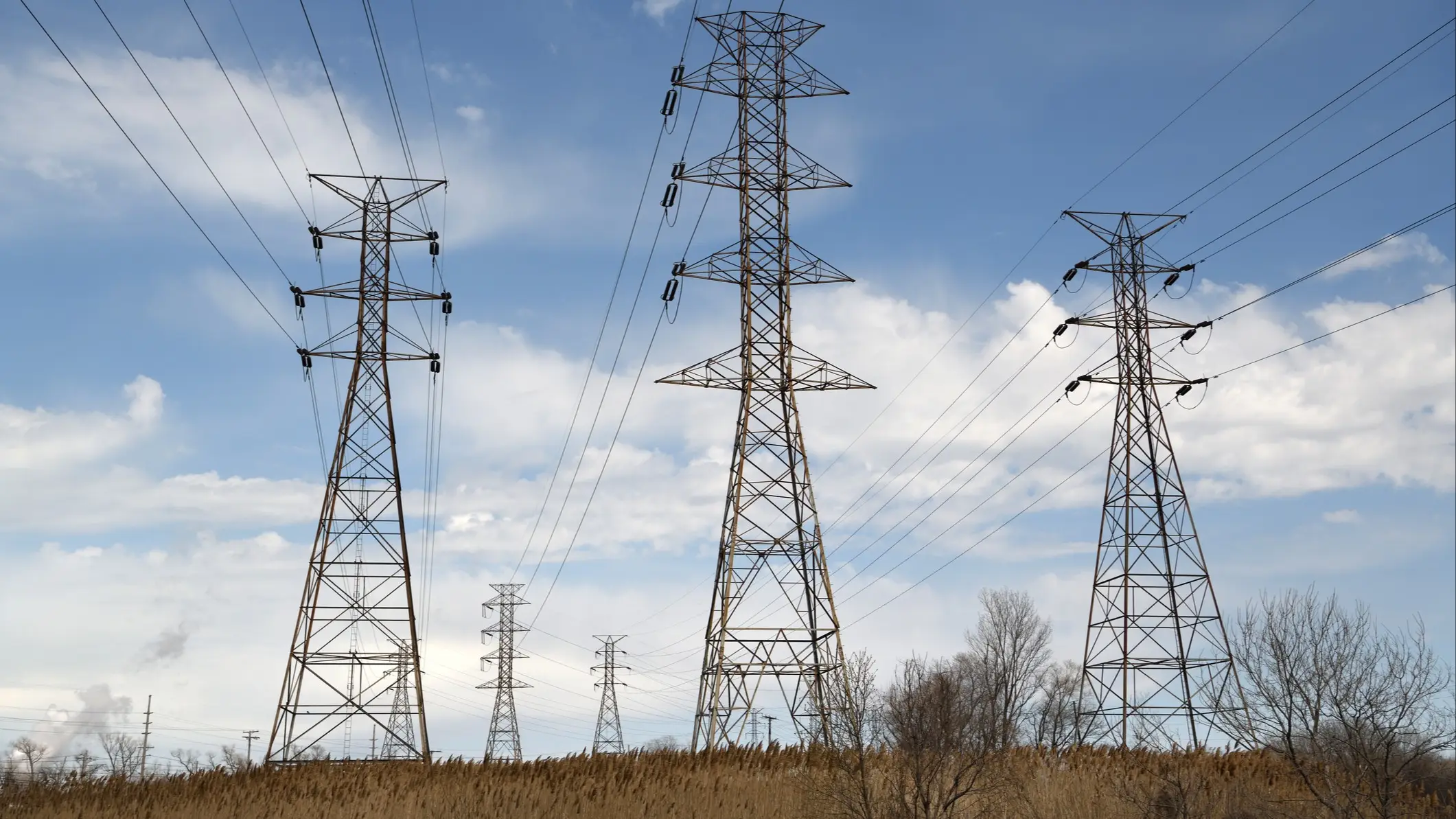
US issues power grid emergency warning to 13 states over hot temperatures and pollution

PJM Interconnection, the largest grid operator in the US, was issued a Maximum Generation Alert, which sends 13 states into an emergency electrical procedure.
The Federal Government declared yesterday (October 12) that there is to be a power grid emergency across Delaware, Illinois, Indiana, Kentucky, Maryland, Michigan, New Jersey, North Carolina, Ohio, Pennsylvania, Tennessee, Virginia, West Virginia and Washington D.C.
The Department of Energy approved the emergency order for PJM, which reports say has enough power to generate electricity to somewhere between 35 and 45 million homes, per Evolution Sustainability Group.
However, a quick search reveals online that it could be upwards of 65 million people who benefit from its services.
Advert
Per the DOE, the order takes hold from October 13 through October 16 and cites unusually hot temperatures in the area it covers as being a strain on the grid that is causing issues at the plant.
The DOE website also states the Department ‘issued emergency DOE Order No. 202-26-50, pursuant to section 202(c) of the Federal Power Act, to PJM Interconnection, L.L.C. (PJM).’
What does the emergency warning mean?
This Act was filed by the grid provider on October 11, citing that if the DOE doesn't accept the filing, ‘an imminent electric reliability emergency will exist that will threaten transmission reliability and the ability to serve load in the PJM Region due to a shortage of electric energy, a shortage of facilities for the generation of electric energy, and other causes.’
The order allows power plants to run over their pollution limits, and PJM could enact several other modes to ensure its vendors are using as little energy as possible as it attempts to keep homes and businesses powered.
PJM’s region, according to the order document, includes ‘all or parts of Delaware, Illinois, Indiana, Kentucky, Maryland, Michigan, New Jersey, North Carolina, Ohio, Pennsylvania, Tennessee, Virginia, West Virginia, and the District of Columbia’.
The order will allow PJM to make major decisions as a last resort before declaring an Energy Emergency Alert (EEA) 3 or during an EEA 3.
This EEA is when electricity is at a critically low point. If this happens, the order states that PJM is authorized to tell its vendors to use its backup generators to conserve power.

PJM further has the ability to issue a Maximum Generation Alert, which notifies transmission and generation owners, who can then decide if the services need to be deferred or canceled.
It also enables them to work away from current environmental constraints if it means they can work efficiently – which includes creating more pollution in the areas if need be.
What could happen next?
According to PJM Inside Lines, the order can be issued up to five days in advance, and that a Capacity Advisory anticipates PJM taking specific action during this time such as:
- Recalling or rescheduling of generation and transmission maintenance outages
- Notifying neighboring grids to prepare for decreased imports from its grid
- Alerting PJM Members to update their information about generator availability, fuel supply concerns, environmental constraints and more
As of yesterday, the forecasted electricity demand, or load, for the affected period is:
- Monday – 103,125 MW
- Tuesday – 112,447 MW
- Wednesday – 112,282 MW
However, none of the advisories say customers need to do anything.
Instead, they just have to wait as PJM manages tight electricity supply conditions across its region.
“This order will help ensure millions of American families and businesses across the mid-Atlantic have access to affordable, reliable and secure electricity by making additional power generation, including backup power, available to use as needed,” said US Secretary of Energy Chris Wright, in a statement.
Wright added that DOE is committed to using ‘every available tool to prevent blackouts.’
UNILAD reached out to the Department of Energy and PJM Interconnection for comment.
 Britt Jones