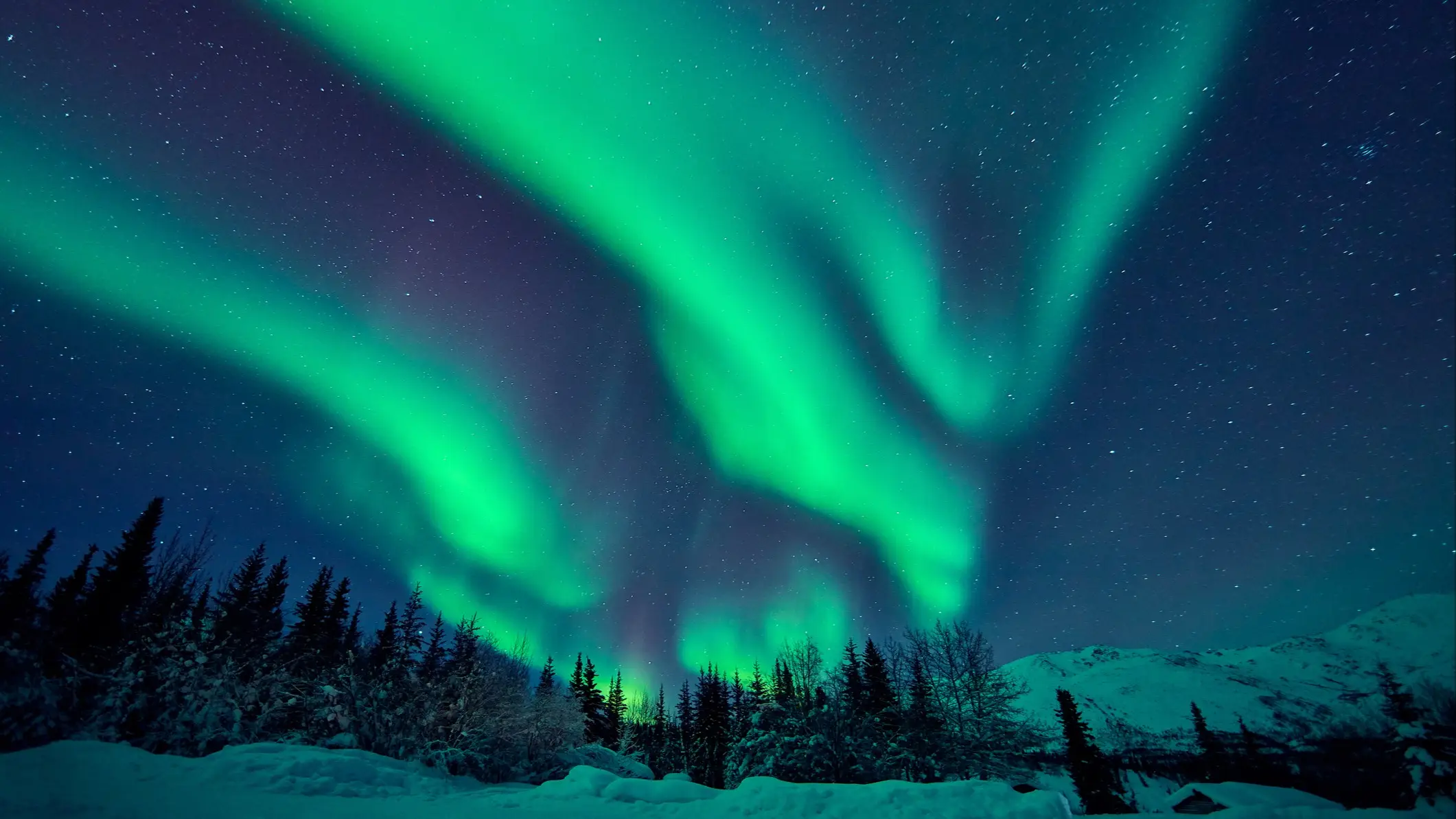
Northern Lights could be visible across 28 US states tonight – here's how to see them

Up to 28 US states could see the northern lights between Friday, Oct. 9 and Sunday, Oct. 11, as could parts of Canada and northern Europe.
The reason is a trio of coronal mass ejections (CMEs), eruptions of solar material and magnetic fields from the sun, that could reach Earth over those three days, according to Forbes.
When that material arrives, it can trigger a geomagnetic storm, which is what can push the aurora farther south than usual.
The National Oceanic and Atmospheric Administration (NOAA) has forecast a G2 (Moderate) geomagnetic storm, with the strongest activity now expected between 2 p.m. and 8 p.m. EDT on Friday: several hours later than previously predicted.
Advert
That could bring the lights to parts of the northern US around nightfall, particularly if the storm lasts into the evening.
NOAA’s forecast states: “G1-G2 (Minor-Moderate) geomagnetic storms are likely on 09 Oct due to the anticipated arrival of a CME from 06 Oct.”
That CME followed an M1.4-class solar flare on Tuesday, Oct. 6. Called a full-halo CME, it appears to surround the sun in images from NASA’s SOHO spacecraft.
According to the UK Met Office, a glancing blow from a CME launched on Wednesday, Oct. 7 could bring G1 (Minor) storms on Saturday, with a slight chance of G2.
A third, tied to an M6.7-class solar flare on Thursday, Oct. 8, could arrive on Sunday, with the Met Office forecasting active to G1 conditions, a chance of G2 and a slight chance of G3 (Strong).
Across the weekend, the Met Office forecasts G1, G2 and possibly even G3 storms, the latter a potential Kp 7 event that could bring aurora farther south than usual.
However, it notes ‘significant uncertainty in the timing of these features’.
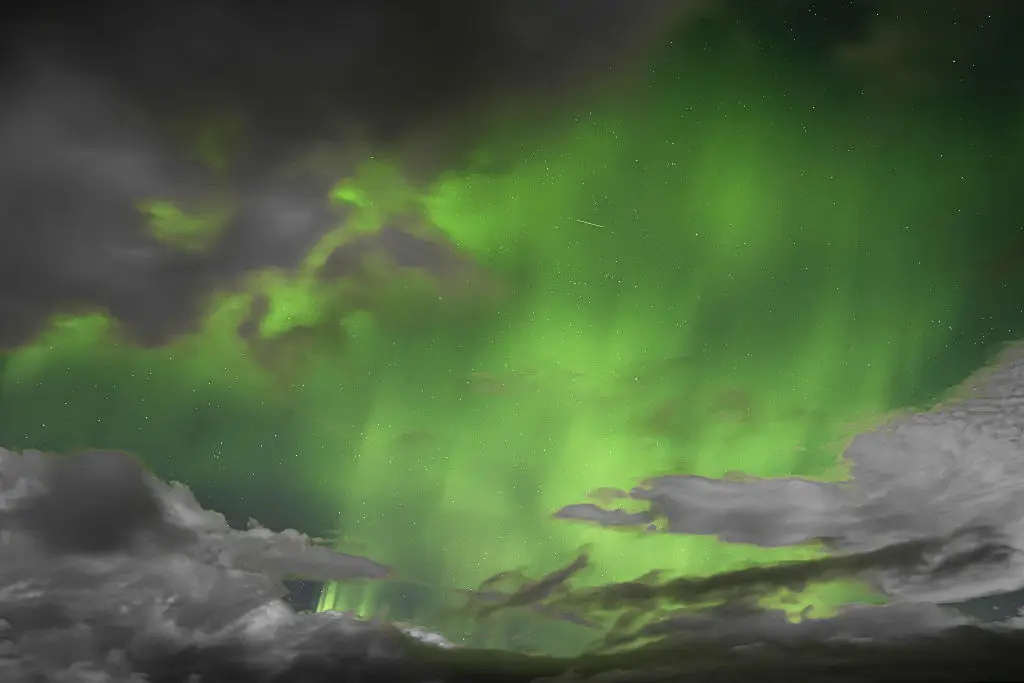
US states that could see the northern lights this weekend
At G1, Alaska and states across the northern tier: Washington, Idaho, Montana, North Dakota, South Dakota, Minnesota, Wisconsin, Michigan, Maine, Vermont and New Hampshire: could have chances, particularly from dark spots near the Canadian border.
At G2, the lights could stretch farther south, potentially allowing photographers in Oregon, Wyoming, Nebraska, Iowa, Illinois, Indiana, Ohio, Colorado, Pennsylvania and New York to capture faint displays.
At the less likely G3 level, parts of Kansas, Missouri, Kentucky, West Virginia, Virginia and Maryland could see them, especially from dark locations with unobstructed views north.
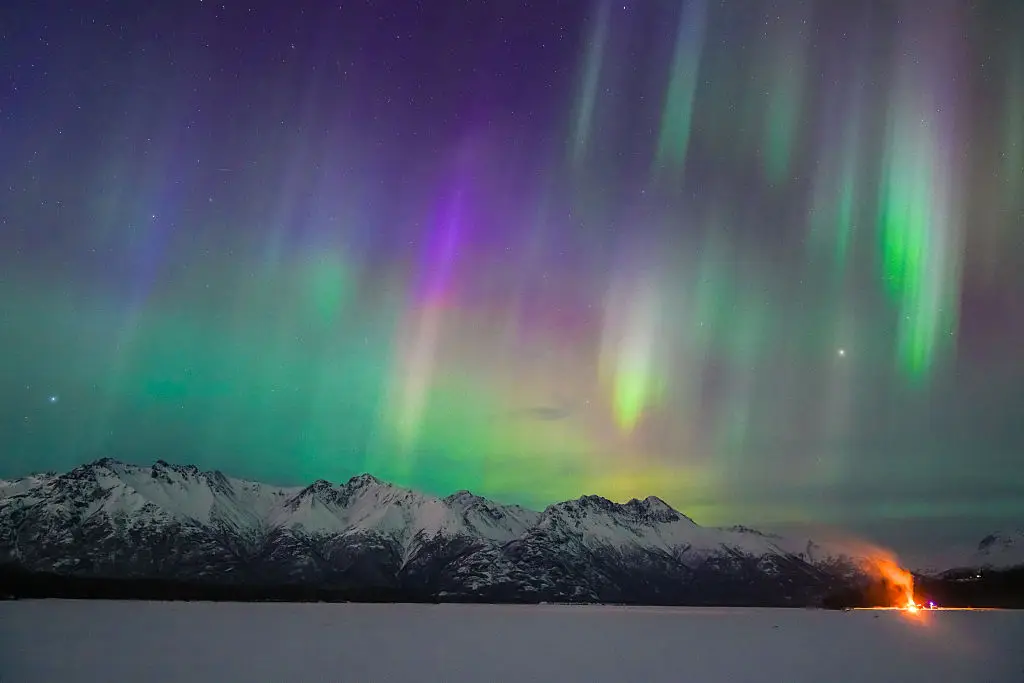
How to see the northern lights tonight
A new moon on Saturday, Oct. 10 means virtually no moonlight, ideal wherever skies are clear. If the aurora reaches the northern US, a smartphone camera may pick up faint colors that are hard to see with the naked eye, most likely low on the northern horizon.
Apps such as Aurora Now, My Aurora Forecast and Glendale Aurora offer up-to-the-minute alerts and live solar wind data.
Nothing is guaranteed though. Cloud cover, light pollution and the magnetic direction of the incoming solar material, known as Bz, all matter.
A sustained southward Bz can mean aurora farther south than expected, while a northward Bz may mean a weak display limited to higher latitudes.
 Thomas Bamford