
NYC Marathon runner, 24, dies after collapsing two miles from finish line in Central Park

The father of a 24-year-old runner who died after collapsing during the New York marathon said her death is 'unfathomable'.
Rachel Apa, who took part in Sunday's marathon, collapsed in Central Park at mile 24, just two miles before the finish line. A hospital worker who was watching the race as a spectator rushed to her aid and administered CPR. Medical staff then rushed to the scene with a defibrillator.
Her father, Steve Apa, told The New York Times that she died at 9.40 p.m. after being taken to hospital. According to Steve, his daughter died from rhabdomyolysis, which as per Cleveland Clinic, is a rare life-threatening condition where your muscles break down. It can happen after excessive exercise without rest or after an injury.
The Pennsylvania native was running to raise money for Parkinson’s Foundation’s Champions team in honor of her grandfather, who she had lost four years prior. In a fundraiser, she said he was her 'role model growing up' and taught her to 'push limits,' as well as shaping her love for 'sports and movement'.
Advert
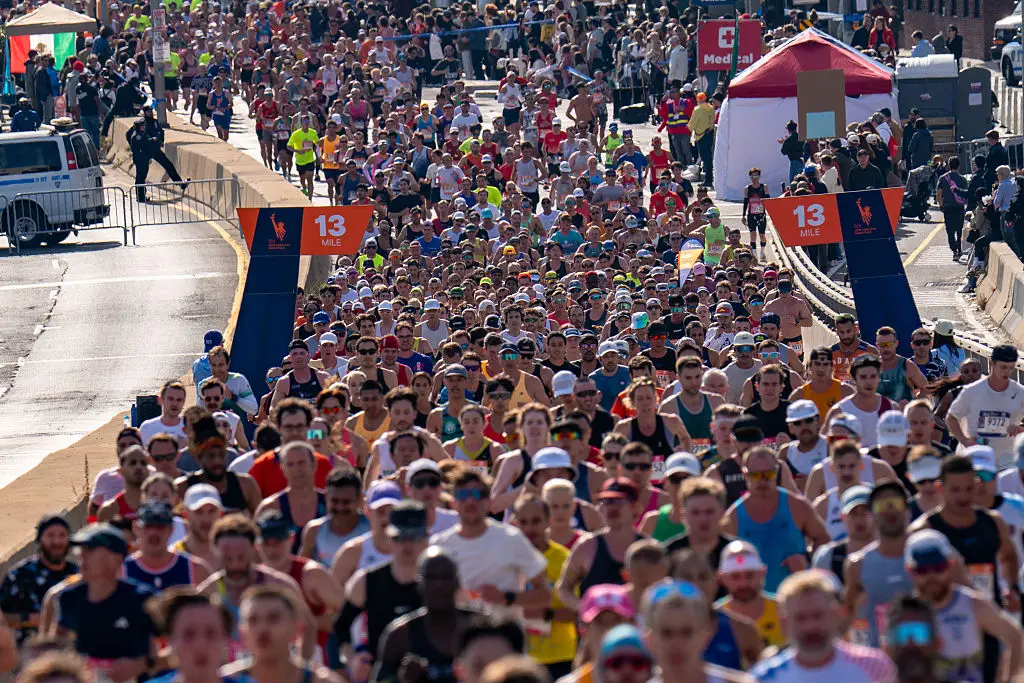
She had been training for months.
Apa, who was running her first marathon, was in contact with her parents via text messages throughout the race, with her father telling the Times she was in 'perfect health and perfect shape'.
Her mother, Michelle Apa, had recorded her daughter passing Mile 14, and her parents had been tracking her on an app throughout the run. At Mile 18, she had texted her father saying: "Ow." At Mile 19, she sent another, which read: "Ow, Ow."
The last exchange between the two came at Mile 23 when Steve sent an encouraging message to his daughter telling her it was the 'final stretch,' however, it went unanswered.
Shortly after, her mother realized she wasn't making progress after she had collapsed, prompting her to dash over to the Park.
In a statement, the New York Road Runners, who organize the race, said: “We are deeply saddened by the death of one of our runners following yesterday’s race.
“Our thoughts and sincere sympathies are with the runner’s family, friends, and the entire running community.”
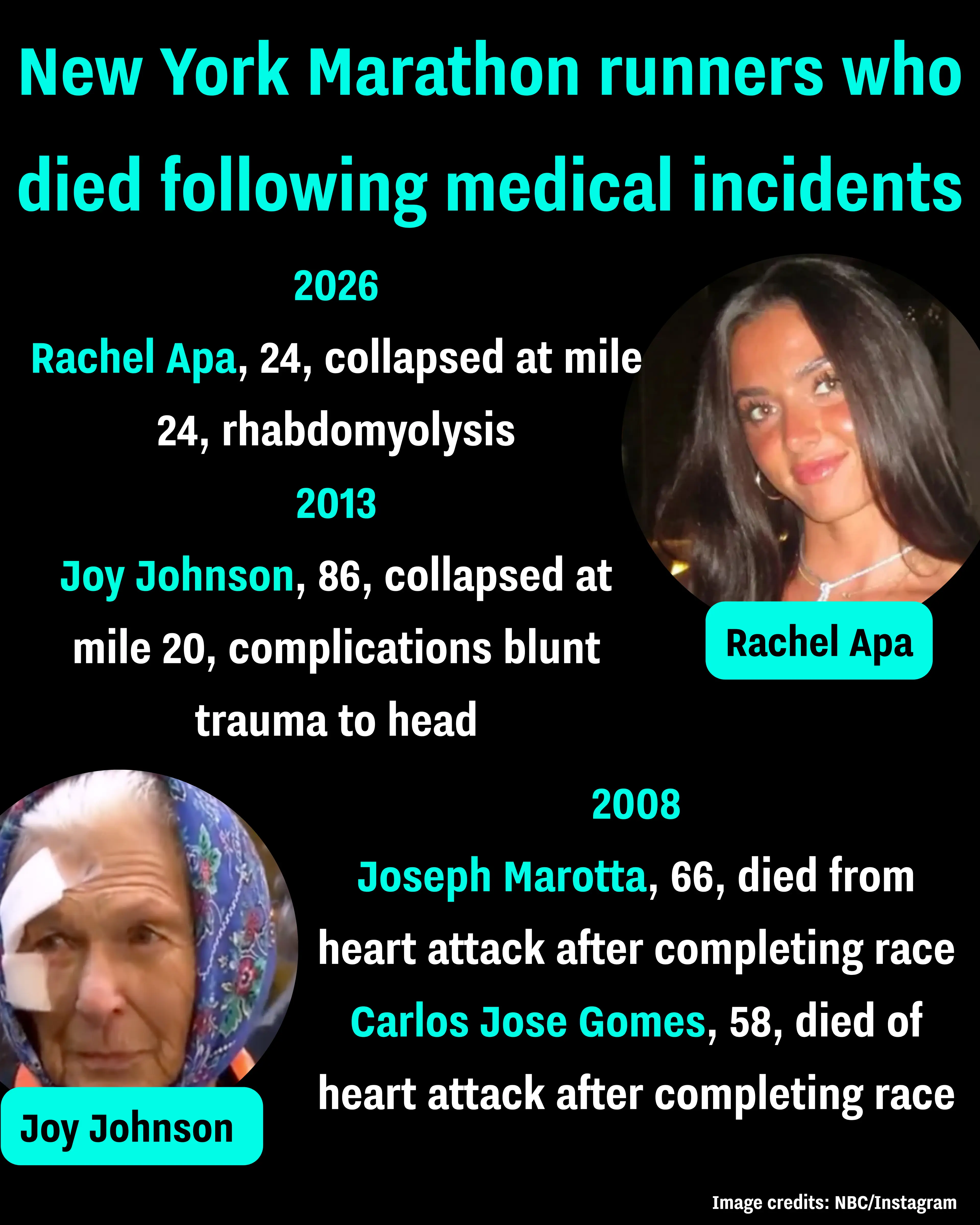
Rachel, who was a student at Charleston Southern University, is the first person to die from a medical incident at the New York Marathon since 2024.
Her father described his daughter's death as 'unfathomable'.
The New York Marathon has been taking place in the Big Apple since 1970. 2026 marked the first year a race has exceeded 60,000 finishers, setting a record of 61,146 finishers.
What is rhabdomyolysis?
Rhabdomyolysis affects 26,000 people a year in the US, according to Cleveland Clinic.
Symptoms include swollen, weak, tender or sore muscles and urine that's brown or red. Other symptoms include dehydration, not needing to pee as much and nausea.
Symptoms may not appear for hours or days after the initial muscle injury, according to the Centers for Disease Control and Prevention.
Rhabdomyolysis can happen if the muscles don't have time to heal following an intense workout, or following an injury like a severe burn, electrocution or crushing injury.
The muscles break down, releasing potassium, phosphate, myoglobin, creatine kinase and urate into the bloodstream. Too much of these substances overwhelms and damages the kidneys, potentially leading to life-threatening kidney failure.
It's not just endurance athletes who are at increased risk. Heat exposure is a risk factor, so firefighters, factory workers and outdoor laborers are more likely to develop the condition.
The CDC adds: "It’s a common misconception that only unfit or out of shape people get rhabdo. People in great shape, such as firefighters, marathon runners, and professional athletes, get rhabdo. It can happen to anyone and even after activities you have done in the past without a problem.
"People also falsely believe dehydration causes rhabdo. Dehydration doesn't cause rhabdo but it can make it worse. Dehydration impairs the body's ability to get rid of the proteins and electrolytes in the blood stream released from damaged muscle. These proteins and electrolytes cause organ damage."
 Kiesha Dosanjh