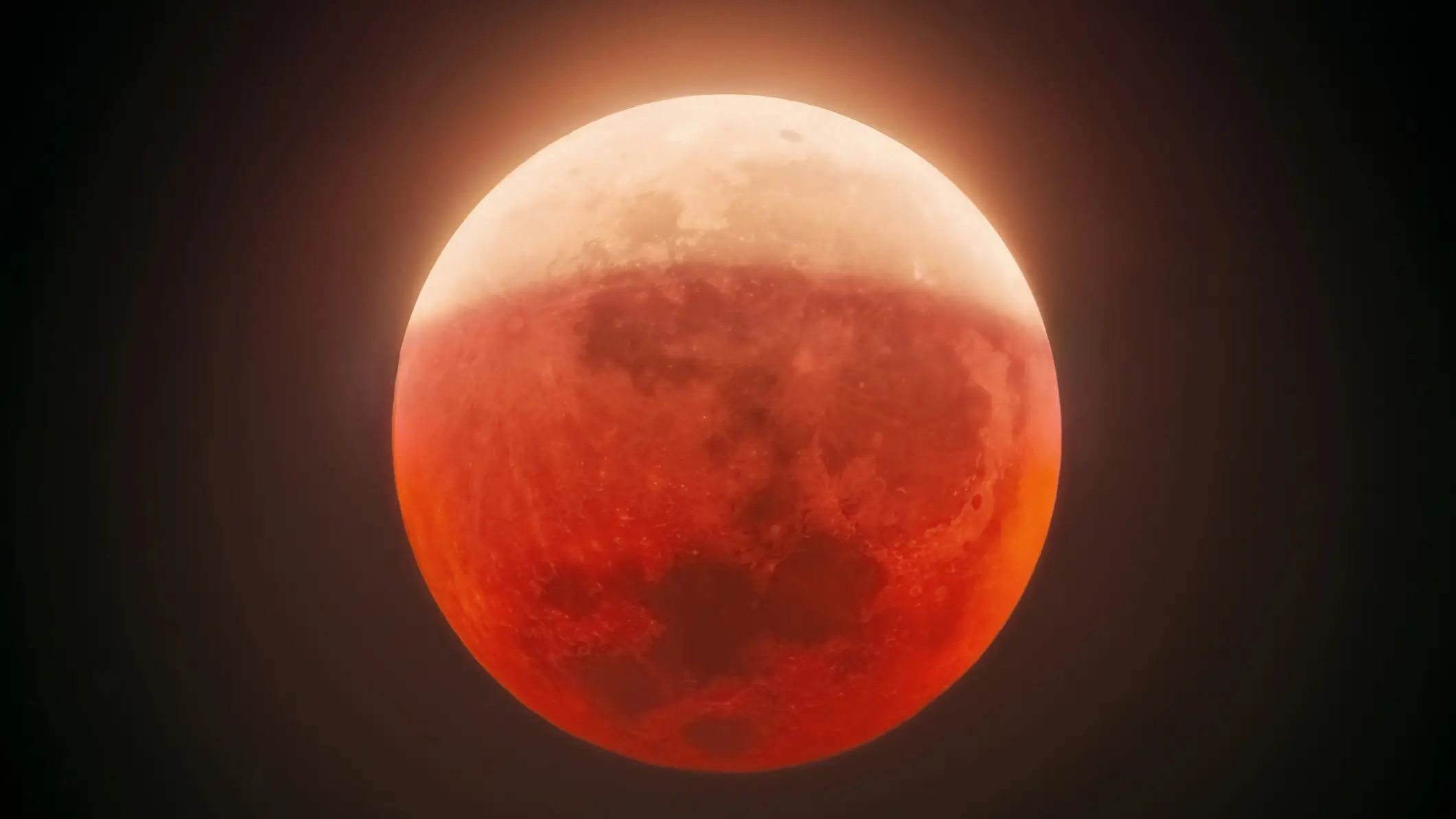
Perfect time of day to see the rare lunar eclipse across the US this week

Americans can witness an incredible phenomenon across the sky this week, as a rare event called selenelion could show off both the rising sun and an eclipsed moon at the same time.
How's that for a two-for-one special!?
There are usually between two and five lunar eclipses each year, as Royal Museums Greenwich (RMG) reports, although these aren't always a 'total' eclipse.
The US last saw a total lunar eclipse on April 8, 2024.
Advert
Yet on Tuesday morning (March 3), Americans could catch a glimpse of a total lunar eclipse as well as the selenelion - but only for around 59 minutes.
Total eclipses occur when the Sun, the Earth and the Moon align in one straight line, meaning the Moon passes through the darkest part of the Earth’s shadow.
The Moon appears a shade of deep, dark red as it's illuminated by light that has passed through the Earth's atmosphere and been bent backwards by refraction, as RMG explains.
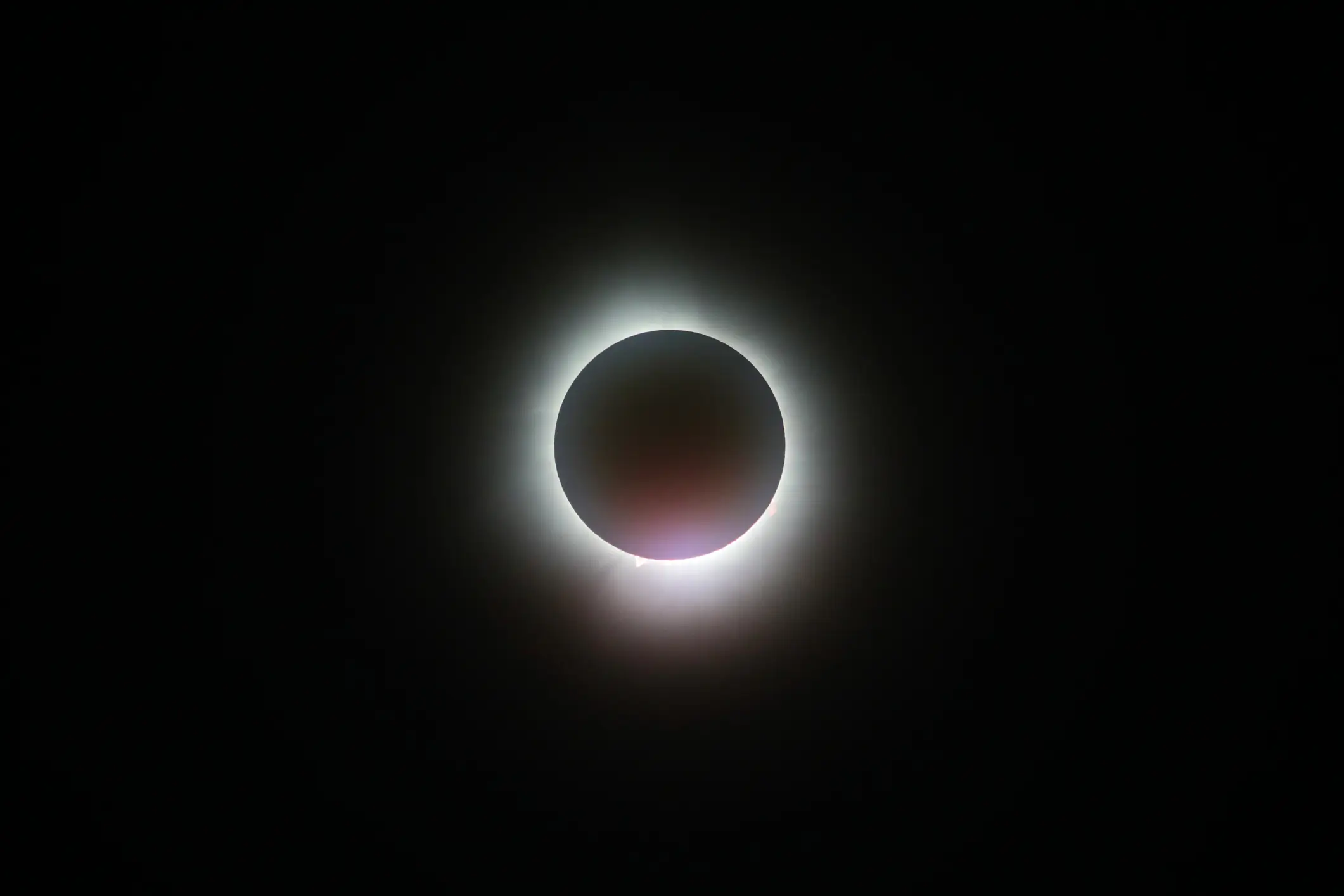
Yet seeing both the Sun and eclipsed Moon was once considered impossible - if Earth is in the middle of this straight line, how do we see them?
As Space.com explains, it's the atmospheric refraction that makes a selenelion possible.
Essentially, it's one big optical illusion; refraction causes objects to appear higher in the sky than they really are, with our atmosphere acting like a lens and bending celestial objects.
It's the same effect that enables us to see the sun for a few extra minutes in the morning before it has actually risen each day - and it works the same way when the sun sets.
Where and when to see the total lunar eclipse and selenelion

The Washington Post reports that the lunar eclipse will be visible over the Lower 48 states, as well as Alaska and Hawaii.
This should last for around 59 minutes.
Only a handful of locations will see the total lunar eclipse as well as the selenelion, with the sun rising and the totally-eclipsed moon setting on opposite horizons, as Space.com adds.
And if you're in either of the following locations, then get setting your alarm early.
Those in Boston can catch a glimpse between 6.16 and 6.17 am EST, while New Yorkers will get a chance between 6.26 and 6.28 am EST and people in Washington D.C. have a window of 6.38 and 6.39 am EST.

Over in Canada, meanwhile, people in Montreal will be able to catch the total eclipse between 6.29 and 6.30 am EST.
Those living in Atlanta can see the Moon at 97 percent eclipsed between 7.03 and 7.05 am EST.
If you want to see the phenomenon for yourself, then it's worth finding a high-up location that gives you a clear view of both the eastern and western horizons.
 Ellie Kemp