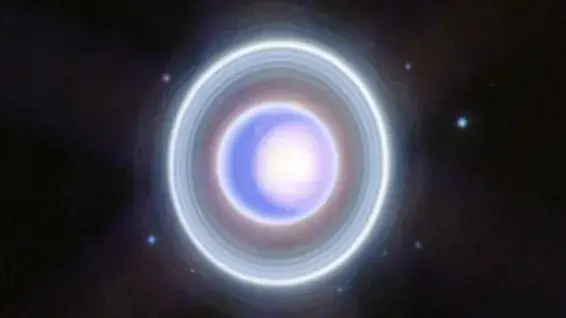
Uranus will be visible to the naked eye this week and these are the best US states to view it

Stargazers could be in for a treat this week as Uranus is set to shine bright enough to be spotted without a telescope.
We were already treated to dazzling displays of the Northern Lights this month, and now, our third-largest planet is having its own special moment.
Famed for its icy rings (and giggle-inducing name), Uranus is four times wider than Earth and boasts 28 known moons.
Making it even more unique is the way it tilts; rotating at almost 90 degrees, it appears to be spinning on its side.
Advert
Once a year, our seventh planet falls into perfect alignment with the Sun and Earth, known as opposition.
This is prime Uranus viewing time; the planet appears at its largest and brightest in the night sky and is visible for much of the night.
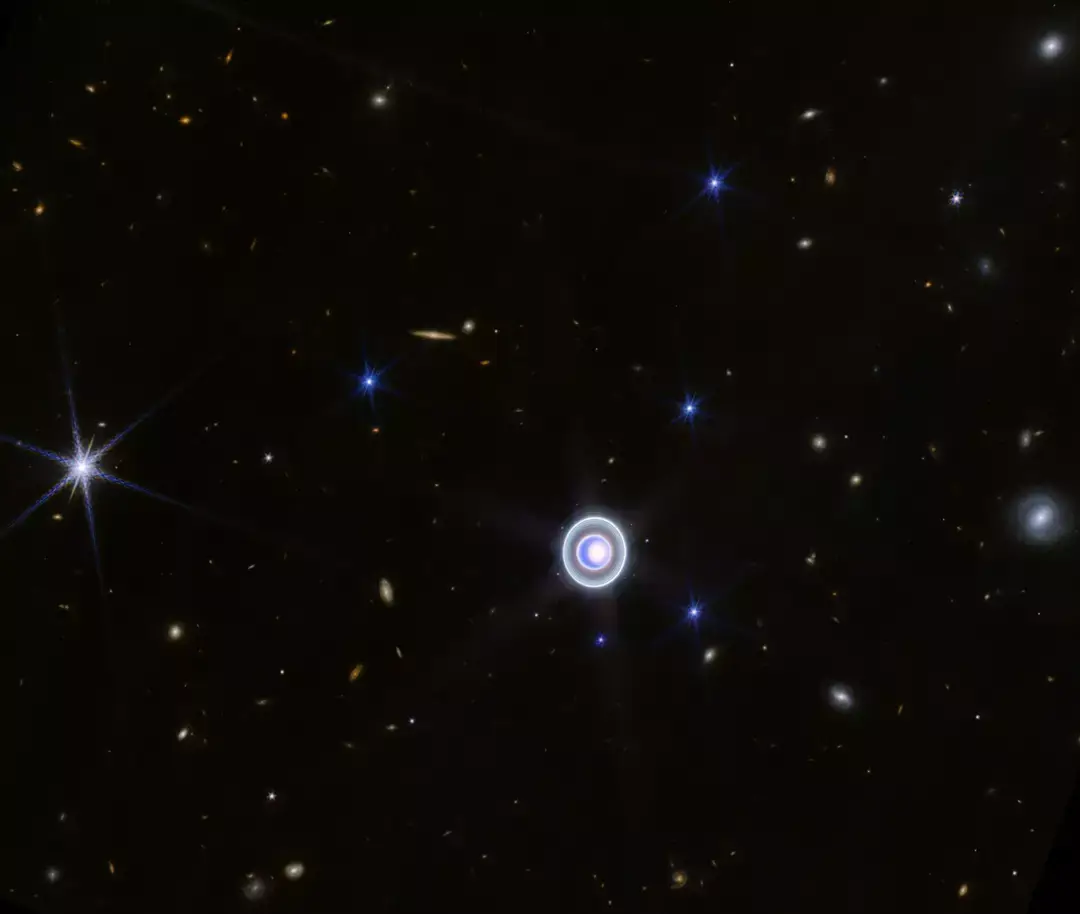
And on Friday (November 21), Uranus will glow brilliantly for all to see.
The best time to catch it will be at 11.55pm UT, according to the BBC's Sky at Night Magazine.
The publication adds that it will be easier to spot than in previous years, as the planet will sit at 4.5 degrees south of the Pleiades open cluster.
So if you want to catch a magical glimpse of Uranus, including its rings, then read on.
Which states are the best to see Uranus from?
Each state will have its own sky-watching hotspots, in rural areas far enough away from bustling cities and, well, civilisation.
According to Telescopic Watch, a 'reasonably dark sky with low light pollution around a Bortle 5' makes for ideal viewing.
But if you live in any of these 10 US states with the darkest skies, as per US News Travel, then you're in luck.
The 10 states in question are:
- Arizona
- California
- Colorado
- Idaho
- Illinois
- Nevada
- New Mexico
- Oregon
- Texas
- Utah
How to spot Uranus with the naked eye
So, you've set up (figurative) camp in your dark location, and now it's time to see the goods.
Again, give your eyes time to adjust to its new surroundings.
You can download an app to help locate Uranus, but don't be on it too much or your vision might be affected.
Telescope Watch says, in dark enough skies, Uranus should be 'actually directly visible to the naked eye as a dim, star-like point.'
Even under light-polluted skies, a small pair of binoculars should show Uranus 'fairly easily.'

Getting the best view of Uranus
If you want to get an even better view of Uranus, rings and all, then invest in a small telescope.
The Sky at Night Magazine says that even with optical assistance, Uranus may only appear as 'a tiny, green-hued disc through the eyepiece'.
"In binoculars, it looks just like a sixth-magnitude star, with the planet’s characteristic colour being barely discernible," the publication added.
But a small telescope can help out, although it should have at least 100x magnification if you want to catch Uranus' disc.
Don't go getting your hopes up too high though; the magazine warns 'you shouldn’t expect to see any detail'.
"Larger apertures combined with steady seeing conditions and high magnification may show the disc to have areas of different brightness intensities," they added.
 Ellie Kemp