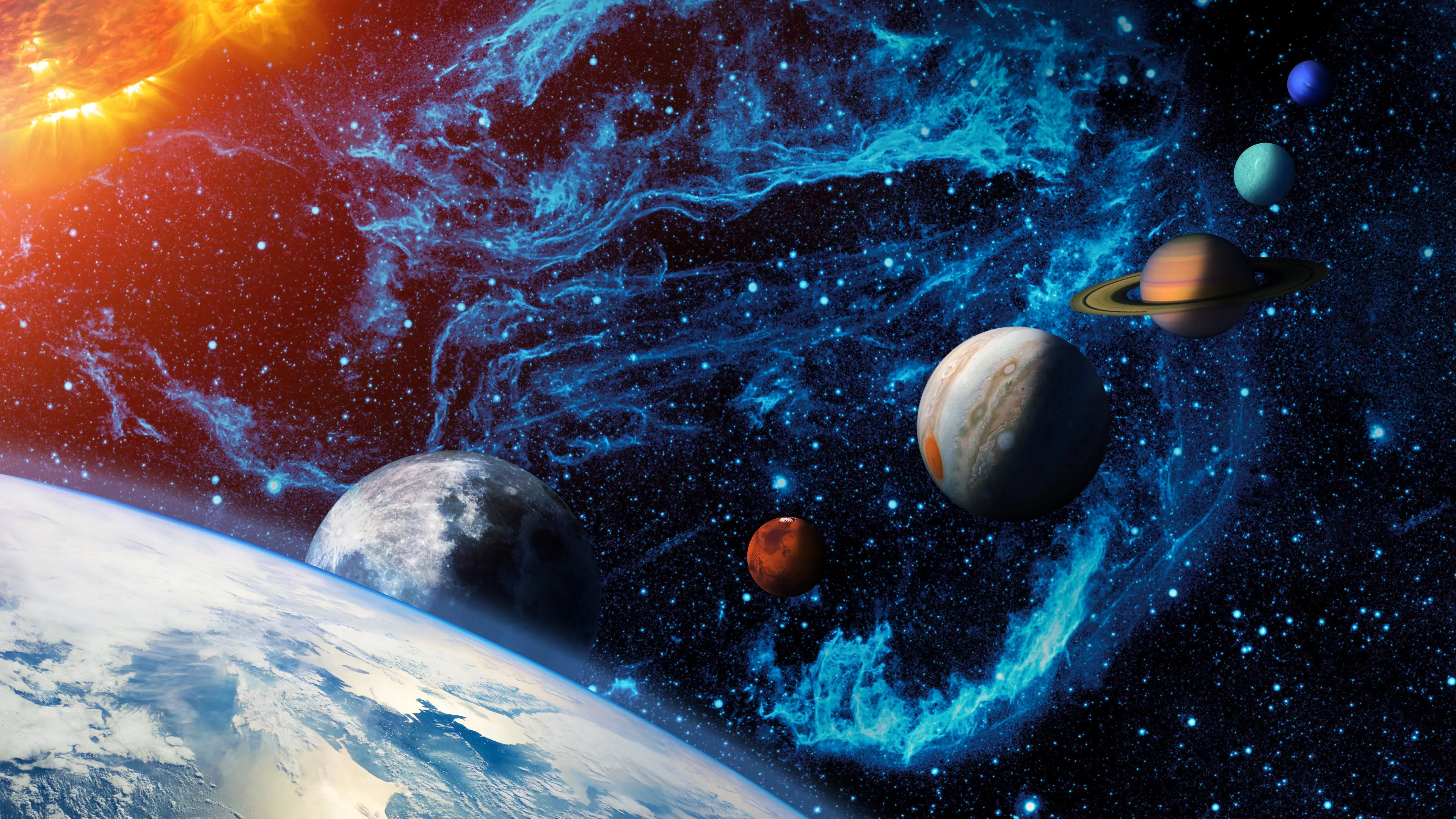
How to see rare planetary parade that will be visible this weekend

Look up this weekend as you will be treated to a planetary spectacle that will see six planets align in the night sky — here's how you can spot them and from where.
Stargazers are in for a treat this weekend as six planets are set to appear close together in an astronomical phenomenon known as a planet parade or planetary alignment.
According to NASA, this occurs when at least four or five planets can be seen together, with 2025 being the most recent big planet parade display. On 27 February last year, Mercury, Venus, Mars, Jupiter, Saturn, Uranus and Neptune lined up in a rare seven-planet display that won't reoccur until 2040.
Now, astronomy enthusiasts have the chance to look up and spot Mercury, Venus, Jupiter, Saturn, Uranus and Neptune aligned closely across the sky. This is set to take place on 28 February, but will be best visible at different dates across the world.
Advert
Dr Shyam Balaji, a researcher in astroparticle physics and cosmology at King’s College London, has explained the phenomenon, saying that one planet will only be visible with binoculars or a telescope.
“On 28 February, Mercury, Venus, Jupiter, Saturn and Uranus will appear as bright points clustered along a single line. While Neptune is also in alignment, it is too distant to be seen without binoculars or a telescope. These planets appear grouped in the night sky as their orbits happen to place them on the same side of the Sun during this period," Dr Balaji said in a statement provided to UNILAD.
“These alignments have no gravitational effects on Earth. Their combined gravitational pull of the planets on Earth is negligible compared to that of the Moon or the Sun," he added.
“Planetary alignments have often inspired cultural or astrological interpretations, but scientifically they are predictable geometrical coincidences with no known physical influence."
According to scientists, a planetary alignment is a purely visual effect. It occurs when the planets orbit the sun in roughly the same flat plane, known as the ecliptic plane. Although each planet travels at a different speed and distance, and remain anywhere from millions to billions of kilometres apart, there are times when several of them appear to line up from Earth’s perspective.
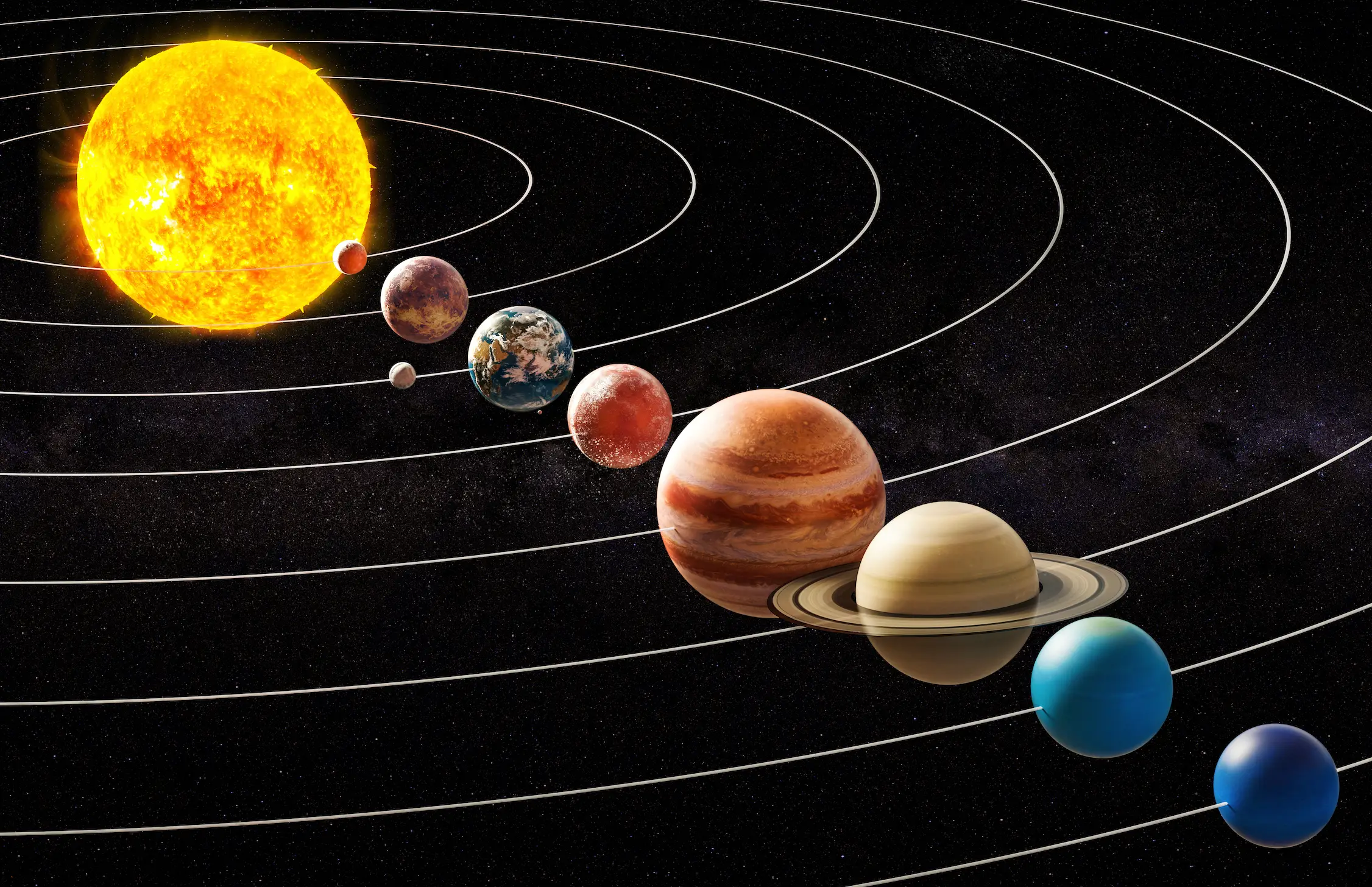
NASA pointed out that a planet parade is an event that lasts from weeks to more than a month.
What makes 28 February a key date to spot the six planets in question is that they will be most tightly grouped and can be seen together in the night sky (via The Guardian). Additionally, NASA warned that while four planets – Mercury, Venus, Mars and Jupiter – will be visible to the naked eye, Uranus and Neptune will require binoculars or a telescope as they orbit in the distant outer regions of the solar system. Mercury could also be difficult to locate due to its low position near the horizon.
As for when to gaze at the sky, it seems that the best time to enjoy the show will be about 30 minutes after local sunset, with Star Walk recommending viewers to look low in the western sky, ideally with an unobstructed view and clear weather conditions.
NASA also explained that a planet is visible without any optical aid when it is at least a few degrees above the horizon, with 10 degrees or higher being best.
28 February is a median date for whoever wants to spot the planet parade, though viewers may be able to observe the phenomenon a few days before or after that date, depending on their location.
Star Walk shared a handy guide, revealing the best view will be 25 February for São Paulo, 28 February for Athens, New York, Mexico City and Tokyo, 1 March for Beijing, Berlin, London and Mumbai and 2 March from Reykjavik.
 Stefania Sarrubba