US state switches primary method of execution to firing squad with supporters arguing it's 'more humane'

Idaho has made history by becoming the first state in America to adopt a controversial execution method as its primary form of capital punishment, sparking fierce debate over whether it's more humane or simply more brutal.
From 1 July 2026, the firing squad will officially become Idaho's default method of execution, with supporters arguing it offers a quicker and more reliable alternative to lethal injection, while critics remain deeply sceptical.
Idaho now joins Mississippi, Oklahoma, Utah and South Carolina in authorising the firing squad, but it stands alone as the only state to make it the go-to method rather than a backup option.
The shift comes after a troubled history with lethal injection in the state. Since the death penalty was reinstated by the Supreme Court in the 1977 case Gregg v. Georgia, Idaho has carried out just three executions, in 1994, 2011 and 2012, all by lethal injection.
Advert
The most recent attempt, in February 2024, ended in failure when the execution team was unable to find a usable vein after eight attempts to set an IV for death row's longest-serving inmate, Thomas Creech.
Why has Idaho switched to the firing squad?
Per Idaho News, Republican Representative Bruce Skaug, who co-sponsored the bill behind the change, said lethal injection carries a failure rate of around six or seven per cent, and argued the firing squad offers a more dependable alternative.
"We needed something that was sure and humane, and firing squad is humane because it is sudden, it is quick and it is certain," Skaug said.
Under the new system, a traditional three-member firing squad will be used, rather than a remote-controlled mechanism that was previously considered. Each volunteer will be issued a single live round and will fire simultaneously on command.
Volunteers must hold a Peace Officers Standards and Training certification for at least three years, have no firearms-related disciplinary action in the past year, and pass an accuracy test requiring 100% precision from 21 feet away.
They must also have no blood or legal ties to either the prisoner or the victim's family.
Is the firing squad actually reliable?
Despite the state's confidence in the method, figures from the Death Penalty Information Center suggest it isn't quite so straightforward. Since capital punishment resumed, there have been just six firing squad executions in total, three of which took place in South Carolina in 2025 alone.
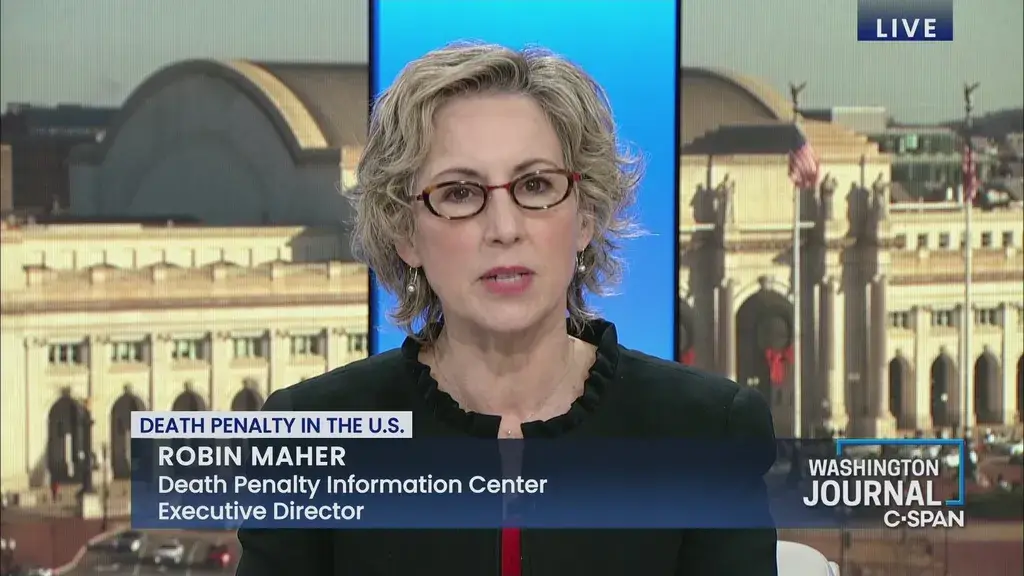
According to the organisation's executive director, Robin Maher, two of those three executions "went badly." "One of them, only two bullets were found in the prisoner.
The third bullet didn't even hit him and neither of those bullets hit his heart," she said. "So it tells you that the firing squad is not a fool proof method."
The ACLU of Idaho has also voiced strong opposition, pointing to the state's own botched lethal injection attempt and alleged issues with improper drug storage as part of a broader pattern of concern.
"To be clear, we at the ACLU of Idaho oppose all executions; there is no method that does not impose an intolerably high risk of cruel and unusual punishment," the organisation said in a statement.
Nationally, support for the death penalty has fallen to a five-decade low, according to Gallup polling, with 52% still in favour but opposition steadily climbing since the mid-1990s.
Maher pointed to growing concerns over bias, error, and whether capital punishment actually improves public safety.
Skaug, however, maintains that support in Idaho remains strong, claiming some constituents have expressed a "too eager" desire to volunteer for the firing squad itself.
The switch hasn't come cheap either. Retrofitting the execution chamber at the Idaho Maximum Security Institution has already cost $750,000, with a second phase estimated at a further $910,802. Skaug said he wasn't happy with the upfront cost but insisted "it needed to be done," adding that sourcing ammunition would ultimately prove easier than acquiring lethal injection drugs, especially after a manufacturer's offer to donate ammunition to the state was turned down.
Maher noted that many people are surprised to learn just how expensive carrying out the death penalty really is.
"As soon as the prosecutor decides to seek death, the price tag goes up," she said, pointing to the extensive appeals process and security costs involved.
UNILAD has contacted the Idaho Department of Corrections for comment.
 Thomas Bamford