
'Frankenstein' rabbits with 'tentacles' spotted across US again

Ever looked at a fluffy bunny and nearly vomited due to its grotesque appearance? Today might be that day as locals report seeing freaky ‘Frankenstein’ rabbits once again.
Americans across areas like Wisconsin, Minnesota and New York have increasingly been encountering the strange creatures, which sees bunnies sporting black tentacles on their faces and heads.
This comes almost one year after Fort Collins, Colorado, was rocked by an influx of the rabbits, leading to Colorado Parks and Wildlife to issue a warning about keeping your distance from the animals.
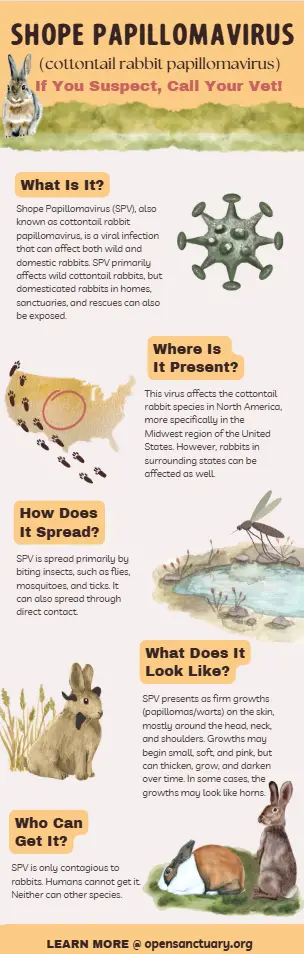
That’s because they are infected with the cottontail papilloma virus (CRPV), aka the Shope Papillomavirus, a disease known to impact the rabbit population in the US.
Advert
CRPV leads to the hoppers to develop face-covering tumors, and whilst it’s not known to spread to humans or pets, it’s best to steer clear just in case.

Researchers have even suggested that the 'Frankenstein' variations are likely to increase in the Midwest, as it is carried by mosquitoes and ticks and spread via biting - and as you know, the Midwest is teeming with the critters.
This Spring, some have already been spotted, leaving onlookers with a lot of questions and some even likening it to a ‘horror movie’.
One New York native even went as far as to say she ‘regretted’ her experience after running into one, posting on Facebook: “Made eye contact with this rabbit and immediately regretted it.
“All jokes aside, I reported it to the proper wildlife authorities, but this thing was GNARLY. I’d heard rumors of these around my area but had never actually seen one in person.
“They told me it’s most likely Rabbit Papilloma Virus (Shope papillomavirus)… and honestly it looks like something that escaped from a horror movie.”
At least now we know where the mythical ‘Jackalope’ probably originated from, which saw villagers whisper of rabbits hopping around with antlers on top of their heads.
Anyway, CRPV is no joke, and it can quickly turn deadly to the poor floofers.
Per Open Sanctuary, the disease typically presents itself ‘as firm, wart-like growths (papillomas) on the skin, mostly around the head, neck, and shoulders, though they can also appear elsewhere on the body.’
Its website added: “Growths may begin small, soft, and pink, but can thicken and darken over time. Sometimes only one or two papillomas develop, but in severe cases, many can form and become quite large, interfering with the rabbit’s ability to eat, drink, breathe, see, hear, or groom.”
The growth may also develop into squamous cell carcinoma, a skin cancer that can be deadly if it spreads.
If you think your rabbit might have it if it's been exposed to ticks and infected bugs, it's always best to check with a vet.
 Britt Jones