
Terrifying simulation shows the position that gives you the best chance of surviving a plane crash

Humans instinctively curl up in a ball to protect themselves, but this may not be the best way to protect yourself in a plane crash, contrary to popular belief.
A terrifying simulation, posted by YouTuber Zack D, who is known for his 3D CGI animations to explain science facts, medical procedures, and hypothetical scenarios, demonstrates why the brace position is the most effective if passengers ever find themselves in a plane crash.
For those not familiar, assuming the brace position involves leaning forward and protecting your head.
"This position helps protect your vital organs and reduces the risk of head and neck injuries," Zack's simulation video explains.
Advert
The video then shows bags flying out of the overhead lockers, illustrating the potential dangers posed by unsecured luggage during a crash.
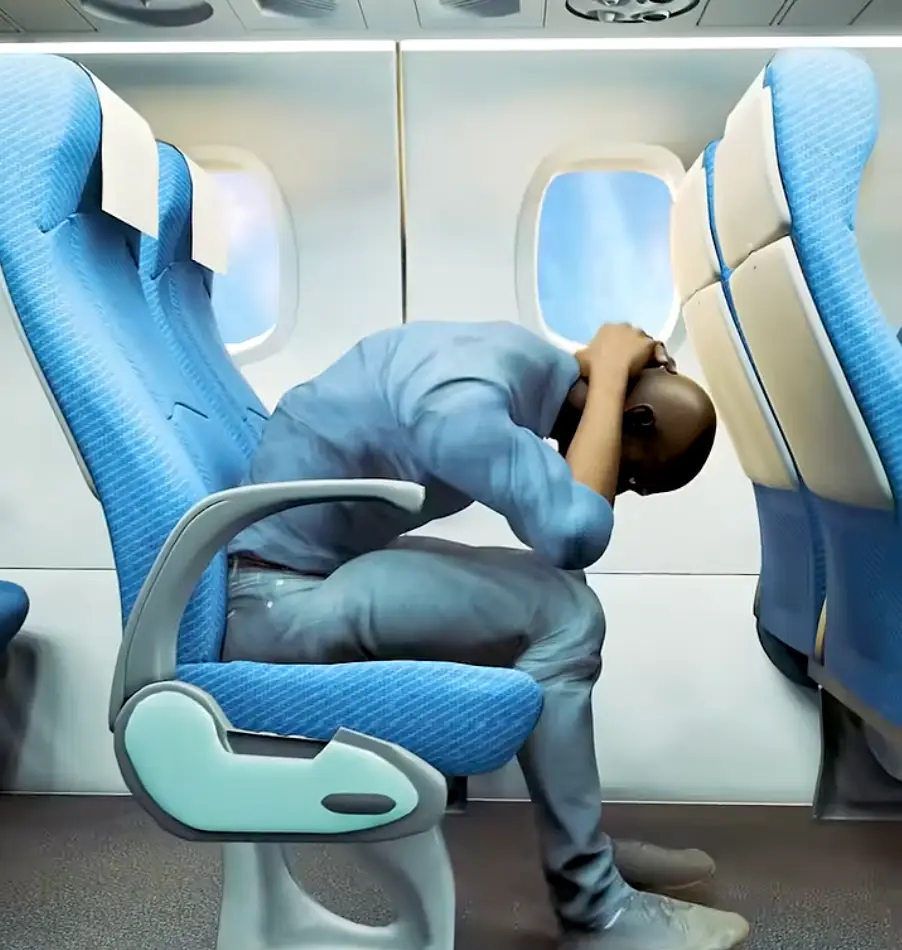
"By leaning forward, you also minimise the impact force on your spine, increasing your chances of survival during high impact situations," the video continues.
During the high-impact scenario, the simulation demonstrates the man in the brace position remaining in his seat. However, the animated man curled up in a ball can be seen being flung upwards before slamming back down over the arm rest. Ouch!
World's 'most experienced pilot' weighs in
The simulation has actually been backed up by experts, as they explain why the brace position really could save you.
Nick Eades, who is the world's most experienced Boeing 747 pilot, told LADbible: "What you're trying to do is to stop people breaking their necks in a big impact.
"You're just trying to get the body into a position that's going to suffer the least damage," he added.
Comparing it to whiplash, Nick further explained: "You're trying to avoid that sudden movement of the head, which can result in serious injury, if not death.”
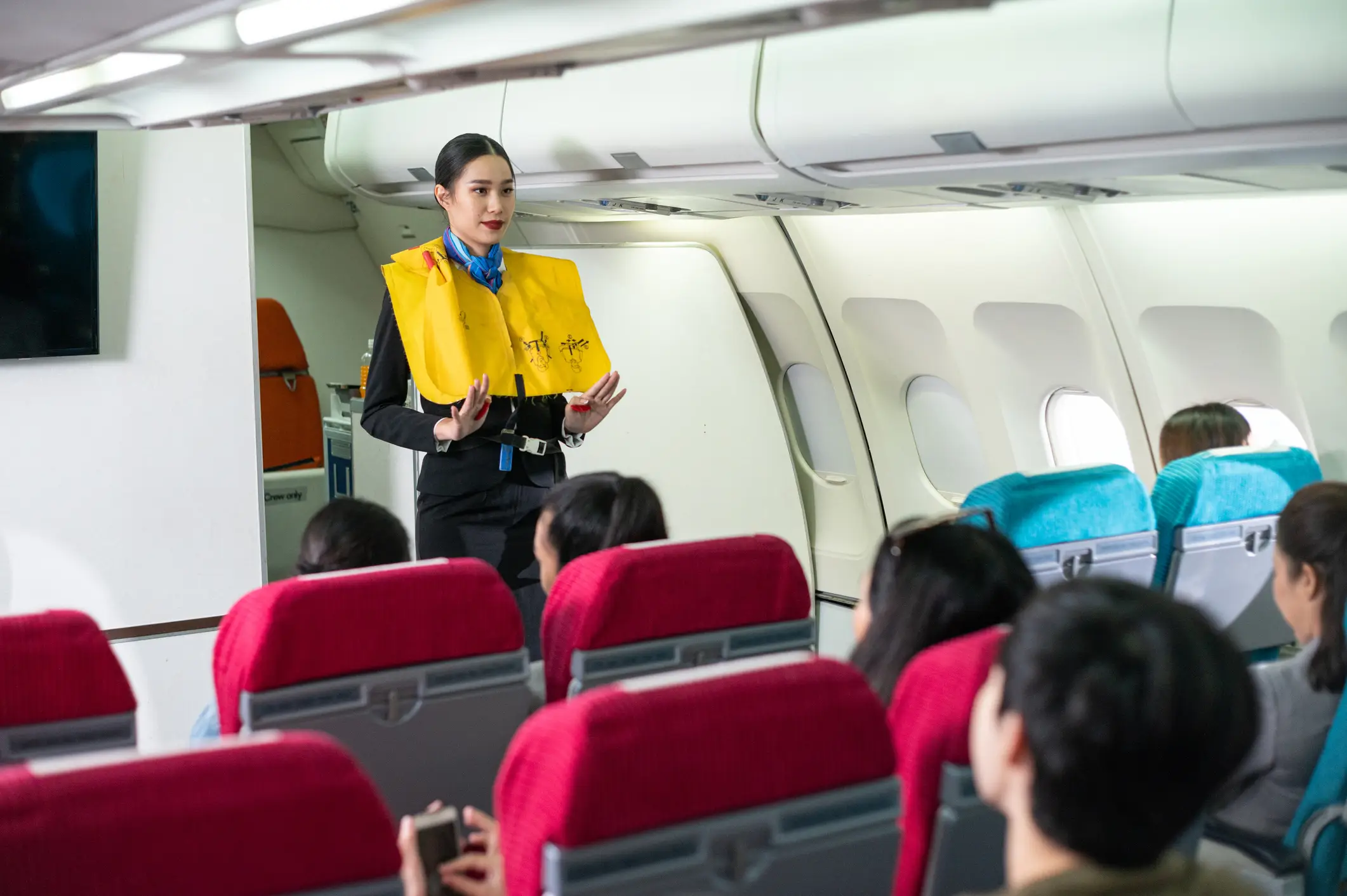
However, when boarding a plane, passengers may not always hear the phrase 'brace for impact.' Not because it isn't effective, but because many people may not know what it means.
Now, many replace the wording by saying 'heads down, hands over your head.'
How to assume the brace position safely and effectively
Hopefully, none of us will ever have to use the brace position, but it's better to be safe than sorry.
According to guidance from the UK Civil Aviation Authority (CAA), passengers with only a lap belt available should adopt the brace position by leaning forward towards their knees and placing one hand over the other on top of their head, without interlocking their fingers.
Feet should be firmly placed on the ground.
 Kiesha Dosanjh