New broadcast guidelines crack down on 'sexualized' shots of female athletes

Broadcasters will now face new regulations for filming and airing women's sports events in an aim to discourage 'sexualized' shots of female athletes, but the move has received a mixed reaction from users online.
New guidance from the European Broadcasting Union asks one thing of broadcasters: prioritize athletic performance over unnecessarily sexualized camera angles.
The 23-page document, titled 'Raising the Bar', doesn't call for less coverage of female sporting events, simply more thoughtful decision-making around filming and editing.
In practice, it means fewer close-up shots from behind, less cameras pointed upwards, and more caution around slow-mo replays that don't particularly add anything to coverage of performance.
Advert
The new regulations apply to numerous events, including high jump, pole vault, horizontal jumps, and running.
Glen Killane, executive director of EBU Sport, said: "These choices carry profound implications. They shape audience perception by diverting attention from the remarkable achievements and technical skills of women athletes, and risk perpetuating harmful stereotypes."
For running competitions, the guidelines specifically warn against very tight shots from behind or below, particularly around the starting line and moments of exhaustion after a race.
But the decision to move away from controversial shots during female sporting events has sparked backlash from many users on social media.
"With all due respect why not just give female athletes longer shorts," one proposed on X.
As another sarcastically wrote: "You basically killed any interest in female sports."
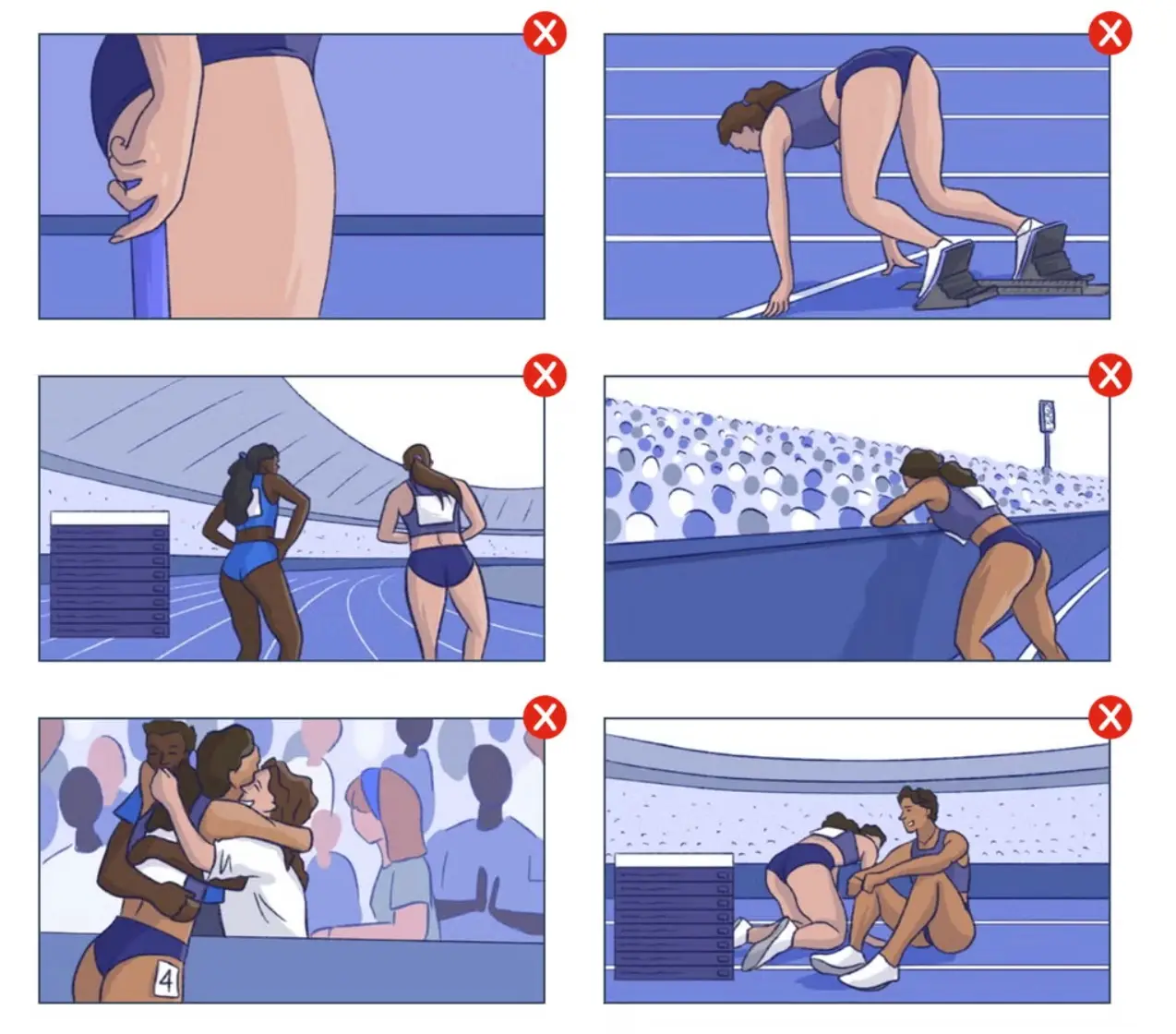
The guidelines state: "This is not a list of restrictions. The report demonstrates how the most compromising shots can be avoided with no loss of storytelling or visual quality."
And Olympic pole vaulter Holly Bradshaw opened up about the issue following female athletes well beyond the screen.
Writing in the report, she explained: "How our sport is displayed during live broadcast can be incredibly powerful yet sometimes harmful to the women competing and the women/girls watching.
"I first-hand have received social media abuse and witnessed inappropriate videos online of myself and colleagues when slow-motion content of us competing is captured."
She also claimed that noticing camera placements in real time can be extremely off-putting ahead of a race or event.
Topics: Sport, World News, Film and TV
 Mia Williams