Russian athletes could compete at 2028 Olympics as ban lifted, but they must abide by important rule

Russian athletes could be allowed to compete at the 2028 Olympic Games in Los Angeles after previously been banned by the International Olympic Committee (IOC) in response to the Russian invasion of Ukraine.
Reports have claimed the IOC has since rescinded its ban, at least provisionally, having
Suspended the Russian Olympic Committee in 2023 – one year after the nation started warring with its neighbor.
At the time it claimed the Russian Olympic Committee ‘is no longer entitled to operate as a National Olympic Committee’ and ‘cannot receive any funding from the Olympic movement’.
Advert
However, the ban will only be lifted if the nation adherer's to one important rule.
Other details of the news, per the BBC, have not mentioned whether Russia can display their colors, flag, or anthem, and decision will still keep its original promise to ‘not organise IOC events in Russia or invite Russian government or state officials to its events’.
However, they can still play if ‘all Russian athletes returning to international competition must meet relevant anti-doping requirements’.
This is a big rule considering Russia has been caught doping systemically, which resulted in 51 Olympic medals being stripped in its entire history of athletics competitions.
In 2023, its seven-year doping ban was lifted, only for them to be banned by the IOC for invading Ukraine.
Now, they can play again if they stick to the rules.
Per the IOC’s statement, it was also confirmed that the ‘ROC no longer includes as members any regional sports organisations in territories falling under the jurisdiction of the NOC of Ukraine’.
Russia has taken the new announcement well, noting the Olympics must stay 'free from politics', with Russian sports minister Mikhail Degtyarev writing on Telegram: "The IOC is sending a clear signal: the Olympic movement must remain free from politics." , He also said Russia plans to attend the qualifiers for the 2028 Olympics, which will be hosted in LA.
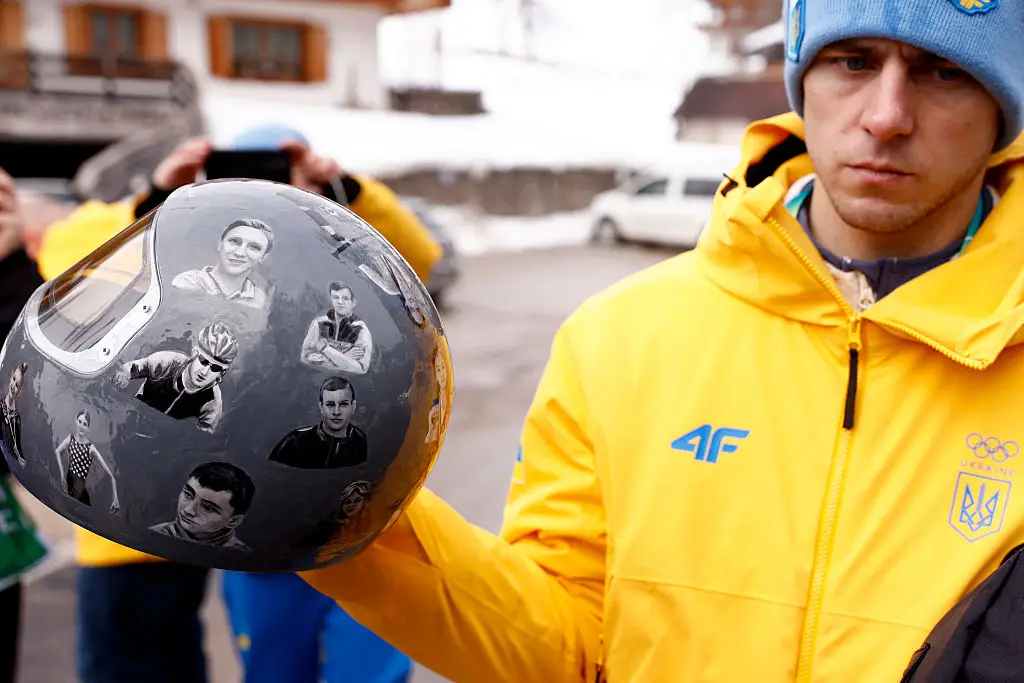
The Olympics has had a few moments where it took action against athletes for displaying political imagery whilst competing.
For example, the most recent case was in February, which saw Skeleton pilot Vladyslav Heraskevych could be seen during his training runs before the competition wearing a helmet of athletes who had died during the Russian conflict, and was told by the IOC that the headwear is banned.
But Heraskevych continued to wear it, leading to him to be banned.
According to reports, the athlete had been told the helmet ‘does not comply’ with the Olympic Charter and that he could not wear it, according to a statement from the IOC.
 Britt Jones