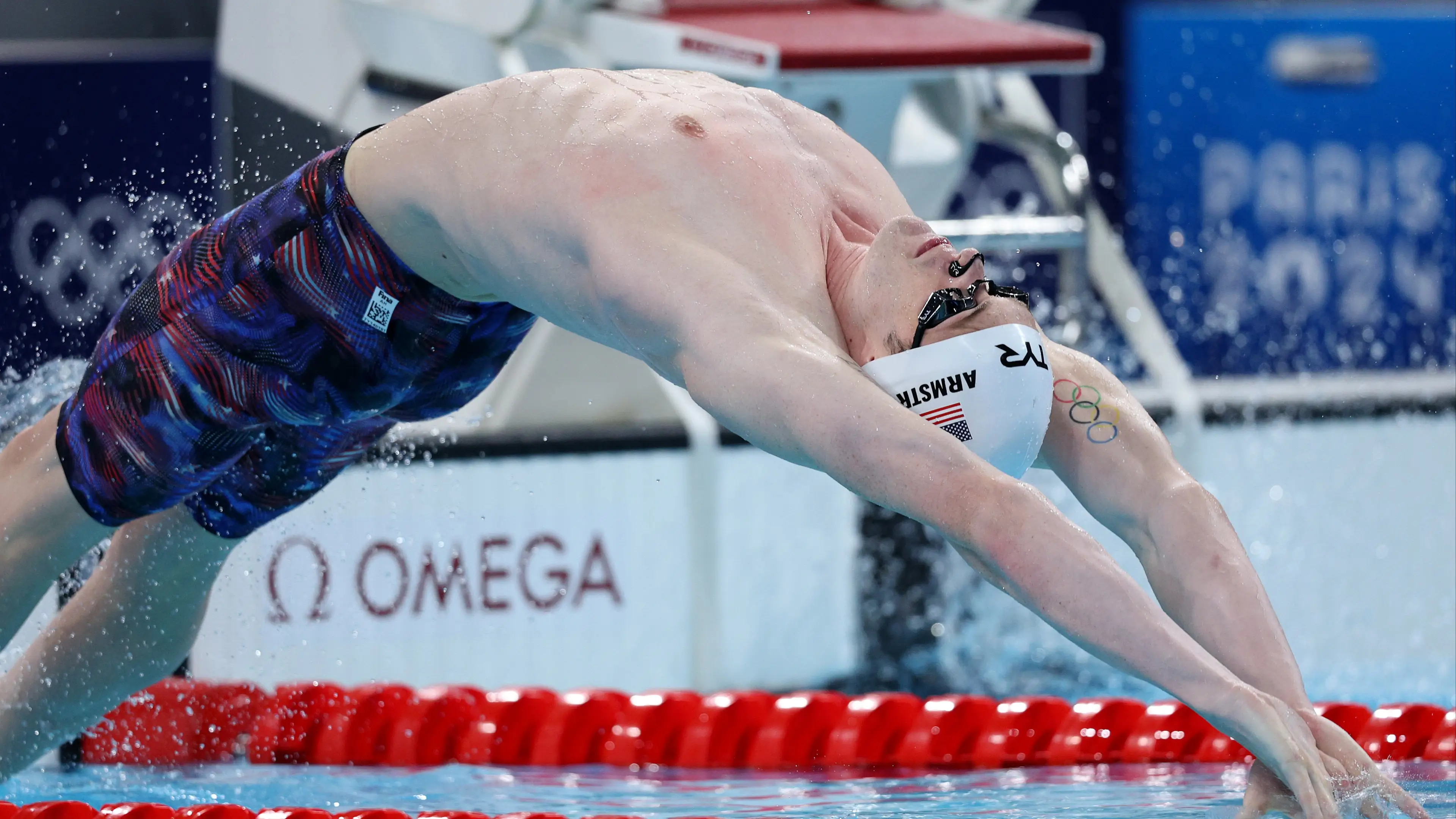
Olympic gold medal swimmer is competing in Enhanced Games clean - but still faces LA 2028 ban

A two-time Olympic gold medalist is soon set to compete in the most controversial sporting event of the year in Las Vegas, and he's doing it without touching a single performance-enhancing drug.
Hunter Armstrong, 25, nicknamed 'The Magic Man', will compete at the Enhanced Games, an organization that allows, but doesn't require, athletes to compete while using banned substances.
The inaugural event kicks off on May 24 at a purpose-built competition complex at Resorts World Las Vegas.
The decision to do the event without PEDs, Armstrong told ESPN, wasn't really a decision at all. After one of his main sponsors ended their relationship after the Paris Olympics, he had no way to pay his bills and even considered retirement.
Advert
"If I don't join Enhanced, I lose everything. If I do join Enhanced, I have a chance at not losing everything," he said.
"My back was against the wall, so I had to reopen that conversation to see if it was a plausible option."
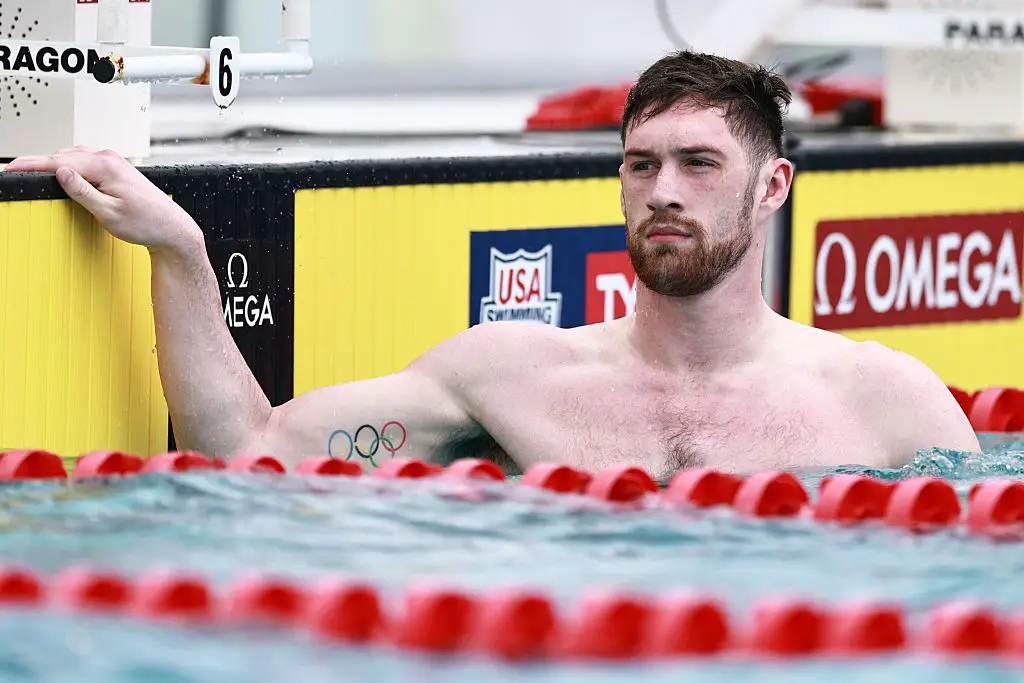
The Enhanced Games is offering eye-watering prize money to lure athletes in. The Games are offering rewards of up to $1 million for breaking the world record in the 50m freestyle, with a prize purse of $500,000 per event, $250,000 going to the winner. For an athlete who had no way to pay his bills just months ago, it's easy to see why Armstrong felt he couldn't walk away from the conversation.
Are all athletes at the Enhanced Games using steroids?
There are three tiers of participation at the Enhanced Games. 'Clinical trial athletes' receive medical care and PED protocols directly from the organization. 'Independently enhanced athletes' manage their own regimens. And 'natural athletes' compete without any performance-enhancing substances at all. Armstrong falls into that third category.
He is one of only four athletes expected to compete naturally at the Games. The swimming field also includes fellow Olympic medalists Ben Proud, James Magnussen and Cody Miller, along with current 50m fly world record holder Andrii Govorov, the majority of whom will be competing with the full benefit of whatever their medical programmes allow.
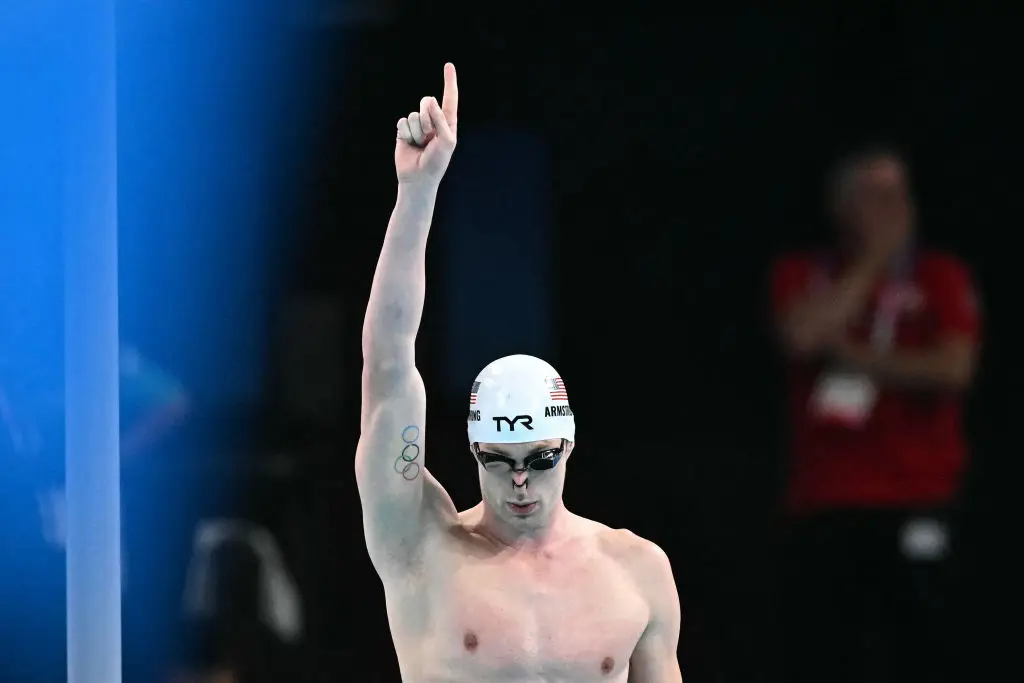
Armstrong is a formidable athlete by any measure. The two-time Olympian won gold in the 4x100m medley at Tokyo and gold again in the 4x100m freestyle in Paris, and is a former world record holder in the 50m backstroke.
He's also chasing a spot at the 2028 Los Angeles Olympics, which is precisely where things get complicated.
World Aquatics, the sport's governing body, amended its bylaws last year to ban any athlete from the sport if they were to compete in the Enhanced Games.
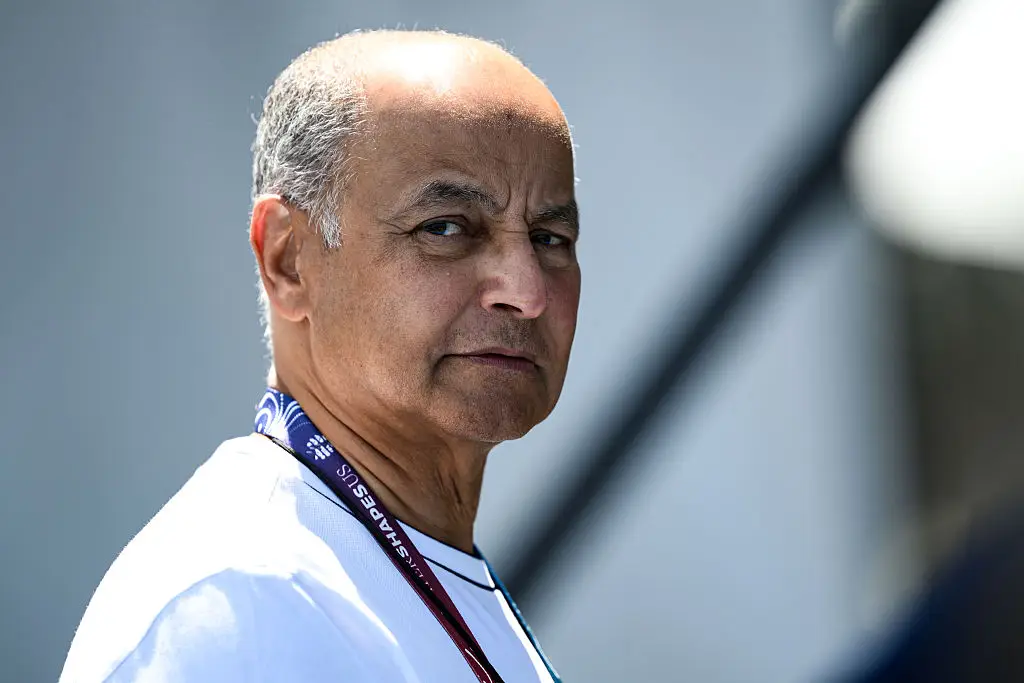
Its president Husain Al-Musallam was unambiguous: "Those who enable doped sport are not welcome at World Aquatics or our events."
The rule states that those who 'support, endorse, or participate in sporting events that embrace the use of scientific advancements or other practices that may include prohibited substances and/or prohibited methods' face a ban.
Armstrong sought clarity before signing, and got none. "Nobody really knows what's going to happen, and nobody will give me an answer on what's going to happen," he said. "So all I can work off of is what the rules say and take a chance because I won't get an answer by waiting."
After consulting with lawyers, Armstrong said he was confident the ban would only apply if he stopped following World Aquatics' rules and regulations, including its drug testing protocol, at any point in the lead up to the event. Whether World Aquatics agrees with that reading remains to be seen.
What are the risks of using performance enhancing drugs?
The health risks for those competing with enhancement are significant.
Amir Bhogal, Superintendent Lead Pharmacist and Director of Pyramid Pharmacy Group, warned that the dangers aren't always visible.
Speaking to UNILAD, he said: "One of the biggest concerns with steroid use is the amount of strain it can place on the cardiovascular system. A lot of people associate health risk with visible symptoms, but in reality, someone can look incredibly fit externally while their blood pressure is quietly climbing in the background or their heart is working much harder than it should be."

Bhogal also raised concerns about what happens to athletes' bodies once the Games are over. "When external testosterone or anabolic agents are introduced, the body can reduce or completely suppress its own natural hormone production," he explained, adding that athletes may experience fatigue, low mood, reduced libido, sleep problems, muscle loss and difficulty recovering once the event is finished.
His broader concern, however, is the message events like this send to the wider public. "The elite athletes involved may have access to doctors, testing and monitoring, but the wider public often does not," he said.
"That creates the risk of people attempting to imitate what they see without understanding the potential consequences."

Who is funding the Enhanced Games?
As for who's bankrolling the whole thing, the Enhanced Games is funded by a group that includes PayPal founder Peter Thiel, biotech entrepreneur Christian Angermayer, and 1789 Capital, which is run by Donald Trump Jr.
How to watch the Enhanced Games
Only one day of the Enhanced Games will be available to stream online.
Its website states: "The inaugural Enhanced Games emanate live from Las Vegas on Sunday, May 24, signaling a new era of sport on Memorial Day Weekend 2026.
"The one-night spectacle kicks off with the Opening Events at 6:30 p.m. ET / 3:30 p.m. PT on YouTube, Rumble, Twitch and Kick, as weightlifting and swimming athletes target new heights and world records across Snatch, Clean & Jerk and select men’s swim races."
The games will also be streamed on Roku Channel, with coverage starting at starting at 8:30 p.m. ET / 5:30 p.m. PT.
 Thomas Bamford