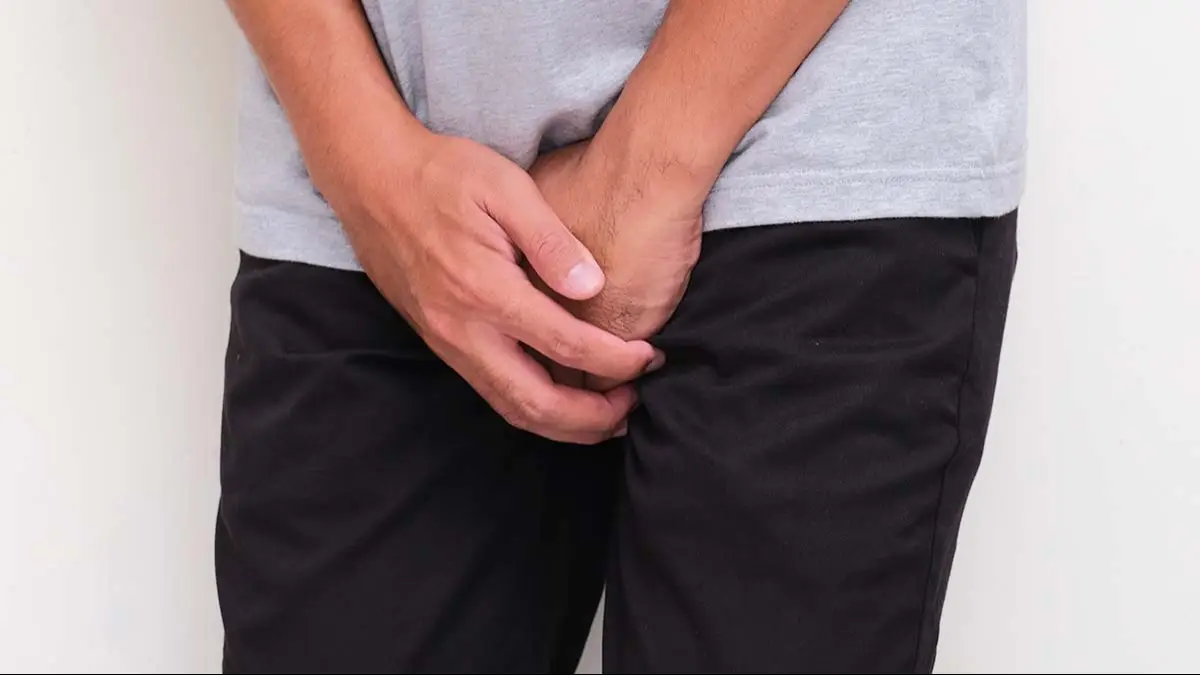

Self-pleasure has one major, unexpected benefit for men, according to scientists.
What's more, a new study might overturn some conventional wisdom surrounding how to improve sperm quality.
Now, anyone unfortunate to have encountered No Nut November will know there's a whole host of men who think not ejaculating for a month will boost sperm quality and testosterone, improve concentration, and more or less give you superpowers.
Doctors have said the only one of these benefits that might have some truth to it is the bit about sperm quality.
Advert
Urologist Dr Rena Malik told Men's Health back in 2021: "Sperm parameters do increase when you have a little bit of delayed time between ejaculations."
But new research has thrown this into doubt.

For some context, sperm takes about two and a half months to mature inside the male body, and men produce between 50 and 100 million sperm daily on average.
Sperm are made in the testes and then stored in a coiled tube called the epididymis for around two weeks, by which point they'll either be ejaculated out into the world or break down and be reabsorbed by the body.
But scientists Dr Rebecca Dean, Dr Irem Sepil and Dr Krish Sanghvi, writing in The Conversation, have now warned that 'sperm, much like eggs, have a “use-by date” after being produced'.
And, guys, if you don't like the image of a load of tiny rotting eggs inside your private parts, sorry about that.
Recent research from the University of Oxford suggests that sperm stored for longer periods may actually begin to deteriorate. An analysis of 115 studies involving nearly 55,000 men found that longer gaps between ejaculations were linked to poorer sperm health overall.

In other words, more frequent ejaculation, including through masturbation, may help 'refresh' sperm supply by clearing out older, potentially damaged cells.
Dr Dean said sperm 'quickly exhaust their stored energy reserves and have limited capacity for repair'. Poor little guys.
She added: "This makes storage particularly damaging compared to other types of cells. Our study highlights how regular ejaculation can provide a small but meaningful boost to male fertility."
Researchers looked at key measures like motility (how well sperm move) and viability (how many are alive). Both tended to decline with longer abstinence, while levels of DNA damage increased.
Scientists point to a couple of possible explanations. One is oxidative stress, often described as a kind of biological 'rust', which can build up over time and damage cells.

The other is energy depletion: sperm are highly active cells, and when stored for too long, they may simply lose the energy needed to function properly.
Current guidelines still recommend abstaining for two to seven days before providing a sperm sample for testing or IVF. But these newer findings suggest that shorter abstinence periods could actually support better sperm quality in some cases.
The study comes, pun not intended, as there is an increased interest in male fertility and infertility.
Writing for the New York Post, the doctor explained that the most common cause of male infertility is a varicocele, which are swollen veins in the scrotum.
The veins can lower sperm production, as well as movement, which can have a direct impact on fertility.
 Greg Harris