
People with no inner monologue describe what goes on in their minds

What might it be like to not have an internal monologue?
People have taken to social media to share their thoughts on this interesting question, as while if you have an internal monologue you might assume taht everyone else does, the reality is actually very different indeed.
Of course, there are a whole myriad of different ways to think out there, and the brain is a very complex and nuanced thing.
Quite how we end up thinking the way we do is a question that psychologists have grappled with since, well, psychology was invented as a science.
Advert
For example, if someone speaks more than one language fluently, what language, or languages, do they think in? Do some people think more in pictures than words?
And of course, do some people have no internal monologue at all?
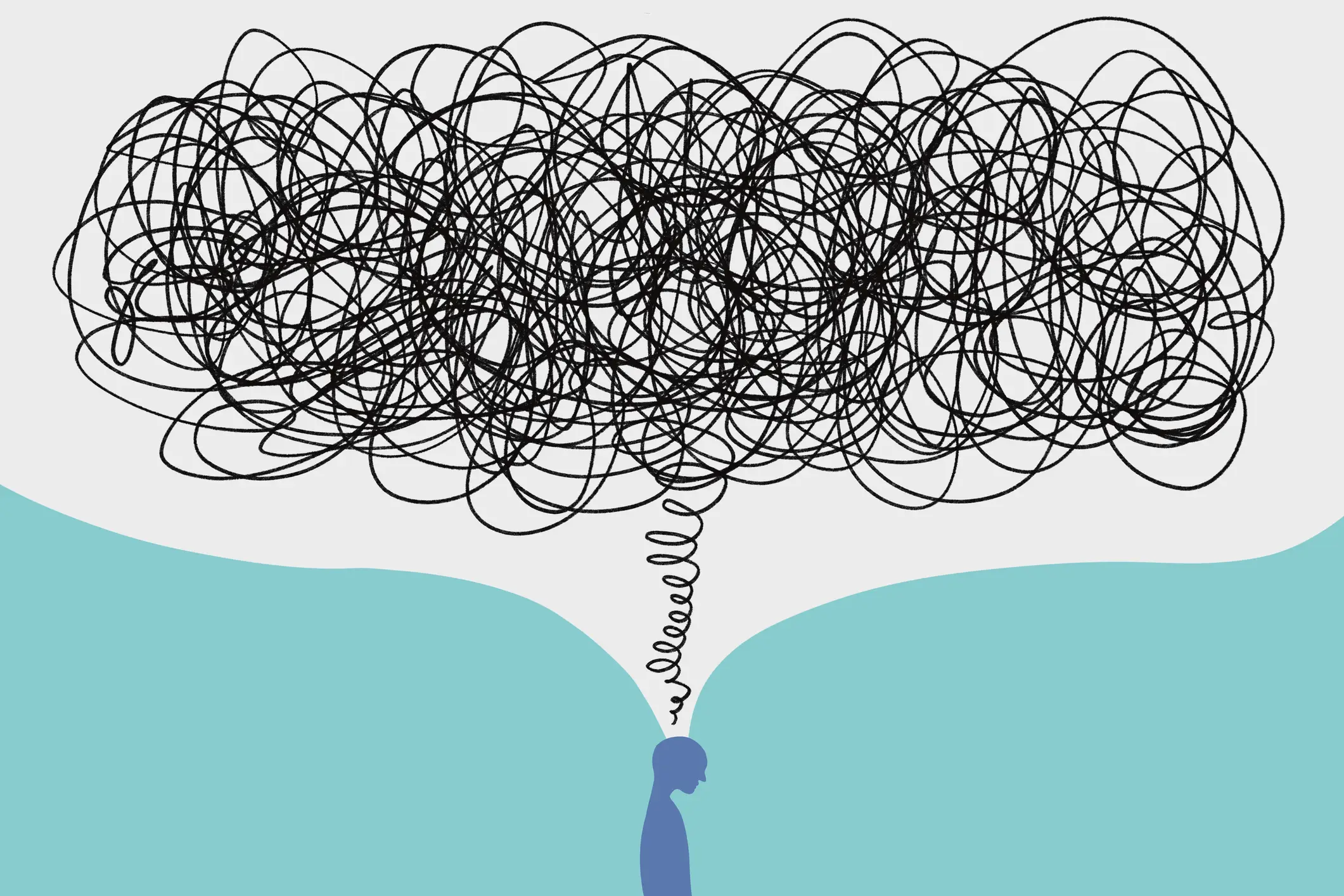
That's the question that one Reddit user was asking in a thread on the social media site.
The user posted: "Today, I told my mom that I have no internal monologue and she stared at me like I have three heads. Is having one common?"
They went on to describe how they had believed that an internal monologue had only existed as a dramatic device for film and TV like Dexter or Bridget Jones' Diary, so were surprised when they found out that people do in fact have them.
Someone laid out the concept, giving the example, saying: "If your boss asks you to do something right at the point you were planning to leave work you don’t think ‘oh f***ing s**t b*lls what a pain? in your head, while saying ‘No problem at all boss,’ out loud?"
The user explained that they would 'just get kinda frustrated', but 'I don’t really think to myself'.
But what even is an internal monologue? Well, the answer is more complex than you might think.

The Guardian spoke to psychology professor Russell Hurlburt, who pointed out that for a lot of people the idea of an 'internal monologue' may just be us talking to ourselves, in our head.
When there's that voice in your head, your own voice not someone or something else's, this isn't like having a narrator or a radio on in your mind, even if you can't get that one piece of music out of your head.
Instead, it may be you consciously 'speaking' internally, telling yourself to take the bins out, or complaining about how inconsiderate that person on the bus was, or asking what to have for dinner.
Hurlburt found that, as is so often the case, it's more complicated than just a binary yes or no question, instead more like 'some people never have words going on, and a few people have words going on all the time, and a lot of people have words going on some of the time'.
Or to perhaps put it in simpler terms - some of us are more chatty with ourselves than others.
Topics: World News, Mental Health, News
 Kit Roberts