Woman taking on manosphere has brutal admission about what men are missing

Warning: This article contains discussion of domestic violence which some readers may find distressing.
Lori Glass has sat across from men who've hit their partners, men who can't remember the last time they cried in front of another person, and men who've arrived at her door quoting Andrew Tate almost word for word.
But when asked what she thinks is really driving the men who end up in her care, her answer had nothing to do with anger, and everything to do with something far simpler.
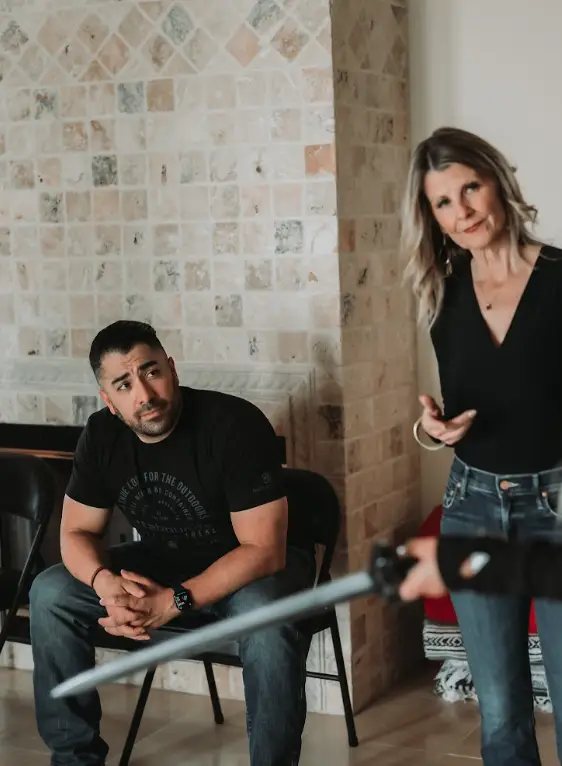
Glass is the founder of relationship coaching programme PIVOT, which runs five-day retreats for men at what she calls her 'Glass House'. She's quick to correct anyone who calls them something else.
Advert
"They're not camps, they're Men's Retreats, and the difference is important," Lori Glass, founder of relationship coaching programme PIVOT, told UNILAD.
"Nobody is sent here. Every man in that room chose to come, and that choice is where the change begins."

The retreats run for five days, bringing together small groups of men who, on paper, have very little in common.
But it's what they open up about once they're there that's led Glass to make one particularly stark admission about the men walking through her door.
Glass, the founder of relationship coaching programme PIVOT, has spent years working with men who have been accused of being 'unemotional, avoidant, narcissistic, codependent', or who are battling anxiety, depression and grief they've never spoken about out loud. Some have watched their marriages collapse.
Others have found themselves drifting into the manosphere, absorbing the language of figures like Andrew Tate without ever really knowing why.
But when asked what she actually sees walking through her door, night after night, retreat after retreat, Glass didn't hesitate. "Men are missing men," she said.
It's a line she's used before, but she was blunt about what it actually looks like in practice, describing a man in his forties who had eight groomsmen at his wedding a decade earlier and, now, 'no one he could call at two in the morning'.
She spoke of men whose only confidant is their partner, crushing that relationship under the weight of being someone's sole emotional outlet, and of sons who spent a lifetime admiring their fathers without ever once hearing them admit to being afraid.
"Modern life has removed most of those places and replaced them with laptops or mobile devices," Glass explained. "So what walks into our retreats is often competence on the outside and silence on the inside."
Why are men turning to the manosphere?
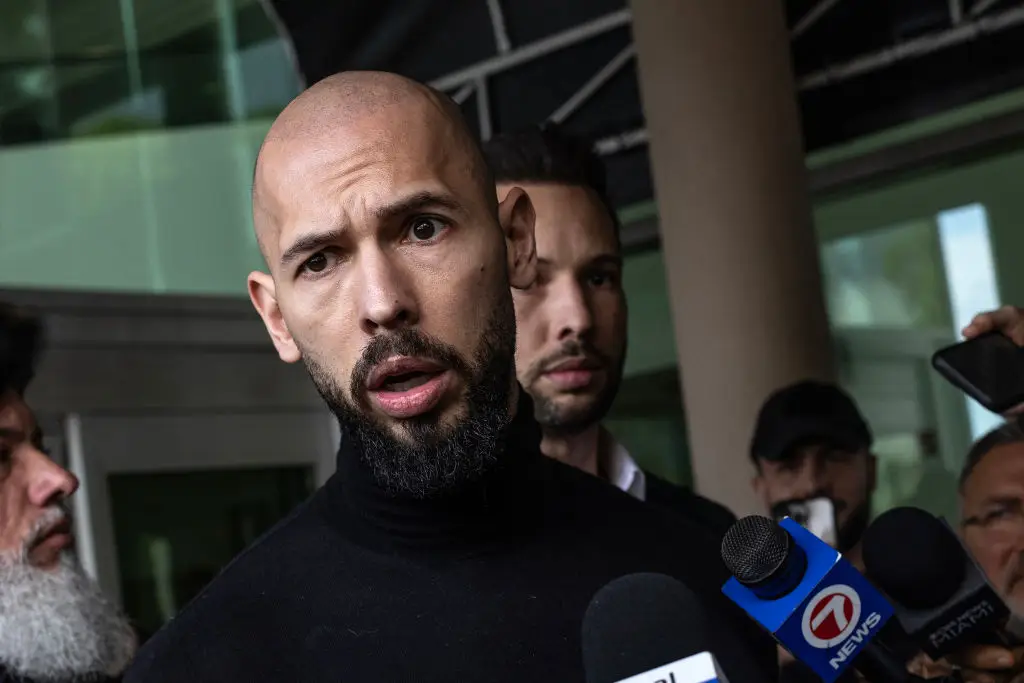
Glass has worked closely with men who arrive at her retreats fresh out of what she describes as 'Tate-style spaces online', and she said the anger that comes with them is instantly recognizable.
"It sounds like certainty. It sounds rehearsed," she said. "He arrives with borrowed language, slogans about women, about status, about what a man has to be, and it comes out fast because it's armor, and armor is easier to hand someone than a wound."
Rather than confronting that ideology head-on, Glass said her approach is to dig underneath it entirely, asking simple questions about a man's father, or the first person who ever broke his heart.
"Everything starts to change," she said. "The voice slows down. It gets younger. The slogans stop, because slogans are for audiences, and he's no longer performing for one."
She was clear that this isn't about tearing a man's defences down by force. "We never tear a man's armor off. We help him heal the wound it was covering, and then he sets it down himself."
Asked how she'd explain the pull of someone like Tate to a worried mother, Glass said shame is the worst possible response.
"Shaming him for listening confirms the exact story he's being sold, that nobody understands him," she said. "Your son isn't necessarily looking for someone unhealthy to follow. He's looking for a man to become."
What actually happens at the men's retreats?
Even men who have admitted to hitting their partners or children aren't turned away, according to Glass, though she was adamant that this isn't the same as letting them off the hook.
"I will never excuse violence, and understanding a man is not the same as excusing his behavior," she said. "When a man who has harmed his partner or his children sits in front of me and faces his own shame and guilt and owns it, I see someone whose change makes everyone around him safer, and I will do that work."
The line, she said, isn't a man's history, it's his willingness.
"If a man blames everyone else, minimizes what happened, or wants me to co-sign his story, the work cannot happen, and I'll tell him so."
Glass said the tragedy shaping her own life is never far from the work. She revealed that her father drowned in front of her in a canoeing accident when she was a toddler, and that her mother later died by suicide when Glass was a teenager, after "disappearing into her grief and into alcohol." She also disclosed that there is sexual abuse in her own history.
"I searched for help for years and couldn't find what I needed, so I built it," she said. "My losses became my life's work, and that is the greatest privilege of my life, helping people with transformational healing."
Glass said she'd like to see the emotional groundwork of her retreats taught in every school, arguing that boys are given 'a rich vocabulary for engines, football, and gaming, and almost no vocabulary for what's happening inside their own bodies'.
"We would never send a child into the world unable to read words," she said. "We send millions out unable to read themselves and their emotions, and then we act surprised by the loneliness and the anger."
For Glass, it all loops back to the same starting point: men who were never taught how to do this in the first place, now sitting in a room together learning it for the first time.
"It takes exactly one man to stop the cycle," she said. "One man, one home, one decision that stops with him."
Topics: Mental Health, Health
 Thomas Bamford