18 men and women undergoing new experiment to reverse aging and cure disease - with very real risks

A biotech startup has started something no one has ever done before: dosing a human being with a drug designed to reverse the aging process at a cellular level.
The treatment, called ER-100, is being developed by Boston-based Life Biosciences, and it's the first-ever cellular-rejuvenation therapy of its kind to get the green light from the FDA to be tested on humans.
Around 18 adults will receive the treatment over the next year, in a study designed to check it's safe and doesn't cause serious side effects.
The company says ER-100 already restored vision in monkeys during earlier testing, and now it's about to find out whether it can do the same thing for people.
Advert
How does epigenetic reprogramming actually work?
Here's the science bit, made simple. Every cell in your body carries instructions that tell it what to do, and which of those instructions get switched 'on' or 'off' changes as you get older.
Life Biosciences believes that this loss of information, not permanent damage to the DNA itself, is a major reason our bodies age in the first place.
ER-100 works by using three proteins, known together as OSK, to try and restore those original instructions, essentially nudging old, worn-out cells back into a younger, healthier state.
David Sinclair, the Harvard Medical School genetics professor who co-founded Life Biosciences, said the trial marks a turning point for the whole field.
"Our research has suggested that aging is driven in large part by the loss of epigenetic information, not irreversible damage," he said.
"This clinical study represents the first opportunity to test whether restoring that information can ameliorate human disease."
So where is all this actually being tested first? In the eyes.
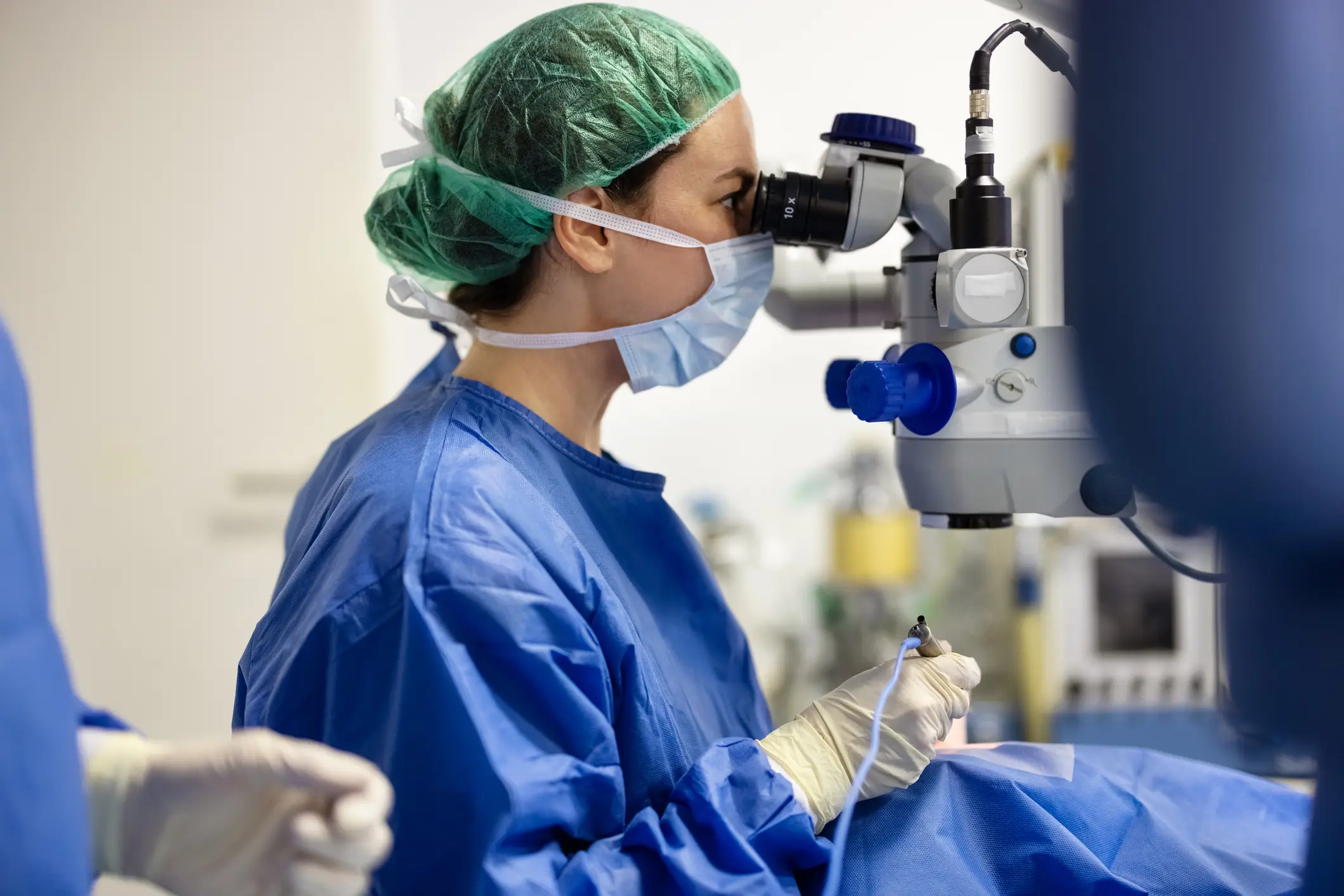
The trial is targeting patients with glaucoma and a rare condition called NAION, both of which damage cells at the back of the eye that carry visual information to the brain. Once those cells are gone, vision loss is usually permanent, because the cells can't grow back on their own. ER-100 is designed to rejuvenate them instead of just managing the damage.

Could this treatment eventually reverse aging in the rest of the body?
Speaking to UNILAD, Life Biosciences CEO Jerry McLaughlin explained why the treatment is starting with the eyes specifically.
"We started with optic neuropathies because the biology is clear and the need is real," he said, pointing out that current glaucoma treatments only manage risk factors like eye pressure, while NAION has no approved treatment at all.
But the ambitions go a lot further than eyesight.
McLaughlin confirmed Life Biosciences is already researching how the same technology could treat liver disease, and says the platform could eventually be applied 'across a variety of organs, because the biology of aging is relevant in many tissues'.
Still, he was quick to add that expansion depends entirely on results. "Each next step must be earned with data rather than promised ahead of it," he said.
That kind of caution matters, given how much hype already surrounds the longevity industry. McLaughlin insists Life Biosciences wants to be judged on hard evidence, not headlines. "We're not making claims about lifespan or selling supplements," he said.
"We're targeting a root cause of age-related diseases at the epigenetic level and asking to be judged on clinical data."

"The potential for catastrophic side effects is high"
Not everyone is convinced the risks are fully understood yet, though.
Speaking to Nature, Matt Kaeberlein, co-founder of longevity-focused company Optispan, said the science is still 'really early' and warned that 'the potential for catastrophic side effects is high' if the approach isn't proven safe in humans, though he agreed the eye was a sensible place to start given the lower risk of life-threatening complications.
Pete Williams, a translational neurobiologist at the Centre for Eye Research Australia, went further, telling Nature that even if the trial succeeds, it wouldn't necessarily prove the treated cells are truly 'younger' in any meaningful sense. He also flagged concerns about the level of public hype surrounding the treatment, saying, 'if this goes catastrophically wrong, it might screw us all in the future'.
For now, all eyes (literally) are on the results of this first human trial. If ER-100 works the way it did in monkeys, it could be the first real proof that reversing aging in humans isn't just science-fiction, it's already begun.
 Thomas Bamford