Mom who can't hold her baby because of rare ‘butterfly skin’ condition reveals first signs

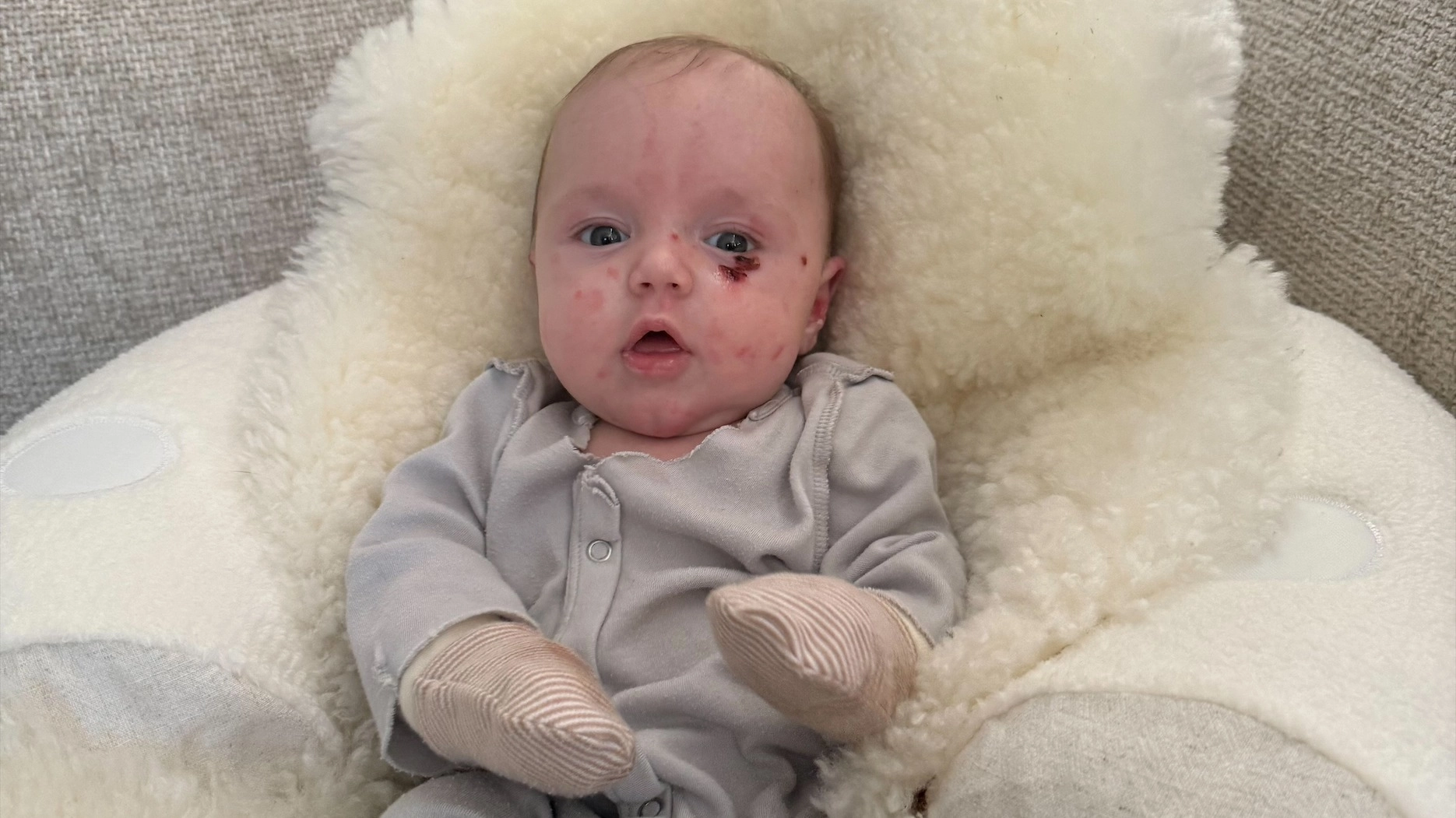
The mother of a baby boy who has skin so delicate she can’t hold or bathe him without worrying she’s ‘causing damage’, has spoken out about his rare genetic condition.
Ciara Burnside, 30, lives in Bedfordshire, UK, and said she began to notice something different about her baby after giving birth in March this year.
Scarily, her little boy would go on to need time in intensive care within minutes of entering the world, and his condition continued to worsen.
Ciara and her fiancé, Lewis Archer, now say they have to give their son medicine, so he doesn’t face the same damage internally, as he does externally.
Advert
That’s because he suffers from a rare subtype of epidermolysis bullosa (EB).
According to the Mayo Clinic, EB ‘is a rare condition that causes fragile, blistering skin’ which ‘may appear in response to minor injury, even from heat, rubbing or scratching’.
It added: “In severe cases, the blisters may occur inside the body, such as the lining of the mouth or stomach.”
Sadly, it is a condition without a cure, but could ‘improve with age’.

For Ciara’s Ralph, when she saw he had ‘big red patches' on his hands and feet after birth, she knew something was wrong.
She explained: “There were big red patches on his fingers and on his feet, and I remember saying to the midwife, ‘What’s wrong with him?’.”
Within hours, he was then displaying ‘blistering all over his body’, and two months later, he got his diagnosis.
The next day, she said a consultant gave her and Lewis a leaflet about epidermolysis bullosa, before a specialist from the Great Ormond Street Hospital visited them the next day to talk them through what it means.
She said: “They said to us there is a specific type where he may not survive. After that, my partner and I just shut down… we were crying and were very, very upset.”
She said it was then confirmed that both Ciara and Lewis are silent carriers of a mutation of the COL17A1 gene.
This is what causes intermediate junctional epidermolysis bullosa (JEB), and for Ralph, this means he experiences extremely fragile skin, and he may also present with alopecia (hair loss) and more.
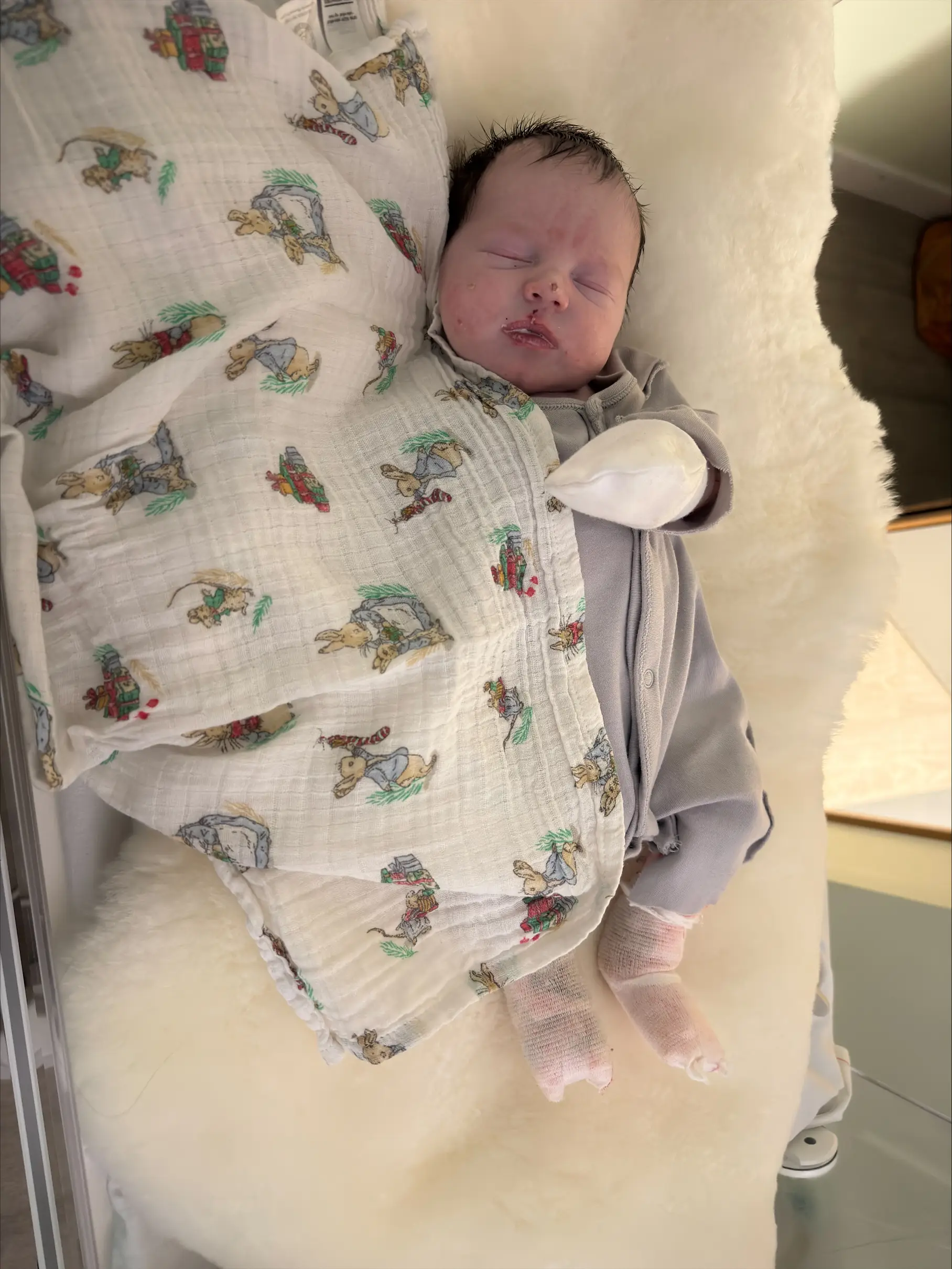
Known more broadly as butterfly skin due to the similar fragility of the insect’s wings, it’s a life-long battle for Ralph that is already a full-time job for Ciara and Lewis.
Now five months old, the parents say they give Ralph acid reflux medication to prevent blistering in his esophagus, he also takes paracetamol for pain management, morphine, and regular dressing changes.
Ciara said of his routine: “We have also syringe-fed Ralph, so we sat there for over an hour, slowly dripping the milk into his mouth.”
She added: “Unlike most parents, we can’t really leave him unattended for more than a minute because, even with very soft mittens on, rubbing his face can cause significant damage incredibly quickly.
“We rarely leave the house due to the heat and fear of damage from the car seat.”
However, the pair are taking things one step at a time.
She said: “He will likely make it to adulthood because his prognosis is not the most severe, but they’ve told me that there is a chance he will lose his hair and fingernails. They can’t tell me much else, other than we have to be proactive in stopping complications early. We just have to take each day as it comes.”
Despite the care taking responsibilities they have for Ralph, Ciara said they would explore IVF with genetic testing for healthy embryos.
The mom, who also posts videos to raise awareness under @ciaraburnside on TikTok, is currently raising signatures on a petition to ask the UK government to increase its funding of these conditions.
 Britt Jones