
Man, 26, discovers he's part of 3% of the world with rare brain condition that makes him 'blind in the mind'

After 26 years I found out I have a rare brain condition that affects just three percent of the population.
Last year, I discovered that I have aphantasia, a phenomenon in which people have no visual imagination and do not have a ‘mind’s eye’ – meaning that they can’t picture anything in their head.
There are a few ways to find out whether you have aphantasia, the simplest way would be to close your eyes and count sheep.
Can you actually picture a flock jumping over a fence? Or, like me, do you just see the back of your eyelids – blackness.
I’ve always thought counting sheep was a figure of speech, and have lay in bed just counting in my head and thinking of sheep but not actually picturing them.
Advert
So, it was crazy when I found out other people can – one of my friends even gloated that he can imagine them doing backflips over a fence.
The phenomenon was first described by Victorian polymath Francis Galton in 1880 when he published a paper on mental imagery.
But it was not until 2015 when a publication of a study, conducted by a team led by Professor Adam Zeman of the University of Exeter, coined the term aphantasia.
The name was derived from the ancient Greek word phantasia, meaning imagination and the prefix ‘a’ – meaning without.
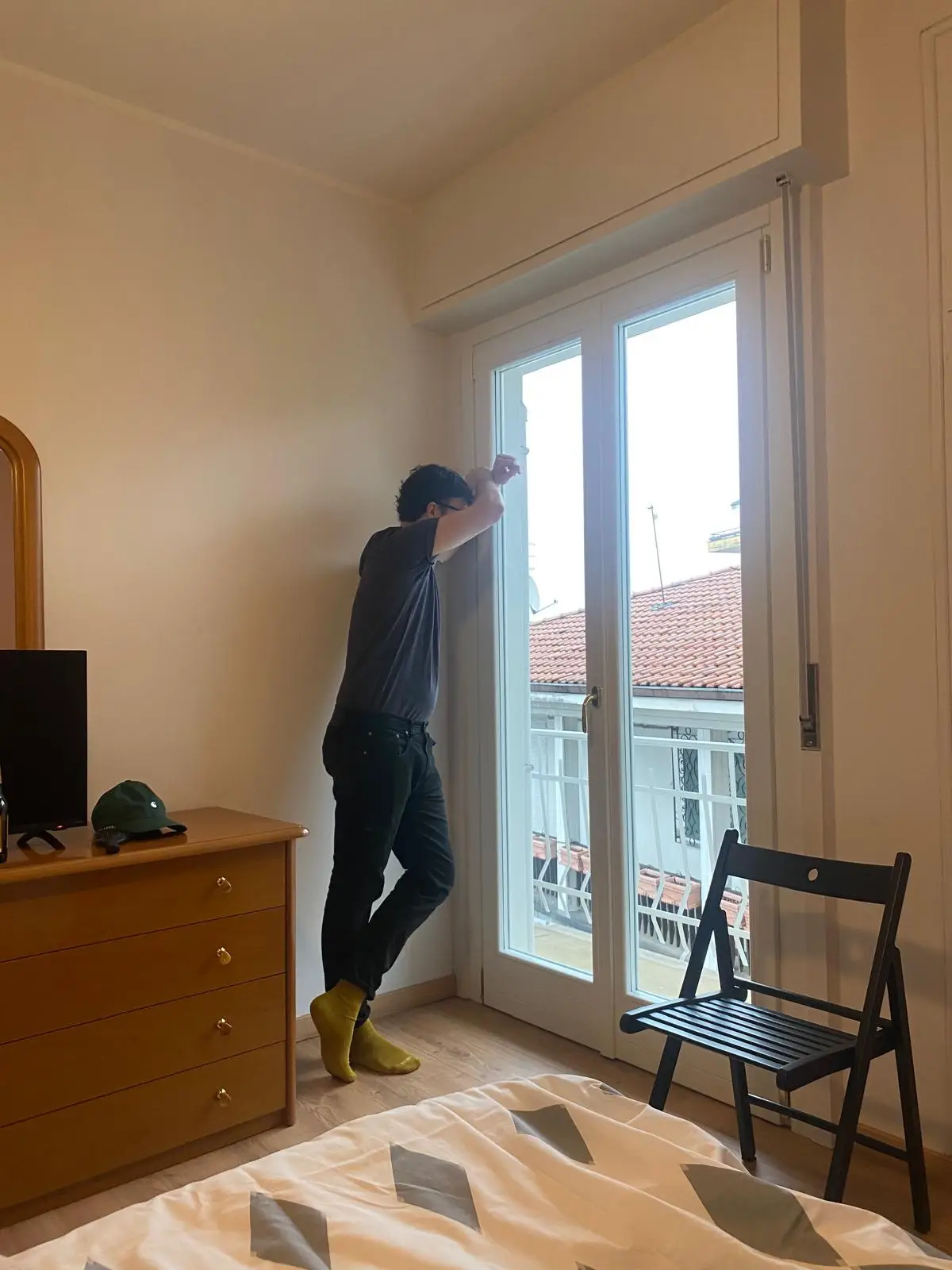
Speaking to UNILAD, Zeman explained: "I try to avoid calling it a condition, as I don’t think it is pathological, and tend to speak of ‘an intriguing variation in human nature’.
"For people with lifelong aphantasia, which is much, much the commonest form, probably a subtle alteration of brain connections, such that thought translates less readily into image than for most of us – this, in turn, may have an at least partially genetic basis.
"Rarely, aphantasia can be acquired as a result of brain injury or psychological upset - depression, depersonalisation especially."
He added: "In terms of treatment – it's probably not needed. People with aphantasia get along just fine and there may be advantages to not being bombarded with images… which is lucky as there is currently no reliable way of ‘curing’ aphantasia."
Over the years I’ve listened to people moan about poor film castings from book to screen adaptations, and I never understood why they were so passionate about them until I realised that the vast majority of people can create vivid scenery and images of characters.

There are different variations of visual imagery; some people can imagine a red star and see it in their head as clear as anything in real life – these people have hyperphantasia, while others struggle to see anything at all.
There is a spectrum of mental imagery, on one end is people like myself, who can’t picture anything, and on the other is those that can imagine things and see them perfectly clear and lively – almost as real as seeing it.
In between, you have people that can visualise dim and vague images, others that can picture things moderately clear and lively – and those that can visualise things clear and lively.
Just how many people 'suffer' with aphantasia differs from study to study, in fact Zeman believes the frequency varies from as little as one percent of the population to as many as four percent.
The professor added: "Depending on where the line is drawn, one percent if you only include people who score as low as possible on our vividness questionnaire - indicating that they only ever ‘think’ about the images that most people visualise."

Another way people can find out whether they have the condition would be to close their eyes and imagine a ball on a table and someone pushes it and it rolls forward.
Then ask yourself what gender was the person? What color was the ball? What kind of table was it? When I thought about it, I imagined a hand on its own pushing a white ping pong ball, on a ping pong table, but of course could not picture it.
It also explains why I’ve always thought guided meditation was a farce.
'Picture yourself on a beach' as I again lie there thinking about it, but seeing blackness.
Topics: Psychology, Health, UK News, Life
 Joe Yates