
GLP-1s can affect your oral health, so your dentist needs to know

Need to see your dentist? Now is the time to tell them if you’re taking weight loss drugs, as an expert reveals why not being upfront could cost you.
A brand-new study published on October 2 in Nature, under the British Dental Journal, revealed that using drugs to aid in weight loss such as Ozempic or Wegovy could put patients at risk if they need to be put under sedation.
After analyzing 8,536 survey responses, it was found that between September 2021 and August 2025, 488 dental practices failed to meet one or more regulations, such as the 'lack of evidence of sedation', or 'life support training' as well as 'inadequate patient monitoring'.
So, what's the link between weight loss drugs and sedation issues?
Advert
According to Dr Saravanan Thangarajan, MDS, MMSc, MBA, Dental Specialist in Prosthodontics and Implantology, Harvard Medical School alumnus...it's the active ingredient in both medications.
He revealed to UNILAD that if you're taking Ozempic or Wegovy, you should tell your dentist, 'especially' if you're going to be sedated.

He explained the reason is because 'both medicines contain semaglutide', which, Dr Thangarajan says 'slows the rate at which the stomach empties'.
He said: "Someone may have followed the fasting instructions before dental surgery and still have food in their stomach. During deep sedation or general anesthesia, there's a risk of stomach contents entering the lungs."
Per the Perio Implant Advisory, weight loss drugs create a risk of pulmonary aspiration (food in lungs) in anecdotal data for both general and deep sedation.
However, Dr Thangarajan is clear about not suggesting 'that everyone taking Ozempic needs to stop it before seeing the dentist' as 'having a filling under local anesthesia' has a 'different' set of risks 'from those for someone undergoing deep sedation'.
The study did also reveal that there is an alternative to deep sedation, known as 'conscious sedation' where a patient is awake and aware, but relaxed, which is offered by many providers.
But that doesn't mean this is an entirely risk-free service, as the relaxed state of a patient also poses a risk for regurgitation, per a 2025 study, as it makes it easier for food to enter the lungs.
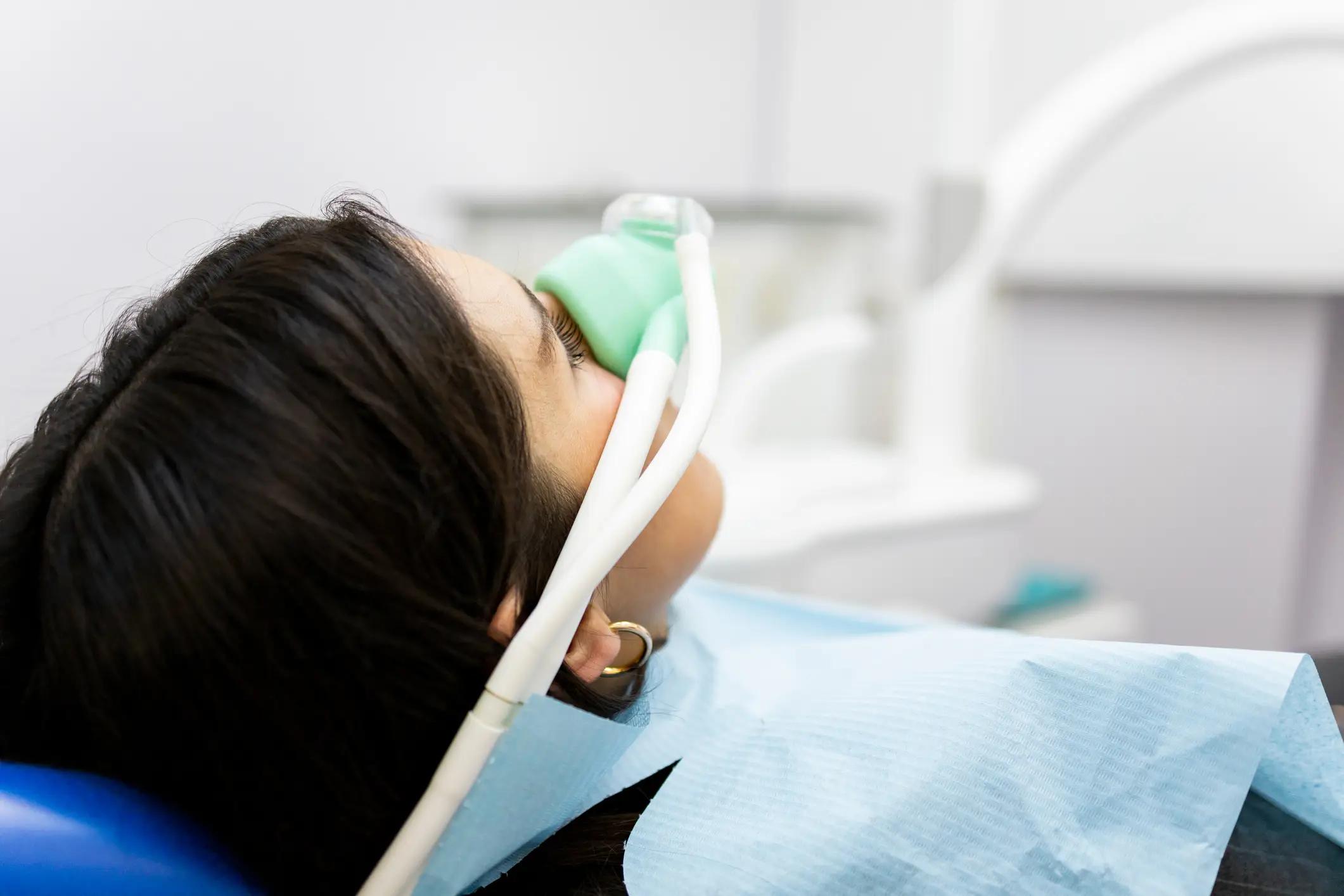
Despite this, part of the process, the expert revealed how he'd approach his patients prior to making the choice to sedate: "I'd ask how long they've been taking the medication, whether the dose has changed recently, and whether they've had nausea, vomiting, bloating or a persistent feeling of fullness."
This is to find out who is more at risk.
He explained: "Someone who's been on a stable dose without symptoms may need a different approach from someone who's just started treatment and is struggling with nausea. The decision about sedation should be based on that assessment, not simply on the name of the medication."
However, it's not just the risk of sedation that can be found in cases where 'frequent vomiting or acid reflux' cause tooth problems like 'signs of enamel erosion', as Dr Thangarajan says: "That's particularly relevant when planning restorative dental treatment."
He revealed that the American Dental Association has updated its medical-history forms so they can include GLP-1 medications, and called this 'a useful reminder that dentists should be asking about these treatments routinely.'
He added: "I'd encourage patients to mention Ozempic or Wegovy when booking a procedure involving sedation rather than waiting until the appointment. That gives the dentist time to review the medication history and discuss any necessary precautions with the anesthesia team. Patients shouldn't discontinue their medication without advice from the clinicians managing their care."
UNILAD reached out to Novo Nordisk for comment.
 Britt Jones