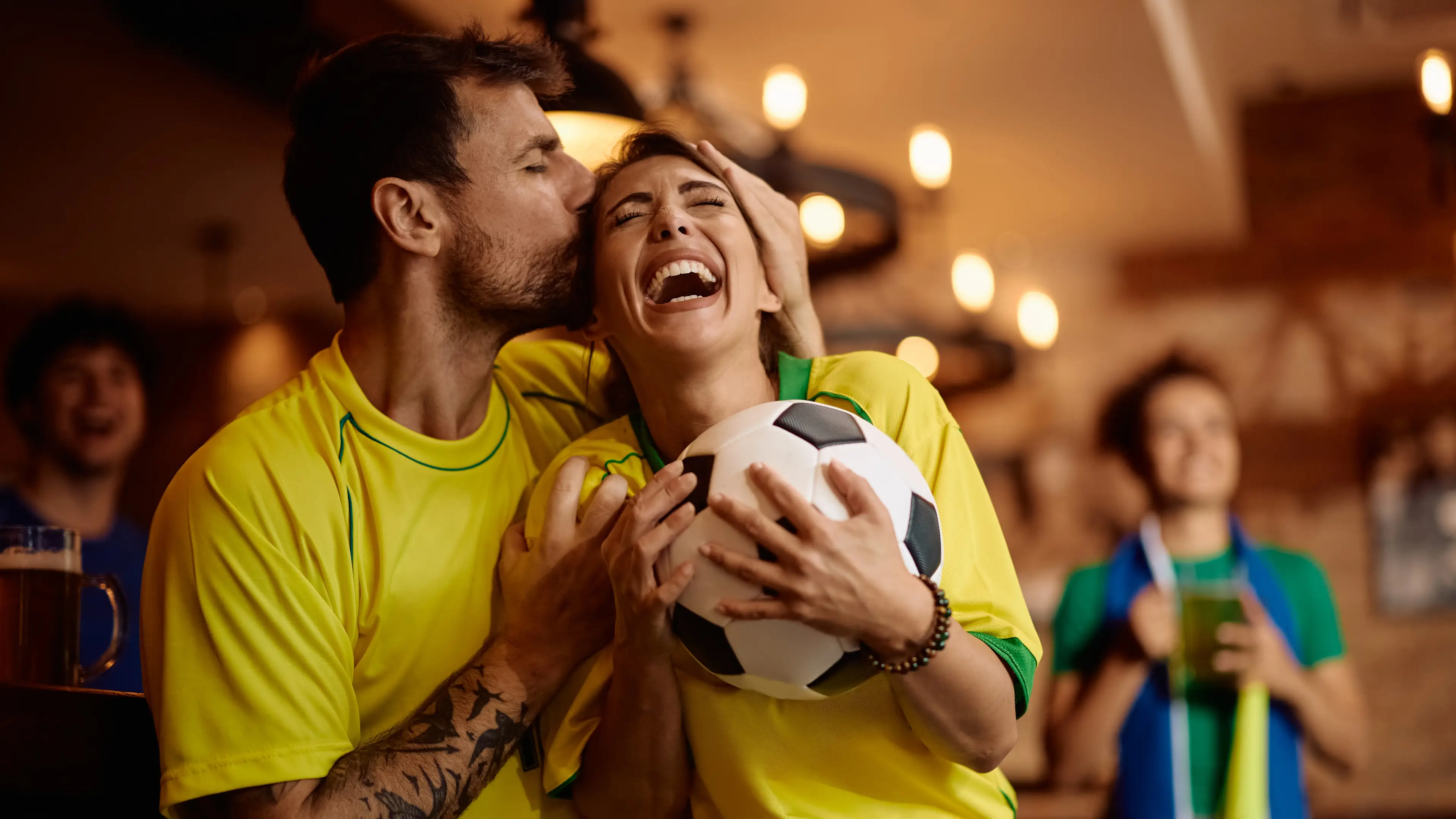
Strict no-sex rules at the World Cup explained by experts

Hard work, discipline and...abstinence? This week, it came to light that New York Knicks head coach James Dolan asked his team to give up sex for 10 weeks ahead of their epic playoff run.
"The Spartans, they denied themselves, right, so they can have an edge. Get the edge. Go home, talk to your wives ... don't tell them it was my idea,” he said in an April. Audio of the speech was played on Knicks stars Jalen Brunson and Josh Har's podcast The Roommates Show following the Knicks clinching the NBA Finals for the first time in 53 years.
He’s not the only coach who believes in such a strict strategy. Abstaining during high-pressure matches has been a long sports tradition, especially for World Cup players. The theory is that sex can affect performance, resulting in a physical weakness, muscle fatigue, and testosterone loss, draining strength. (Evidence through studies has suggested that higher testosterone levels may provide an athletic advantage in both men and women, as it stimulates muscle mass and reduces body fat.)
Advert

During the 2010 World Cup, England manager Fabio Capello limited the, um, private time England players had with their wives and girlfriends. The country’s cup dreams in a 4-1 thrashing by Germany before the quarter finals, so we’re not sure that one worked. At the 2014 cup, the coach of Bosnia-Herzegovina’s soccer team told reporters: “There will be no sex in Brazil."
While so far at the 2026 World Cup, coaches have kept quiet on their after-hours rules and regulations, this begs the question: is giving up sex during competition actually helpful? (We’ve all heard the rumours of the shortfall of condoms at the Olympics.)
In short, no.
Sex and relationship expert, Dr Tara Suwinyattichaiporn, from the UK dating show, Celebs Go, tells UNILAD: “Giving up sex or masturbation isn’t necessary for maximum performance for athletes." A recent study published in Physiology & Behavior included 21 male athletes between 21-35 seems to back this. In the study, their strength, endurance, muscle damage, and other performance indicators were measured 30 minutes after masturbation and after seven days of sexual abstinence, and they found that orgasm shortly before exercise did not hurt performance.
As for affecting testosterone — a hormone that plays a vital role in sperm production, and also affects bone and muscle mass, the way men store fat in the body, and even red blood cell production, as well as a man’s mood, according to HealthLine, Dr. Tara adds: "Having sex does not deplete testosterone. Testosterone can fluctuate during sex and orgasm but the changes are very temporary."

The no-sex-better-performance myth predates FIFA and the NBA.
Ancient Greeks and Romans believed that male athletes should ‘preserve’ their sperm to maintain ‘masculine vitality’ and aggression, which they believed helped them compete.
Certified and Multi Award Winning Sex and Relationship Coachsex expert Gemma Nice agees with Dr. Tara, although she encourages athletes to be aware of timing should they choose to have sex. "Sex before matches doesn’t necessarily reduce stamina, physical strength or aerobic activity. Although the coaches would always advise against this until after the athletes have competed, because it takes the body a while to recover energetically from a sexual experience.
"They would also advise no sex 30 minutes to two hours up to the game because the athletes may feel light headed, or slightly fatigued due to the physical demands of penetrative sex."

Still, many athletes, especially boxers, still choose to abstain while in camp, so in theory it's down to the athlete.
Dr. Tara suggests that the recommendations might be more emotional, rather than physical.
“My theory is that the coaches don’t want the other distractions surrounding sex and dating to affect the players such as dating drama, drinking, partying, and all in all not focusing on the game.”
The medical expert notes that those players with a ‘loving partner’ shouldn’t be affected by getting physical the day before a big game. In fact, it might even help.
“Scientifically it should help them feel happier and more energized due to oxytocin, dopamine, and serotonin release during a connected sexual encounter,” she says, adding that the act could help those who are anxious before a big game.
She explains: "Sex is actually great to relieve stress and keep anxiety levels down... It keeps you in the parasympathetic nervous system because it releases the feel good hormones dopamine, serotonin and testosterone, meaning you feel good and the cortisol levels (stress hormones) are kept low."
Topics: World Cup, Sex and Relationships
 Kiesha Dosanjh