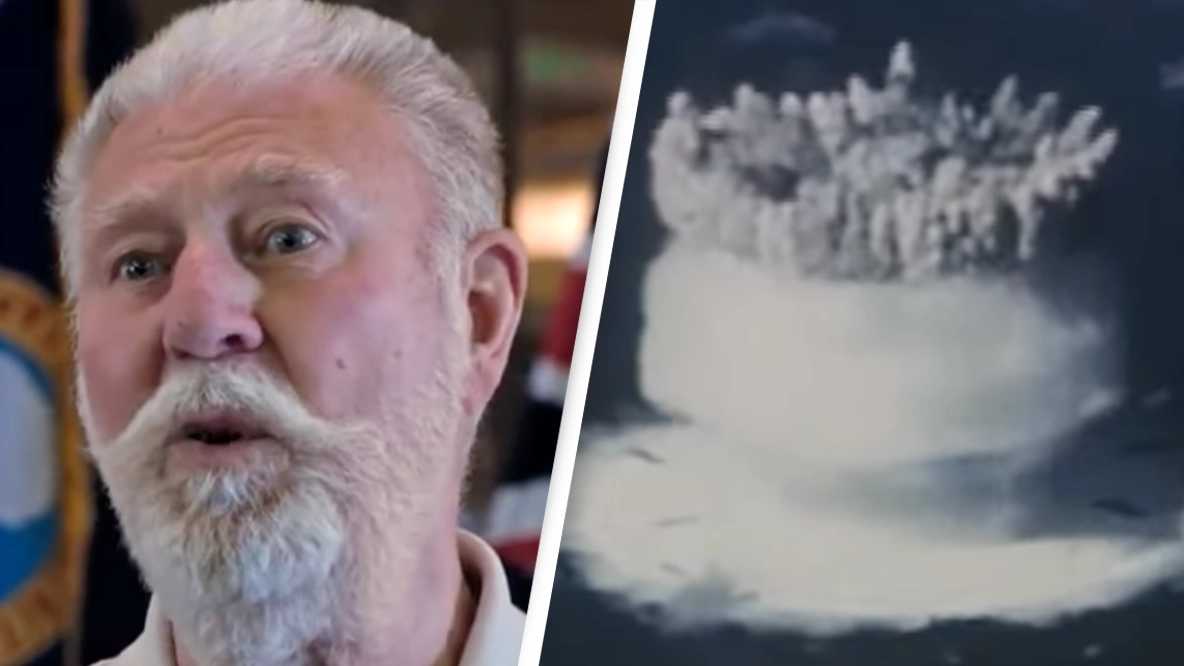
Atomic veterans explain what it's like to experience a nuclear bomb up close

Veterans of atomic testing have described the experience of witnessing a nuclear bomb exploding.
After World War Two ended in 1945, the planet was ushered into an age of fear under the shadow of the atomic bomb.
Atomic bombs were dropped on the cities of Hiroshima and Nagasaki by the United States to force the Japanese to surrender and bring the war to an end, alerting the world to the destructive power of this new weapon.
People learned to live with the shadow of mutually assured destruction looming over them and the possibility that the world might end at a moment's notice.
Advert
The United Nations records that over 2,000 atomic bombs were dropped as part of nuclear tests after the end of the Second World War.
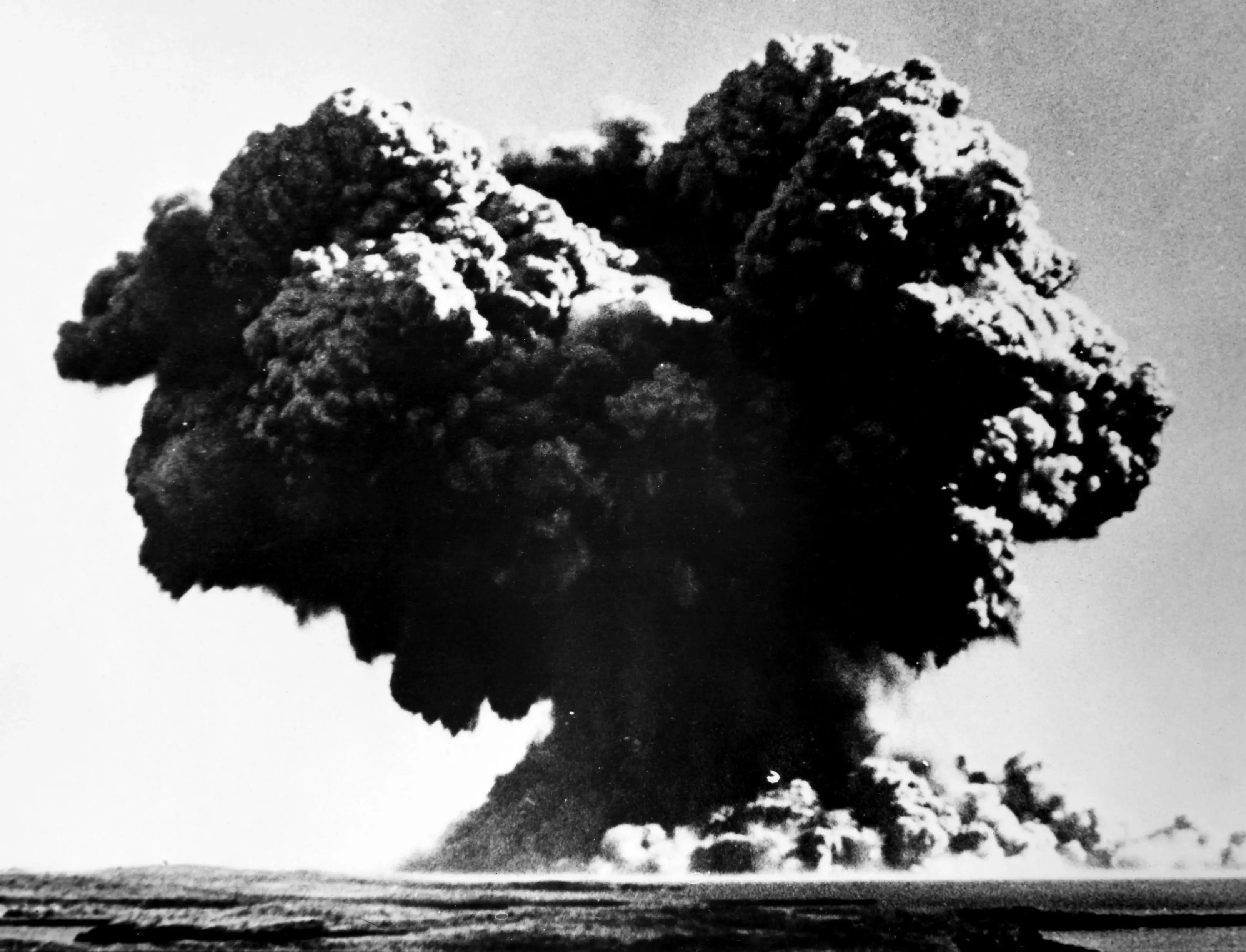
Detonated above ground, underground and in the sea, extensive testing on the full destructive and radioactive capabilities of atomic bombs has been done.
Sadly, thousands of people had their lives affected by these tests as they were brought in to witness and experience the impact of a nuclear blast.
While most tests were done by the US and Russia, including the detonation of the 50 megaton Tsar Bomba in 1961, the UK also developed and tested nuclear weapons.
Some of the tests had soldiers to witness them, and over 20,000 British troops were present at atomic bomb tests.
Interviewed by Vice, some of those veterans who survived into the 21st century explained exactly how it felt to experience a nuclear blast.
Told nothing about what they were about to witness besides 'don't look at the flash', they were made to cover their eyes but could still see 'x-rays of your hands through your closed eyes'.
After the flash came the most intense heat they had ever experienced, which one of the veterans described as though somebody 'caught fire then walked through me'.
About 30 seconds later came the force of the blast which left some with 'bruises and broken limbs' as they were knocked off their feet.
For thousands of veterans sent to witness atomic bombs being tested, bruises and broken limbs would soon be the least of their worries as many developed serious health issues such as cancer and infertility.
Others who could have children sometimes found that health issues were passed down through the generations, with one of the veterans recounting that his first daughter born in 1960 developed a hump on her back by the age of 11 and sadly died as a result.
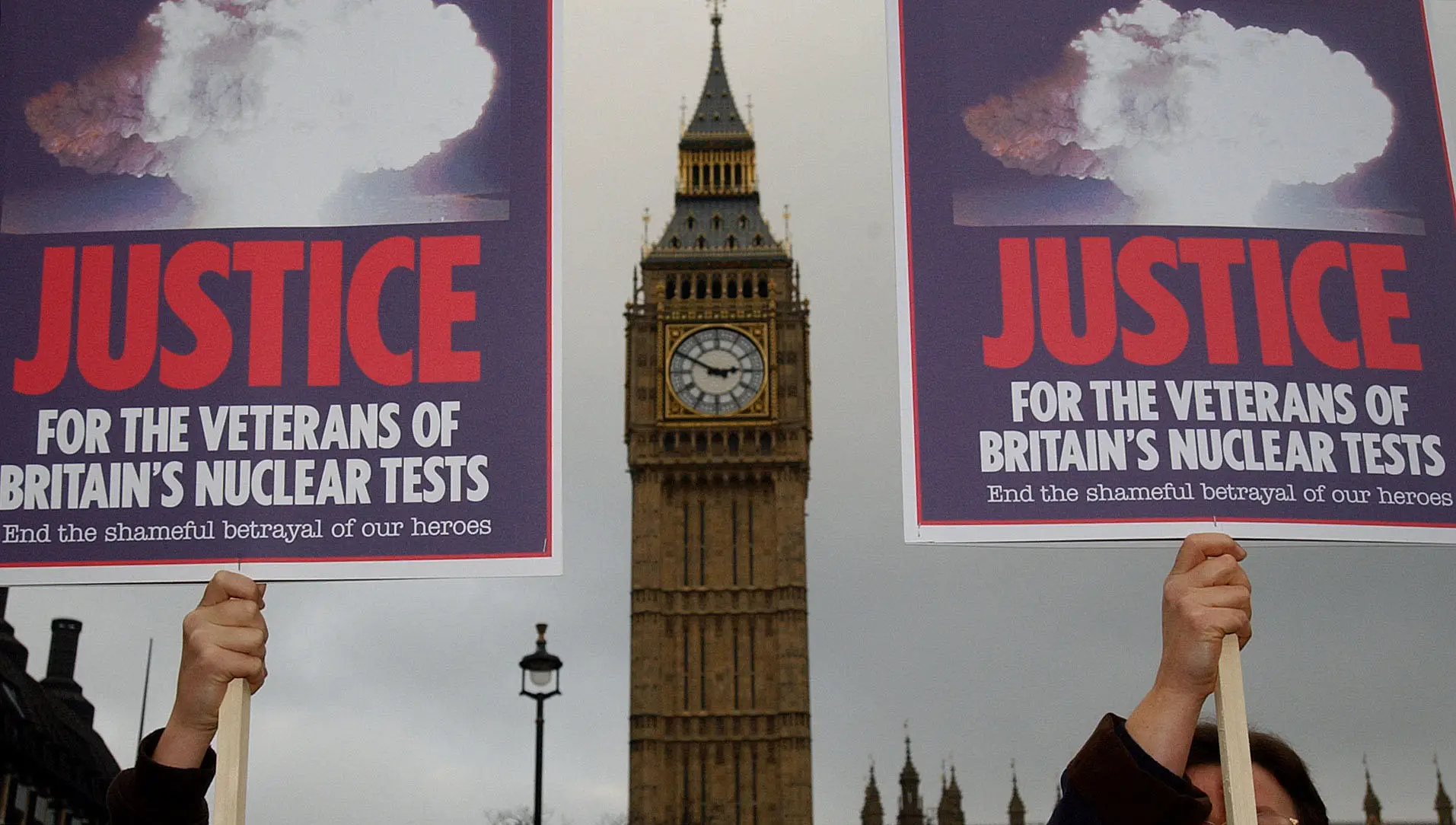
Sworn to secrecy for decades, it wasn't until the 90s that they were allowed to speak out about what had been done to them.
The Daily Mirror reports that a government study found atomic veterans were more likely to die of cancer or leukaemia and 10 times the usual rate of birth defects in their children.
For years there have been campaigns for the government to properly recognise the suffering and sacrifices veterans of atomic bomb tests have had to endure with a medal.
If you have a story you want to tell, send it to UNILAD via [email protected]
 Joe Harker