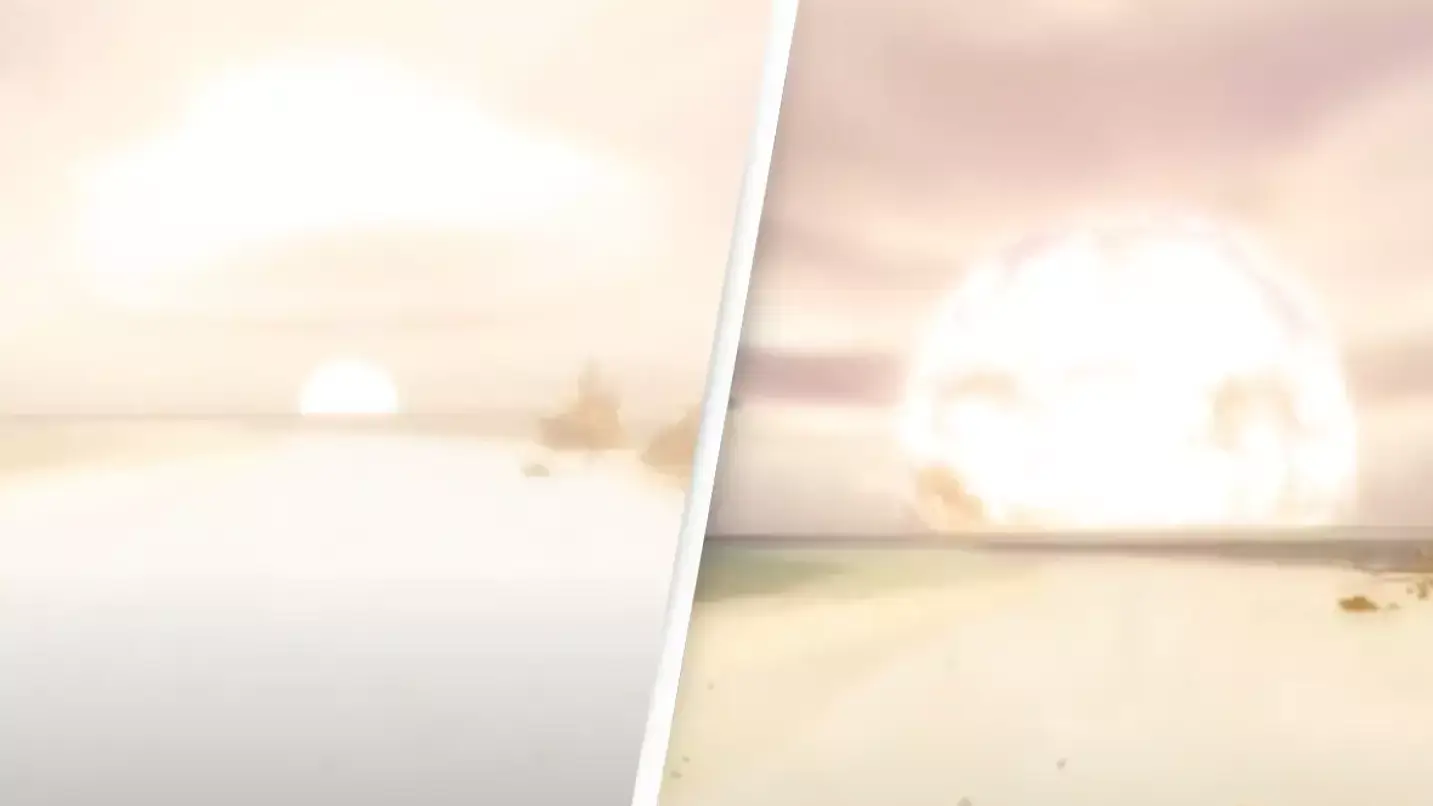
Horrifying POV video shows what experiencing a nuclear explosion would be like

A POV video shows what it would look like if a nuclear explosion was to happen not far from your location.
Nuclear missiles, explosions and technology are both a fascinating and terrifying aspect of the modern world.
In human history it is rare that we create a weapon so devastating that all in possession of it are reluctant to even use it (regardless of what they say on the political world stage).
With that being said, most people don't have the best understanding at just how horrifying a nuclear explosion can be.
Advert
In all honesty, that is likely a good thing, to never have first-hand knowledge of how destructive the most dangerous weapon can be.
However it is hard not to be curious.
While we can all hope humanity never uses them again, a broadcasting company has created a simulation video, shot in the first person, showing just what it would be like to experience a nuclear blast and it is even more horrifying than you are thinking.
Yleisradio Oy, translated as the Finnish Broadcasting Company, created the clip using VR technology, transporting viewers to Enewetak Atoll, a reef in the heart of the Pacific Ocean.
The simulation is based on Ivy Mike, the codename given to the first full-scale test of a thermonuclear device.
It kicks off with a POV look at island, but the stunning scenery is juxtaposed with an eerie countdown.
When the bomb detonates, the whole screen is filled with bright, white light, which in real life is powerful enough to cause a person to temporarily lose their sight in what's called flash blindness.
A huge fireball causes everything in the surrounding area to set on fire before the heat from the fireball generates a change in air pressure, creating a deadly shock wave that turns everything to dust.
If this were to occur in a city, The Atomic Archive explains: "In general, large buildings are destroyed by the change in air pressure, while people and objects such as trees and utility poles are destroyed by the wind."
But what comes next is the most sinister of all.
Anyone who is close enough to an explosion as the viewer is in this clip would experience intense third-degree burns and radiation exposure.
As the simulation continues, we see the famous mushroom cloud begin to form, which in reality would spell disaster for humanity.
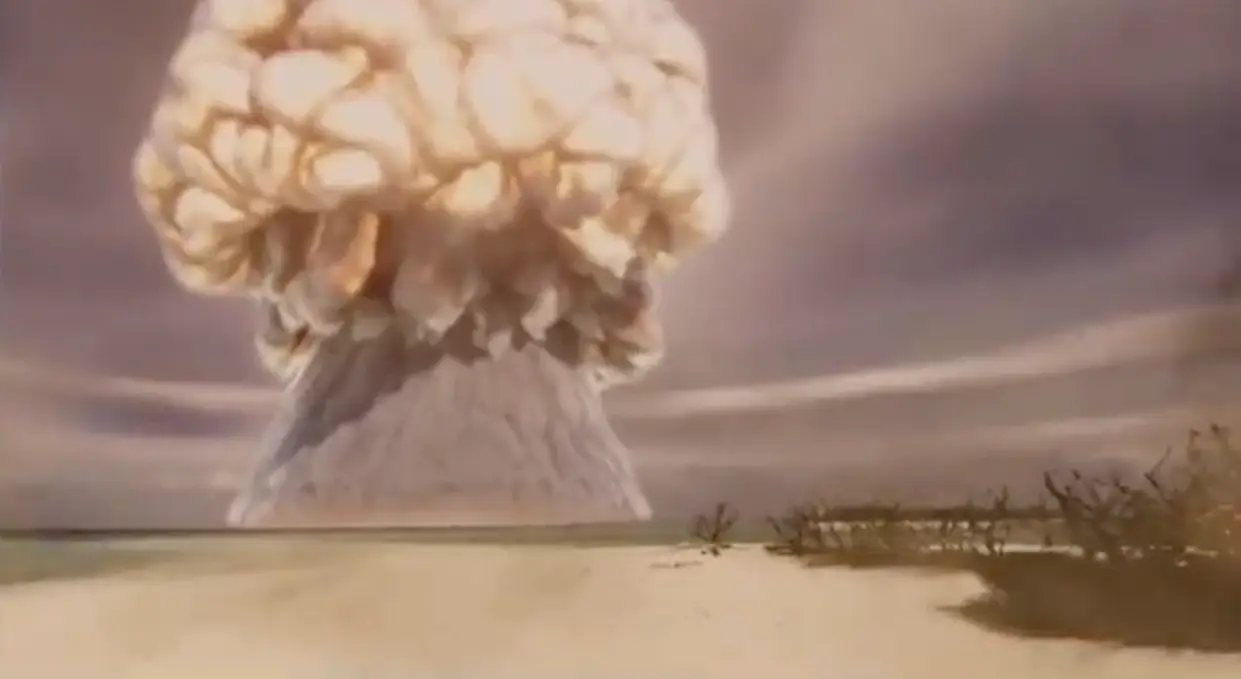
The Atomic Archive goes on to say: "Fallout radiation is received from particles that are made radioactive by the effects of the explosion, and subsequently distributed at varying distances from the site of the blast...
"The significant hazards come from particles scooped up from the ground and irradiated by the nuclear explosion.
"The radioactive particles that rise only a short distance (those in the 'stem' of the familiar mushroom cloud) will fall back to earth within a matter of minutes, landing close to the center of the explosion.
"Such particles are unlikely to cause many deaths, because they will fall in areas where most people have already been killed.
"The radioactive particles that rise higher will be carried some distance by the wind before returning to Earth, and hence the area and intensity of the fallout is strongly influenced by local weather conditions."
As we've seen with nuclear bombings in the past, the fallout contamination can linger for numerous years.
Topics: Technology, Science
 Gerrard Kaonga