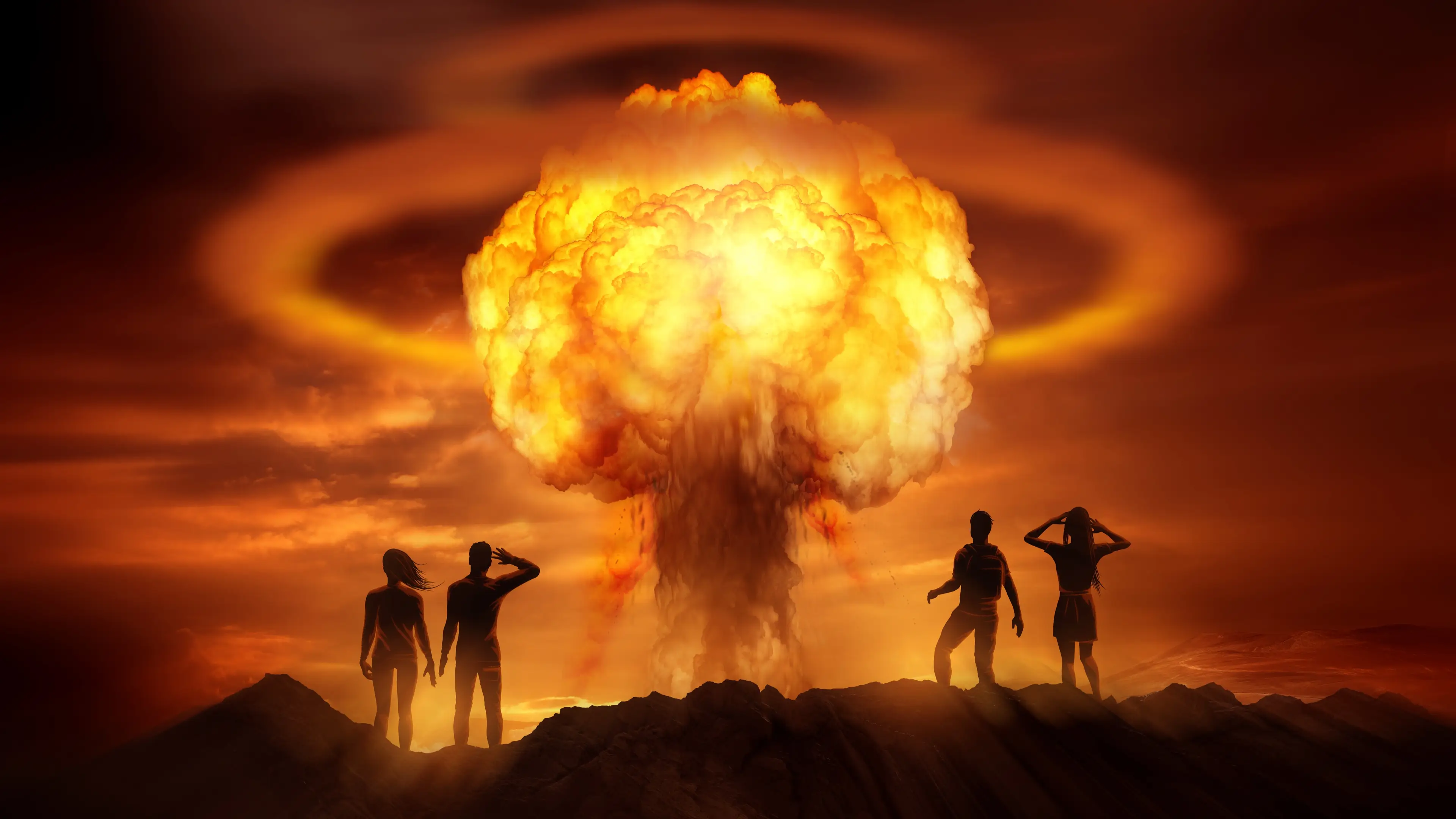
Expert reveals fatal mistake almost everyone would make in the first minutes of a nuclear attack

Living through a nuclear attack is a fate that no living being should endure, but with the world's great powers increasingly being drawn into destabilizing conflicts, it's a reality that some poor souls could one day face.
For those outside the initial blast radius and fireball, which for an average megaton-yield modern nuclear weapon would vaporize everything inside a three-mile radius, the first thing they would notice is a blinding flash of light.
Anyone looking in the direction of the nuclear blast for up to 10 miles would experience temporary blindness that could last minutes, or even long-term blindness, and that's just the first millisecond after detonation.
Those still able to see would then witness a terrifying mushroom cloud roaring upwards at a speed over 100mph. In this instant, you have just seconds to make the right decision and many would make a tragic, fatal, mistake.
Advert
The one fatal mistake people will make in a nuclear blast
Naturally, most people's first instinct is to get as far away as possible after witnessing a radioactive cloud of fire and death rising in front of them. So many would think to jump in their car and drive away.
This will probably kill you, for loads of reasons. Firstly, once the nuclear weapon has detonated, it releases an electromagnetic pulse (EMP) that will fry most electronics, including your vehicle's spark plugs.
So, if you were already driving, an EMP Commission report states that two in every three vehicles on the road will experience some kind of mechanical fault, with 10 percent experiencing more serious effects like engine stalling.
So, not only will many drivers be blinded by the flash of light, many will almost immediately crash into each other.
Secondly, if you jump in your car after seeing the flash of light, you have forgotten about the most dangerous part of the explosion. The immense blast wave.
Brooke Buddemeier, a health physicist and radiation expert at Lawrence Livermore National Laboratory, told Business Insider in 2017, that your vehicle will do nothing to protect you.
He said: “Don’t get in your car. Don’t try to drive, and don’t assume that the glass and metal of a vehicle can protect you."
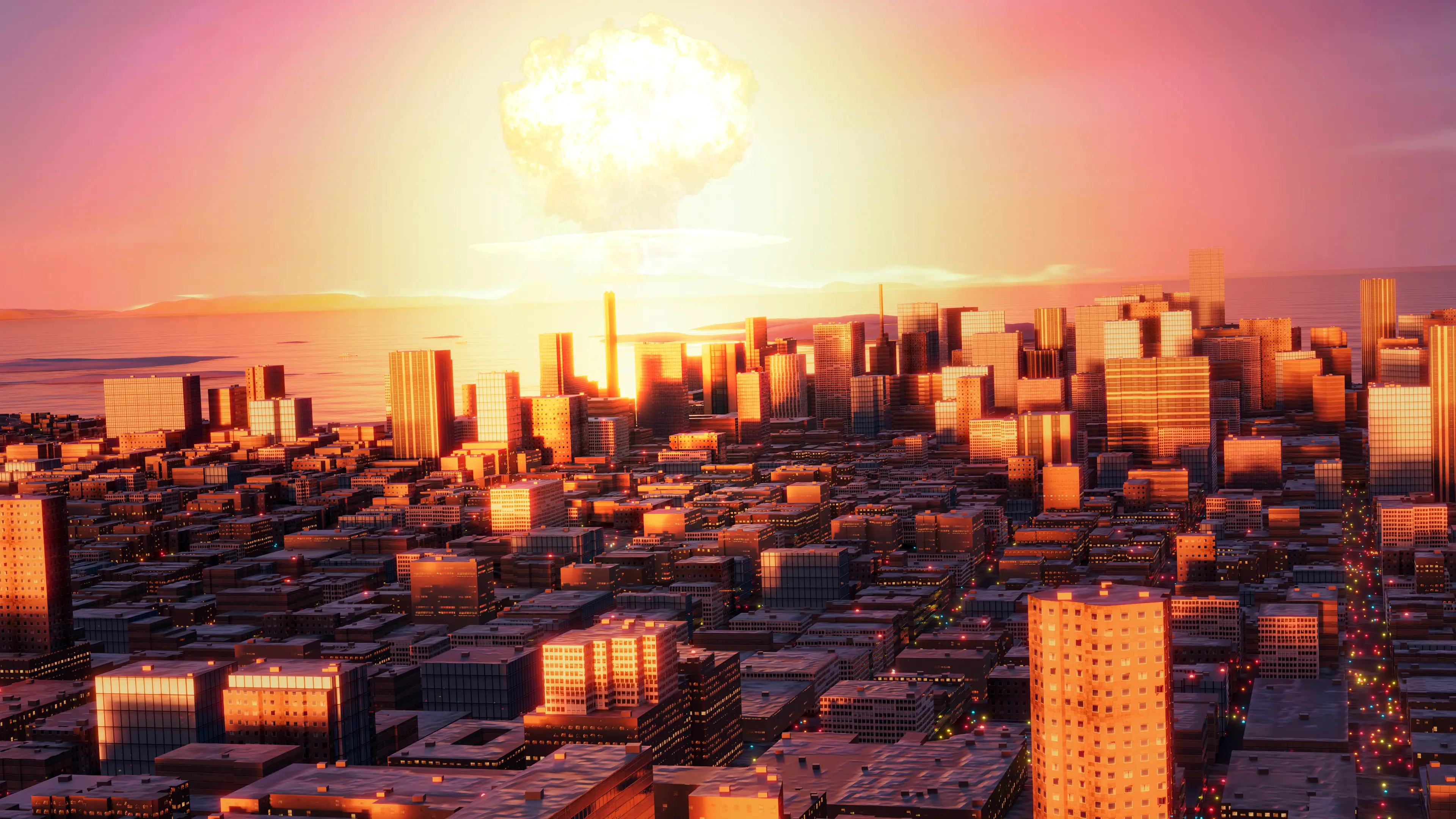
How quickly the explosion's devastating blast wave reaches you could range from a matter of seconds to a couple of minutes.
Anyone outdoors in this radius would also suffer severe third-degree burns from the immediate thermal radiation of the blast, which occurs so rapidly that the top layers of skin essentially fall of your body, as all the connective tissue underneath has been simultaneously fried.
This is horrifically called 'degloving' and people sheltering in cars would not be protected from this.
Making matters worse, just a few dizzying seconds later, the vehicle's windshield would shatter, with the average-yield nuke destroying all glass for at least 12 miles around. Nor would your car protect you from the next deadly consequence of a nuclear explosion.
That is, the deadly radioactive particles that are invisible to the human eye. And if your car has somehow survived the EMP and a blast that can level buildings, it still won't be able to outrun this nuclear fallout.
The nuclear expert explained: “The fireball from a 10-kiloton explosion is so hot, it actually shoots up into the atmosphere at over 100 miles per hour. These fission products mix in with the dirt and debris that’s drawn up into the atmosphere from the fireball.”
What you should do to survive a nuclear explosion
So, if fleeing in a vehicle is out of the question, what should you do?
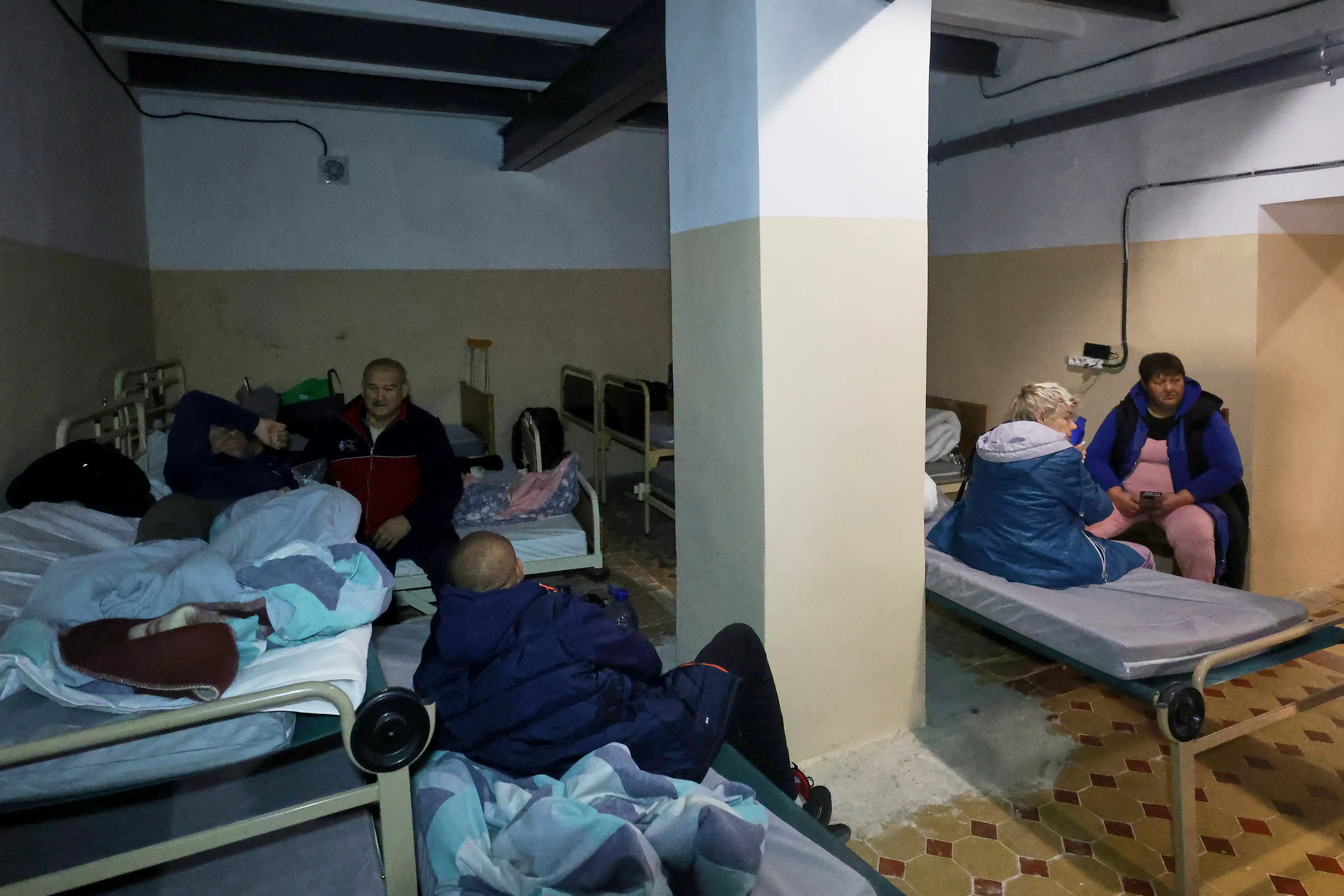
Buddemeier told Business Insider that there is one mantra you should follow, 'go in, stay in, tune in.' That means, run straight to shelter the instant you see the flash of light. While you only have a handful of seconds until the blast wave hits, you may have as much as five minutes to find the right shelter.
You need to find a 'robust structure' that can not only withstand the blast, but also seal you off from deadly gamma and other radiation fired out by the nuclear explosion. Then, stay there for up to 48 hours.
"We’re talking about are things like salt- or sand-size particles,” Buddemeier said. “It’s the penetrating gamma radiation coming off of those particles that’s the hazard.”
The longer you can hide, the lower the levels of radiation will be as the radioactive isotopes decay. Seal off any ventilation that might expose your space to the outside and secure some water and food to last you two days.
"Get inside … and get to the center of that building. If you happen to have access to below-ground areas, getting below ground is great,” the expert said, with basements being shown to have the most protection from radiation.
Should you have access to a radio or some other form of communication equipment, 'tune in' and hope there is enough of a world left standing outside to tell you what to do next.
Topics: Science
 William Morgan