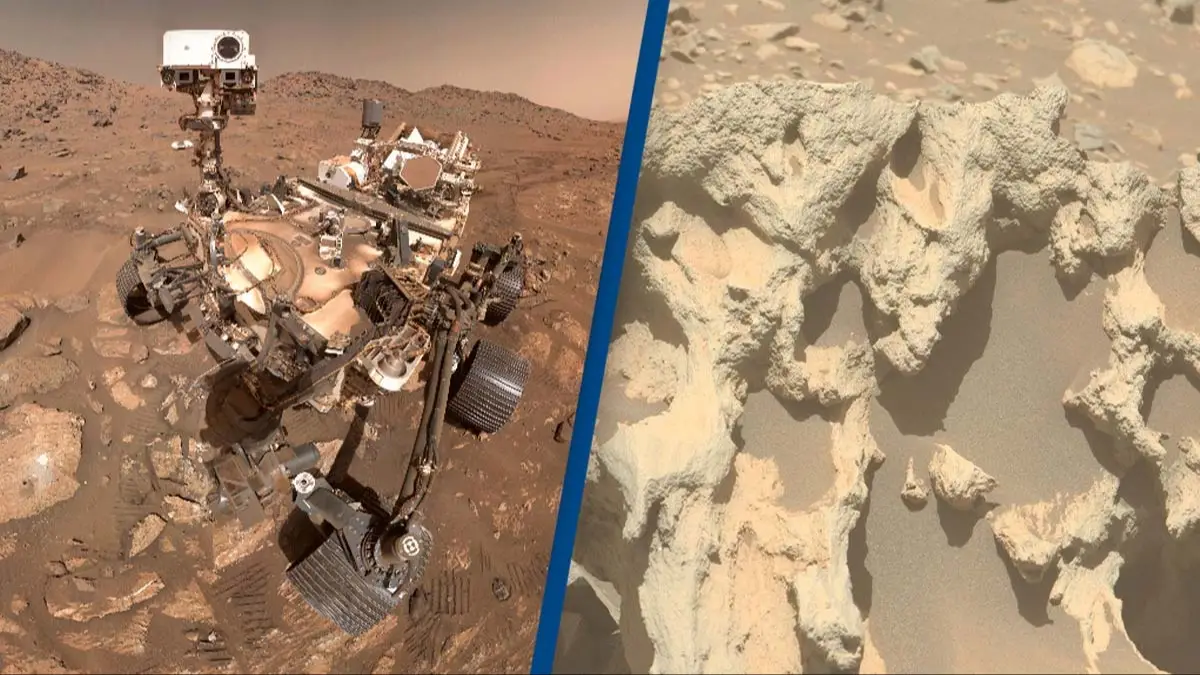
NASA scientists baffled after discovering rock structure on Mars that isn't from there

During the Mars rover’s recent investigation of the planet, NASA found something that shouldn’t be there.
According to the space organization, the Perseverance rover found a boulder near the rim of the Jezero crater in the Vernodden area, which has left scientists baffled.
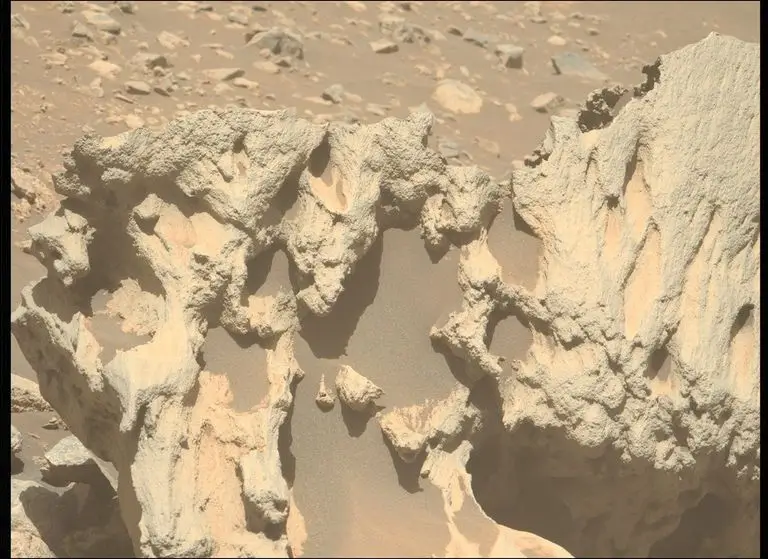
The rock is approximately 80 centimeters across, and has been named ‘Phippsaksla’ by NASA.
While you might be a little confused about all this ruckus over a rock, the issue scientists have is that it appears to be sculpted, and high-standing, compared to the ‘low-lying, flat and fragmented surrounding rocks’.
Advert
To find out more, Perseverance used its SuperCam instrument on the rock, and what it found was astonishing.
In reality, the rock did not originate on Mars.
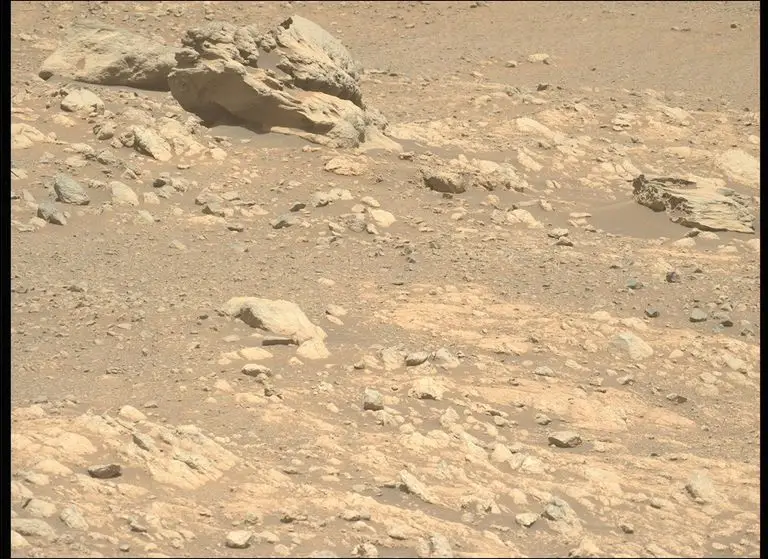
According to its composition, 'it is high in iron and nickel’, which is usually associated with iron-nickel meteorites that are formed in the core of large asteroids.
Dr Candice Bedford, a geologist from Purdue University and Perseverance operator, added in NASA’s blog about the findings: “This element combination is usually associated with iron-nickel meteorites formed in the core of large asteroids, suggesting that this rock formed elsewhere in the solar system.”
So, the rock very well may have fallen onto Mars, and become part of the rubble on its dusty surface.
For four years, the rover has been exploring the Jezero crater as scientists think it might have been once filled with water.
If so, it could have harbored life at one point or another.
As for the rock, while Mars isn’t a stranger to being hit by meteors, the composition of this rock is very strange indeed.
Professor Gareth Collins, an expert on meteor impacts from Imperial College London, said to the Daily Mail: “At some point in time, the entire Martian surface has been shaped by impacts.
“Meteors are expected on Mars on a daily basis; we don’t know the number precisely, but there should be lots each day.”
Dr Bedford wrote: “As such, it has been somewhat unexpected that Perseverance had not seen iron-nickel meteorites within Jezero crater, particularly given its similar age to Gale crater and number of smaller impact craters suggesting that meteorites did fall on the crater floor, delta, and crater rim throughout time.”
In other news, 3I/ATLAS, a ‘comet’ around the size of Manhattan which has a number of strange characteristics and has led to speculation that it is some sort of alien spacecraft, has left people baffled.
The giant rock that’s been floating around Earth passed close to the Sun, but unlike similar comets, this one didn’t break apart due to the heat.
As people think it could be an alien mothership, it’s best to keep a close eye on this oddity.
 Britt Jones