Terrifying warning Artemis II astronauts heard during crucial part of mission

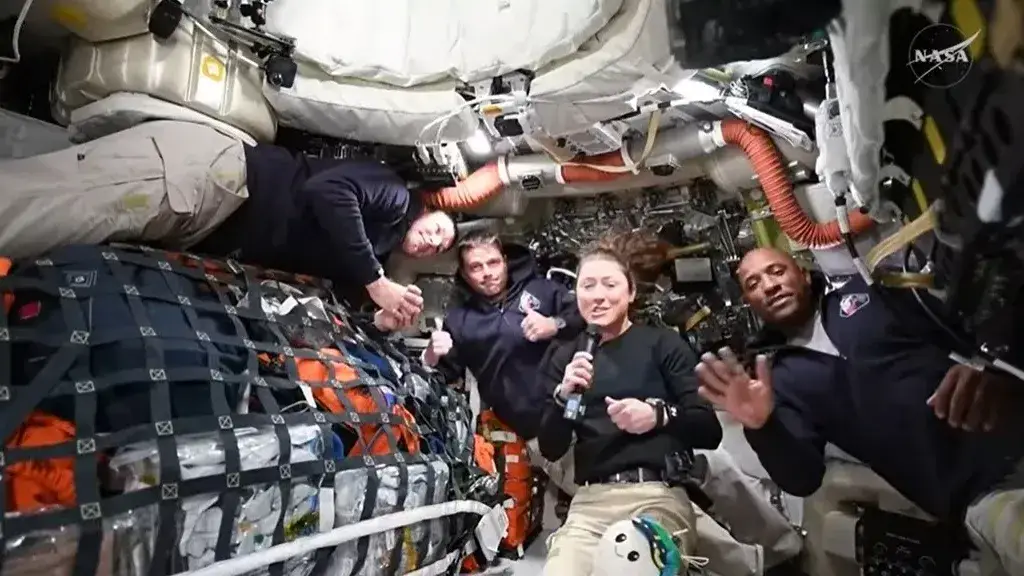
NASA's Artemis II crew has revealed what scary message they were handed after passing the 'point of no return' as they journey to the moon.
It has been half a century, and almost sixty years since the Apollo 11 Moon Landing, which saw NASA explore outer space like no other.
However, amid budget issues and technological stagnation, NASA hasn’t been able to send a team to the moon since...until now.
However, it hasn’t been smooth sailing for the crew.
Advert
The Orion capsule launched from Cape Canaveral at 6:35 p.m. ET, as the team began their journey to space.
But when NASA astronauts Reid Wiseman, Christina Koch, Victor Glover and Jeremy Hansen, were entering a critical time in the flight, a 'translunar injection burn' ended up signaling a terrifying emergency message that there was a ‘cabin leak’.
The injection burn is a key maneuver that helps the rocket out of Earth's orbit so it can steer towards its own path.
“We did get a warning message for ‘cabin leak suspected’,” astronaut Hansen said in a live video with the rest of the team.
He said: “This grabs your attention because… you go right from doing this burn and you're heading to the moon to thinking, ‘Are we going to have to cancel this burn, start getting into our spacesuits and figuring out how to get home in a day or less?’”
A cabin leak isn’t a small issue, as it could even depressurize the cabin, which is a deadly occurrence for anyone inside of the carefully pressurized pod.
That’s because like underwater, the pressure is vastly different than that on Earth, and an immediate change in pressure could just land someone suffering from ‘the bends’ sickness, or a lack of oxygen.
However, this time, it was a false alarm.
“Houston helped us out – they confirmed they were seeing good cabin pressure and so were we on-board,” Hansen said. “We did the burn and now we're heading to the moon and feeling good.”
The crew will reach the furthest point from Earth on day six of their journey, as it breaks Apollo 13’s distance record.
Artemis II will reach 6,400 miles beyond the lunar surface, with mission commander Wiseman stating: “There is nothing normal about this. Sending four humans 250,000 miles away is a Herculean effort and we are now only just realizing the gravity of that.”
Since flying, the crew have also experienced a cold cabin and toilet flushing problems as everything seemed to be going wrong, but they’re still in good spirits about it all.
Artemis II timeline: When will the crew reach the Moon?
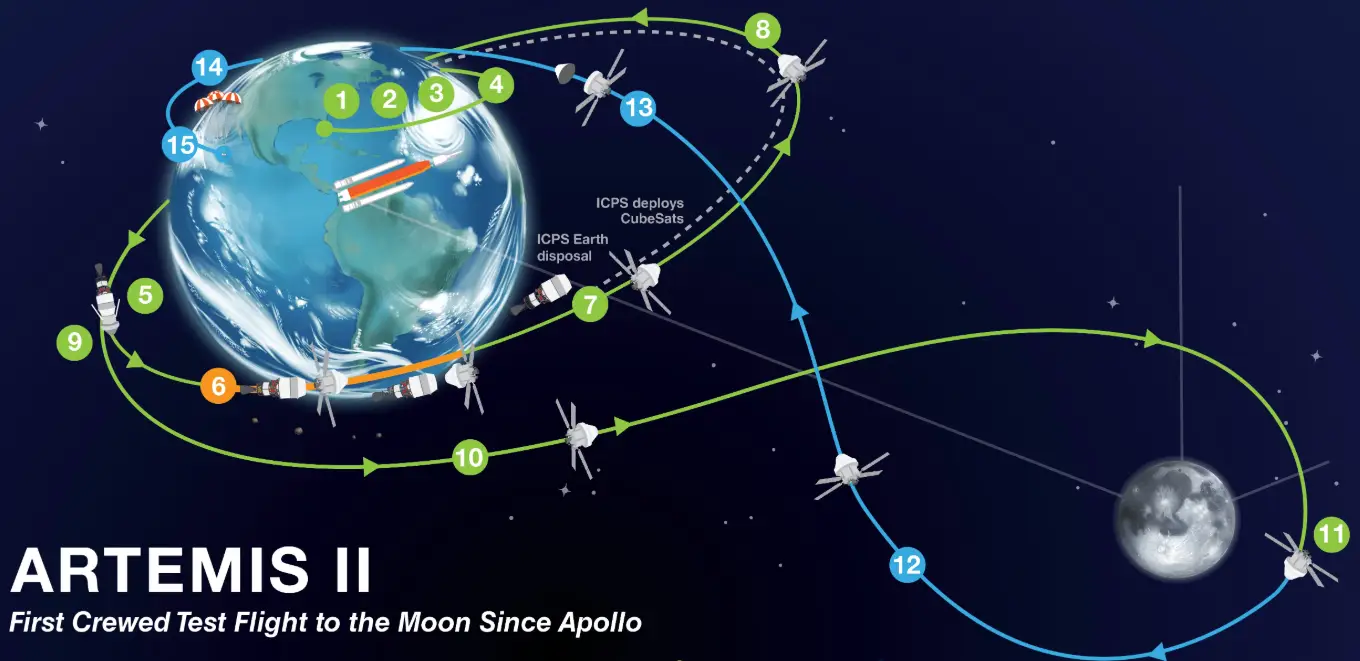
After completing the translunar injection burn, the Artemis II crew have broken free of Earth’s gravity and are now on course for the Moon.
They are set to travel 250,000 miles from Earth, further than any human has ever gone before.
But what are the key milestones over the next few days, and what should we look out for back on Earth?
Friday April 3 - Saturday April 4
Astronauts Reid Wiseman, Victor Glover, Christina Koch and Jeremy Hansen will be testing radio communications, and most importantly for us, taking lots of pictures out of the window of their spacecraft.
So expect some stunning photographs of the Earth and the Moon in deep space.

Sunday April 5
It’s an important day for the Artemis II crew - they’ll enter the lunar sphere of influence, which means the tug of the Moon’s gravity is stronger than Earth’s.
The crew will also be testing their spacesuits to make sure they’re in tip-top shape for re-entry next week.
Monday April 6
This is the big one! The Artemis II crew will pass around the far side of the Moon, the furthest from Earth anyone has ever gone before.
Commonly dubbed the dark side of the Moon - it isn’t actually dark and actually gets more sunlight than the side we do see.
It’s called this because, thanks to something called tidal locking, the same side of the Moon is always facing Earth, so we never get to see the other one.
The Artemis II crew will spend the day taking photographs of the lunar landscape, and there will be 40 mins where they will lose contact with Earth - which is sure to be squeaky bum time for the folks at NASA.
Tuesday April 7 - Thursday April 9
The astronauts begin their return journey to Earth.
Tuesday is the Artemis II crew’s day off after a full-on few days - though you have to imagine entertainment is scarce in the Orion spacecraft. No Netflix, unfortunately.
On Wednesday, the crew will practice building a radiation shelter, which would be able to shield them in the event of solar flares, test compression garments which should prevent dizziness on the return to Earth, and have a go at manually piloting the spacecraft.
Friday April 10
The Artemis II crew will be back on Earth in time for the weekend. This is the diciest section of the mission, with the Orion spacecraft exposed to temperatures of up to 3,000°F.
Once safely back in Earth’s atmosphere, parachutes will deploy and they’ll land in the Pacific Ocean off San Diego, where NASA and the US Navy will be ready to pick them up.
 Britt Jones