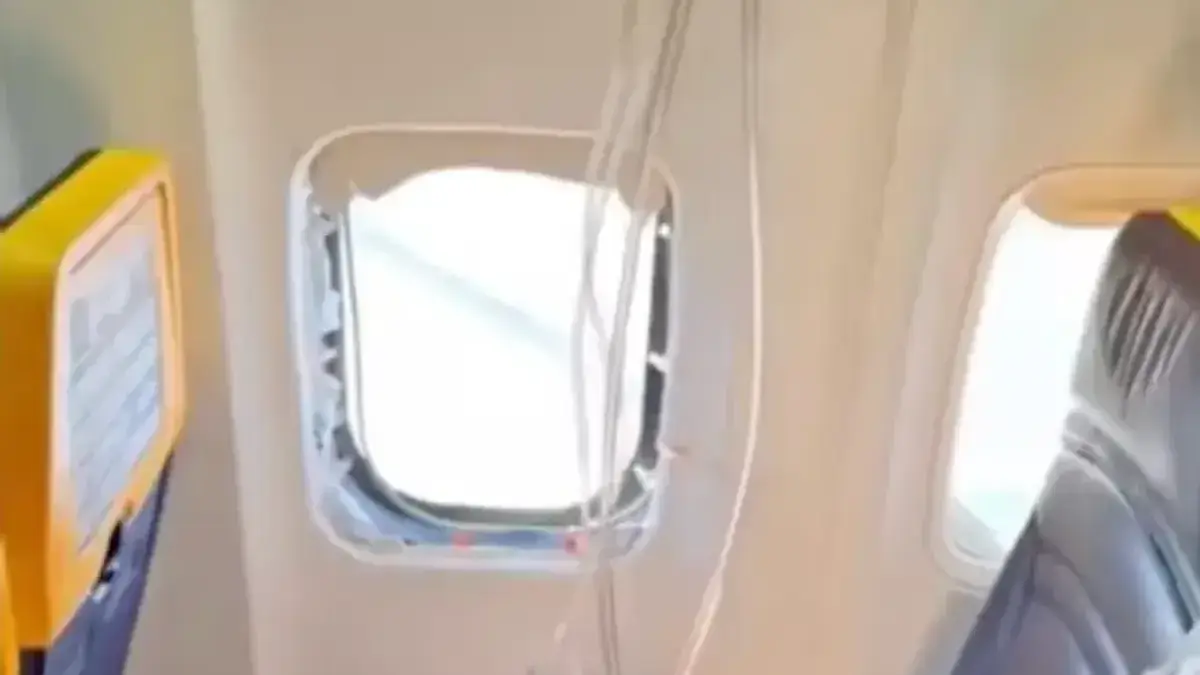
What caused man to be partially sucked out of Ryanair plane at 15,000ft revealed in report

A passenger was left partially hanging out of a plane after a mid-air engine failure ripped a window clean off the fuselage, according to a new report from US air safety investigators.
The National Transportation Safety Board (NTSB) has released its preliminary findings into the incident, which took place on July 10 as the Boeing 737, flying under the Ryanair brand but operated by subsidiary Malta Air, climbed out of Thessaloniki, Greece, en route to Memmingen, Germany, carrying 155 people.
According to the report, the aircraft had reached around 16,000 feet, roughly seven minutes into the flight, when the flight deck received a warning of heavy vibration coming from the right-hand engine.
Investigators traced the issue responsible back to a single fan blade inside that engine, one of the large blades at the front that draws air in.
Advert
The report found the blade had snapped off at its base due to metal fatigue, essentially tiny cracks that build up gradually under repeated stress, rather than any sudden impact like a bird strike.
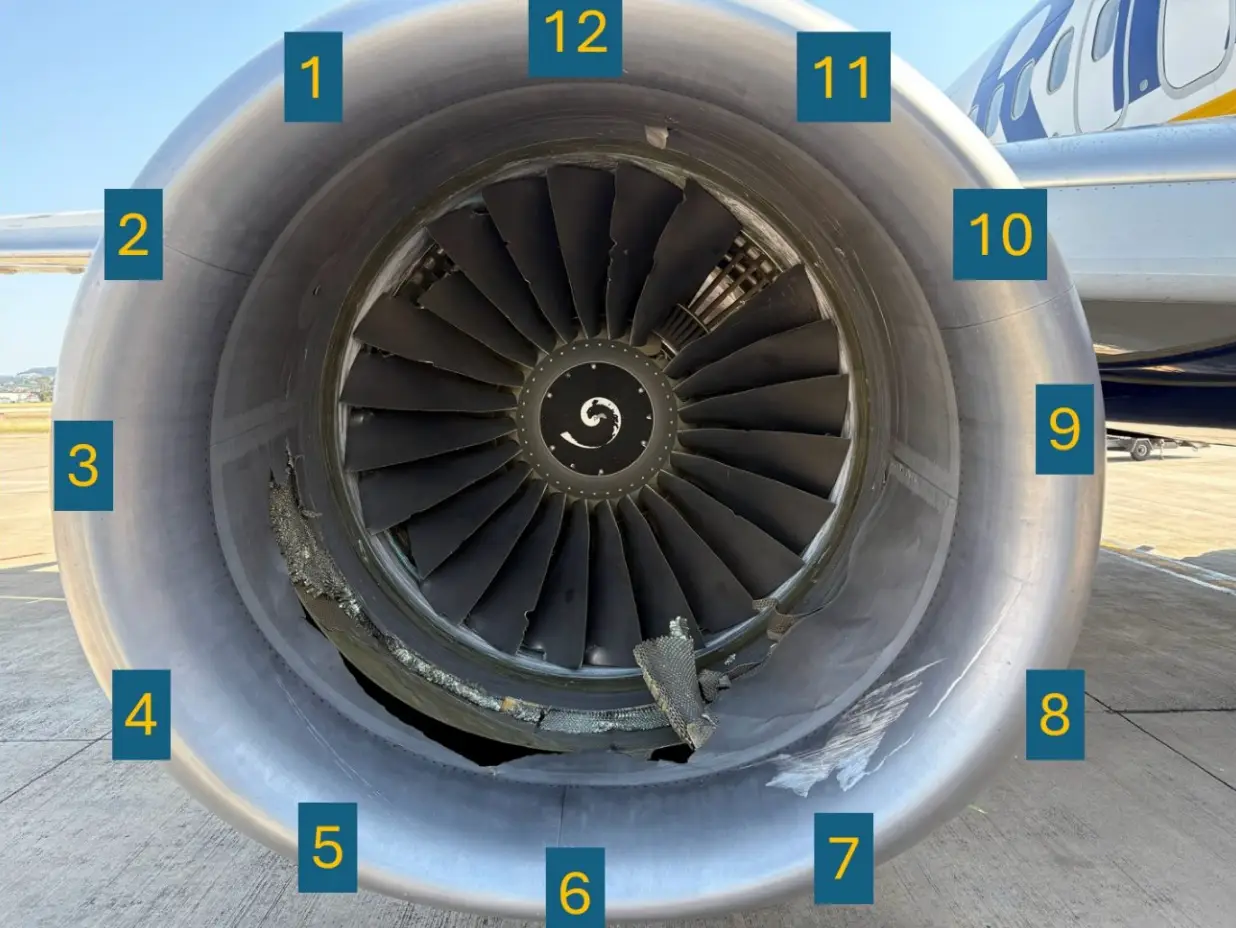
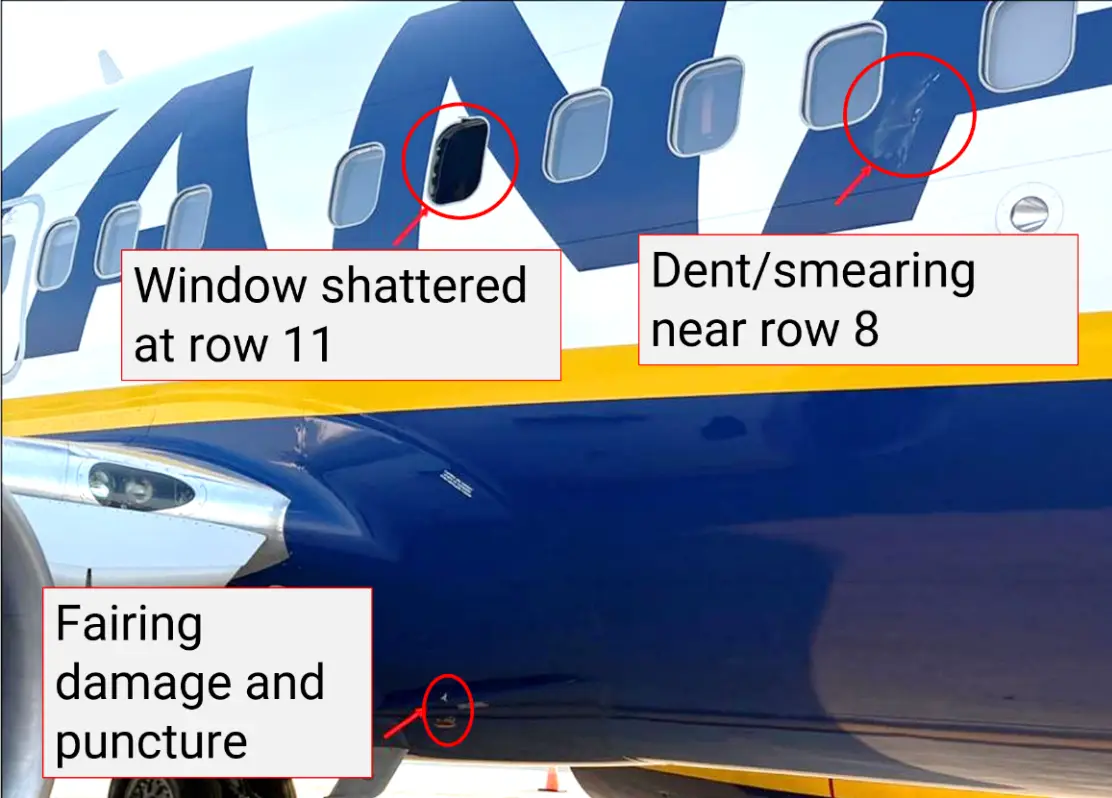
When the blade broke apart, fragments tore through the plane's outer skin in two separate places, blowing out a cabin window entirely and also striking the tail section.
The crew initially responded to the vibration warning by throttling back the engine, and when the shaking appeared to settle, they continued their climb on autopilot.
However, the vibrations soon returned more violently, followed by a loud bang and a cabin depressurisation alert.
Oxygen masks dropped throughout the cabin as the pilots declared an emergency, dived to a safer altitude and turned back toward Thessaloniki.
It was during this chaos that Serbian national Ljubiša Karović, who was seated near the blown-out window, became partially trapped in the opening.
Fellow passengers grabbed hold of him and pulled him back inside the cabin, where a doctor travelling on the flight treated him for the remainder of the journey.
He was the only person seriously hurt out of everyone on board, and the pilots landed the aircraft safely back in Thessaloniki around 20 minutes later.
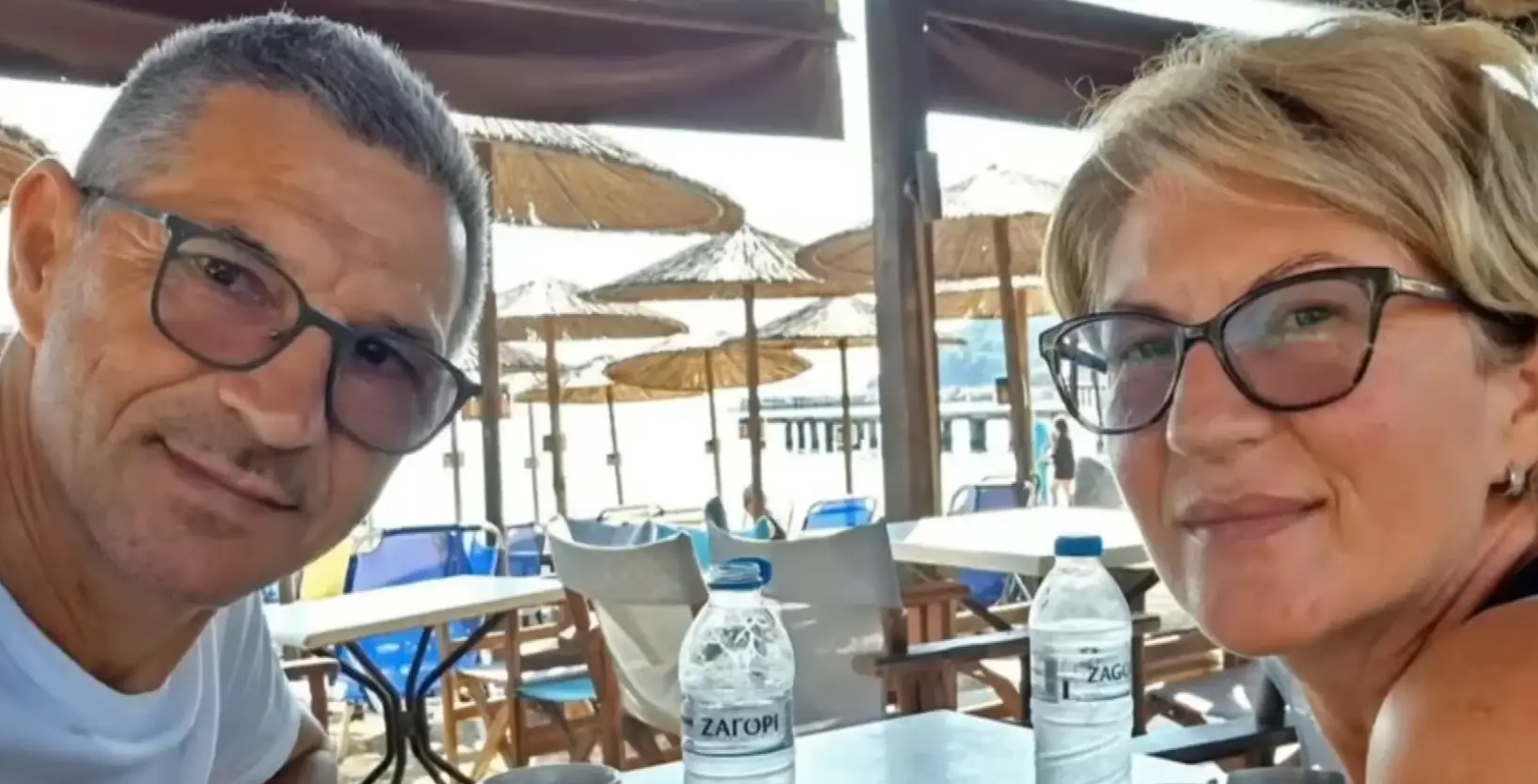
Ljubiša sustained serious injuries as a result of the failure, the NTSB confirmed, with no other injuries reported among the remaining 154 people on the aircraft.
He told the Guardian at the time: "The explosion is what I remember. It’s the noise before the chaos, the noise that is always there when I close my eyes to sleep."
Despite the terrifying experience, Ljubiša considers himself 'lucky' to have survived.
He said he doesn't 'remember much' about the incident. Ljubiša is unsure what prevented him from being pulled completely through the window, wondering whether being 'strapped in' by his 'seatbelt' may have helped.
"But maybe it is fate," he reflected. "I believe in God and I thank him every day."
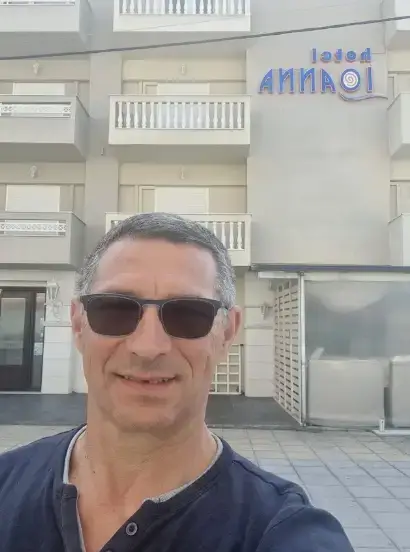
Ljubiša said his neck and head 'hurt' for a long time after the incident but added: "But I am still alive."
His survival appears remarkable, particularly given the severity of the incident.
Another passenger on the same flight told Radio Thessaloniki: "We thought the plane was going down. The decompression was extreme. It felt like we couldn't breathe. The man who was injured was bleeding and then lost consciousness several times, most likely because of the lack of oxygen and the shock."
The engine that was the cause of the trouble had undergone an ultrasonic inspection specifically designed to catch this kind of fatigue crack 253 flights before the incident, with no issues flagged at the time.
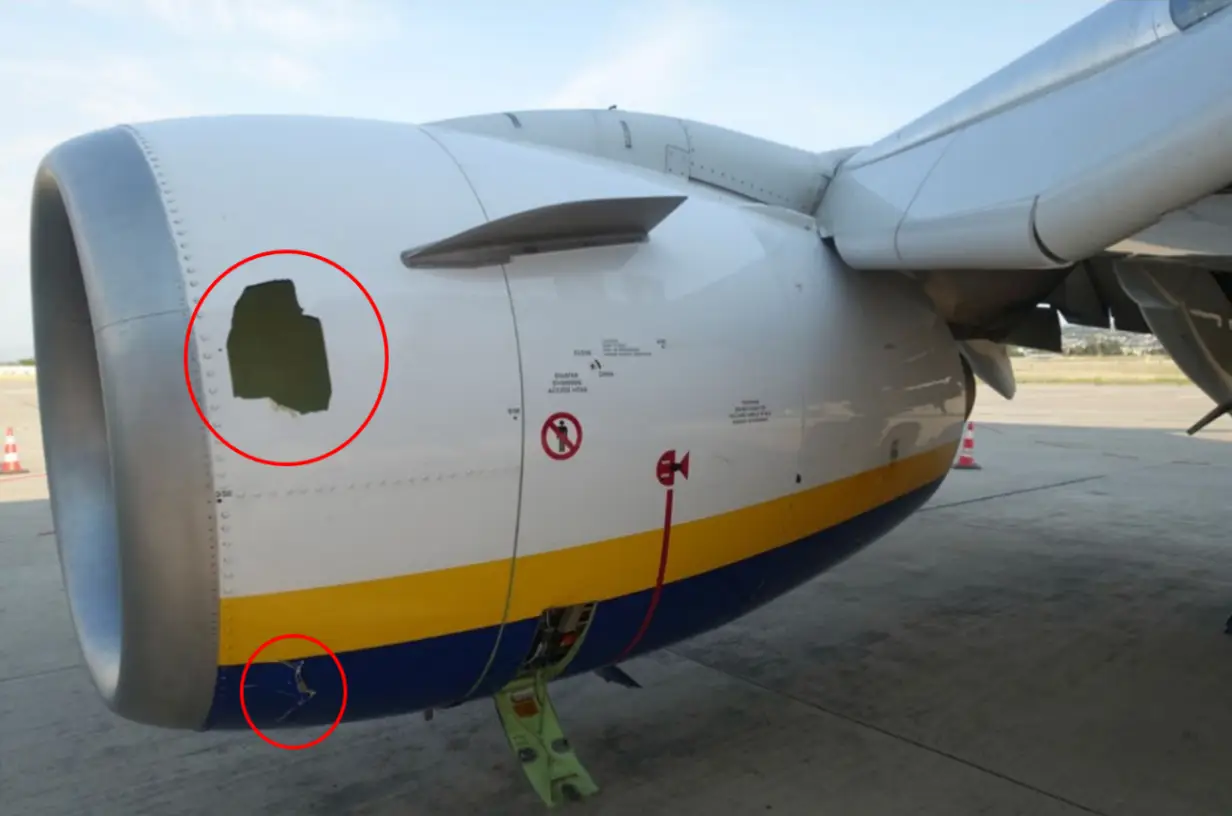
Investigators also noted the aircraft had not yet received newer protective upgrades to the engine casing, including reinforced bolts and plates, that regulators mandated in 2025. Airlines aren't required to have fitted these until 2028, so the missing upgrade is not being blamed for the failure, but has been noted as a relevant detail.
Ryanair chief executive Michael O'Leary had previously suggested the failure may have stemmed from 'foreign object damage' to the engine. The airline's parent has not yet commented on the NTSB's specific findings.
The investigation remains ongoing, and the NTSB has cautioned that further details could still emerge as the full inquiry continues.
UNILAD has approached Ryanair for comment.
Topics: Plane, World News
 Thomas Bamford