Mount Everest guides allegedly 'poisoned' climbers as part of $20 million insurance scam

Picture the scene - you're within reaching distance of accomplishing your lifelong goal of scaling Everest, but nefarious guides scupper your chances by 'poisoning' you to fake the symptoms of altitude sickness, pocketing the cash when insurers pay out for your rescue.
This has apparently been going on for years as part of a $20 million fraud, according to Nepal Police’s Central Investigation Bureau.
The scheme is said to have affected 4,782 international climbers between 2022 and 2025. According to reports by The Kathmandu Post, 32 guides were charged in connection on March 12.
Guides would ‘manufacture’ an emergency for tourists from countries including the UK or Australia, a move which would make it more challenging for insurance companies to verify the incidents in Kathmandu.
Advert
Authorities in Nepal found that some Mount Everest guides would put baking powder into the climbers’ food to copy the common symptoms of altitude sickness, which is extremely common when climbing the highest mountain on Earth above sea level.
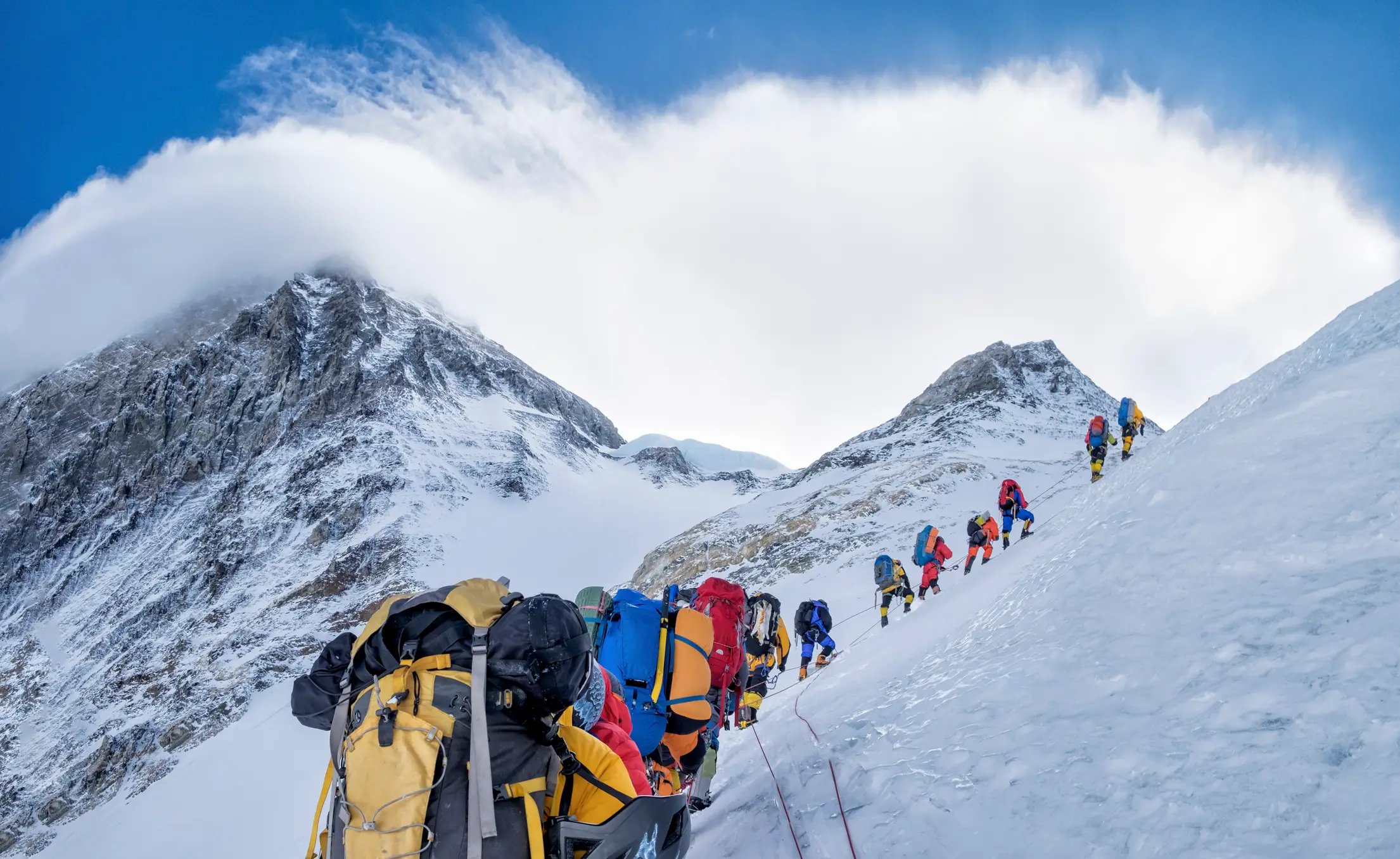
Altitude sickness occurs when the body doesn’t have enough time to adjust to lower oxygen availability when higher up in the atmosphere, the Cleveland Clinic explains.
Mount Everest is the world’s highest peak at 29,032 feet (8,849 meters) and lies on the Nepal-China border. It was successfully climbed for the first time by Sir Edmund Hillary and Tenzing Norgay in 1953, and it continues to attract hundreds of climbers annually.
The summit is covered in snow, but its ice is melting rapidly due to climate change. Extreme weather, avalanches, and altitude sickness make it one of the most dangerous mountains.
When climbers reach heights around 10,000 feet and above, the air pressure is significantly lower, which reduces the amount of oxygen available. This can lead to altitude sickness. Symptoms can include headache, nausea, dizziness, fatigue and shortness of breath.
Nepalese authorities found that guides would put baking powder into climbers’ food to make them show symptoms of altitude sickness, then pretend they needed emergency services.
The climbers were given diamox (Acetazolamide) with ‘excessive’ amounts of water, the outlet reported. The tablets are used to treat and prevent altitude sickness.
More benignly, the guides would apparently offer to help mountaineers fake an emergency so a helicopter could take them off the mountain if they don't fancy walking back down.
To fake the emergencies effectively, helicopter companies and hospitals were also in on the scam, police claim.
Era International Hospital allegedly received over $15.87 million, and Shreedhi International Hospital more than $1.22 million in claims related to these fake rescue operations, according to police.
Mountain Rescue Service is said to have carried out 171 fraudulent rescues, collecting $10.31 million from international insurers.
Nepal Charter Service allegedly earned $8.2 million, and Everest Experience and Assistance was linked to $11.04 million in insurance claims, police claim.
Techniques to inflate the fees they could claim from insurers include charging for a helicopter per mountaineer rescued, when multiple people often share one helicopter. Flight manifests are then faked.
At the hospital, digital signatures from medics are allegedly faked, sometimes without the doctors' knowledge.
One hospital office assistant admitted to providing an x-ray of his own broken limb, taken a year ago, so a foreign mountaineer could make an insurance claim.
UNILAD has contacted Nepalese authorities for comment.
 Greg Harris